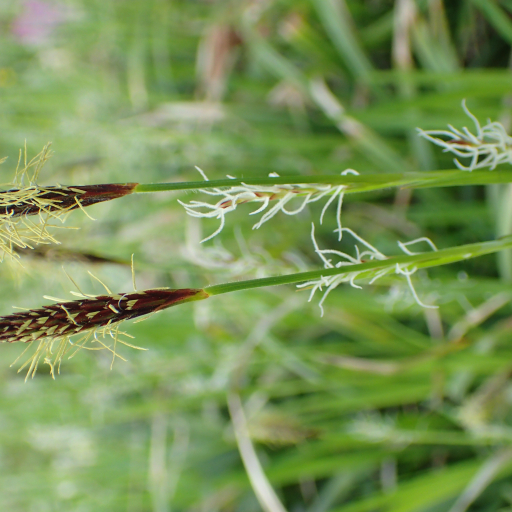
Plant Overview
Often called the Hairy Sedge, this delicate forest dweller is like a soft green carpet for the woodland floor. Unlike many of its rough-textured cousins in the Cyperaceae family, Carex pilosa is famous for its fuzzy, tactile charm. It is a slow-growing traveler that marks the presence of ancient, healthy deciduous forests across Europe and Western Asia.
🔍 How to Identify
- 🌿 The Hairy Margins: The most defining feature is the fine, soft white hairs (cilia) that line the edges of the leaves. If you hold a leaf up to the light, they look like tiny eyelashes.
- 🍃 Leaf Shape: The leaves are relatively broad for a sedge, tapering to a point, and maintain a bright, grassy green color throughout the growing season.
- 🌱 Growth Pattern: It spreads via underground runners (rhizomes), creating loose tufts that eventually merge into a seamless, lush mat.
- 🌾 Subtle Blooms: In late spring, it sends up slender, inconspicuous flower spikes that transition from green to a reddish-brown as they mature.
🏡 In Your Garden
- 🌳 The Shade Specialist: This is a "set it and forget it" plant for deep shade. It excels in the dry shade beneath large beech or hornbeam trees where other grasses might struggle to survive.
- 🍂 Soil Nuances: While it appreciates rich, loamy forest soil, it is surprisingly resilient. It prefers consistent moisture but doesn't like to sit in a swamp; think "damp woodland floor" rather than "marsh."
- ✂️ Low Maintenance: Because it is slow-growing and evergreen in milder climates, it requires very little grooming. Just a light tidy-up of old foliage in early spring is enough to keep it looking fresh.
⚠️ Safety & Toxicity
- ✅ Safe & Non-Toxic: Carex pilosa is considered non-toxic to humans, dogs, and cats.
- 👐 Soft Texture: Unlike "Sawgrass" or other sharp-edged sedges, the Hairy Sedge is soft to the touch, making it a safe choice for gardens where children or pets play.
✨ Fun Fact
In ecology, the Hairy Sedge is considered an indicator species. If you find a large, established colony in the wild, it is a strong sign that you are standing in an ancient, undisturbed woodland that has been forested for centuries!

Detailed Care Instructions
To grow Carex pilosa, also known as the fuzzy sedge or hairy sedge, you can follow these steps:
- Choose a suitable location: Carex pilosa prefers partial shade to full shade conditions. It can grow in both moist and dry soil, but it thrives best in consistently moist soil.
- Prepare the soil: Carex pilosa prefers rich, well-draining soil. If the soil is compacted or lacks nutrients, amend it with organic matter like compost or leaf mold.
- Sow the seeds: You can sow the seeds directly into the prepared soil in the spring or fall. Scatter the seeds evenly and lightly press them into the soil, ensuring good seed-to-soil contact.
- Water the seeds: After sowing the seeds, water the area thoroughly to ensure the soil is moist. Keeping the soil consistently moist during the germination process is essential for successful growth.
- Maintain moisture: Carex pilosa requires consistent moisture throughout its growth. Water the plants regularly, making sure the soil doesn't dry out completely. However, avoid overwatering, as soggy soil can lead to root rot.
- Mulching and weeding: Apply a layer of organic mulch around the plants to retain moisture, suppress weed growth, and provide insulation to the soil. Carefully weed around the plants to prevent competition for nutrients and water.
- Fertilize: Carex pilosa generally doesn't require frequent fertilization. However, you can apply a slow-release, balanced fertilizer in early spring if you notice weak growth or pale leaves.
- Divide and propagate: After a couple of years, the clumps of Carex pilosa may become crowded. You can divide them in early spring or fall to propagate new plants. Dig up the clump, separate the individual plants, and replant them in suitable locations.
- Pruning: Carex pilosa generally doesn't require pruning. However, you can trim back any brown or damaged foliage to maintain the plant's appearance.
- Protection during extreme weather: In regions with extremely hot or cold weather, provide additional protection to the plants. For example, use shade cloth during intense summer heat and apply a layer of mulch or straw in winter to insulate the soil.
With proper care and attention to its moisture requirements, Carex pilosa should grow well in your garden or landscape.

Place in a window with dappled sun or a spot in the middle of a room. Or directly in a window facing west or east.

The ideal way to water this plant is to ensure that the soil remains moist, without becoming waterlogged. This means watering it regularly, but making sure not to pour too much water at a time. It is important to allow the plant to soak up water through its roots, rather than from watering the leaves or stem. This is best done by watering the plant at the base, at the soil level. It is also important to consider the humidity levels of the plant's environment, as this can affect how much water it needs; in a dry environment, the plant may require more frequent watering than in a humid one. Additionally, it is important to use high-quality water, free from harmful chemicals, chlorine or salt. Finally, it may be helpful to check the plant's soil moisture levels frequently, to make sure it is not drying out or becoming too saturated.
To fertilize the Carex Pilosa plant, apply a balanced fertilizer with equal parts of nitrogen, phosphorus, and potassium, such as a 10-10-10 or 12-12-12 formula. Mix the fertilizer according to the package instructions and apply it to the soil around the base of the plant. Spread the fertilizer evenly, making sure not to apply it directly onto the leaves or stem. Water the plant deeply after fertilizing to help the nutrients reach the roots. Repeat this process every 4-6 weeks during the growing season (spring and summer). Avoid fertilizing during the dormant season (fall and winter) as the plant may not be actively growing and could be more susceptible to burning.
Carex Pilosa plant prefers moist soil with adequate drainage. It grows best in loamy soil that is well-drained, but not too dry or too wet. The pH level of the soil should be slightly acidic to neutral.
To create the ideal soil for Carex Pilosa plant, you can mix equal parts of sand, peat moss, and loamy soil. This will provide the plant with good drainage while retaining enough moisture for it to thrive.
You can also add some organic matter, such as leaf mold, compost, or aged manure, to the soil mix to improve its fertility and texture. This will help the plant to develop a strong root system and grow healthy foliage.
It is important to avoid using soil that is too heavy, compacted, or clayey, as this can lead to poor drainage and root rot. Similarly, soil that is too sandy or dry will not retain enough moisture for the plant to grow properly.
Overall, the key to growing Carex Pilosa plant successfully is to provide it with well-draining, moist soil that is rich in nutrients and organic matter.
To propagate this plant, you can take division of plant clumps. Using a clean, sharp knife, separate a smaller clump from the parent plant by cutting through the root ball. Plant the new clump in a pot or in a prepared garden bed, making sure the plant is at the same depth as it was in the parent plant. Water the new plant regularly until it becomes established. Another method of propagation is by taking stem cuttings. Take cuttings from the tips of healthy stems, making sure they have a few leaves attached. Dip the base of the cutting into rooting hormone and plant it in a small pot filled with a well-draining soil mix. Keep the soil moist and place the pot in indirect light until the new plant is established.








