Plant Overview
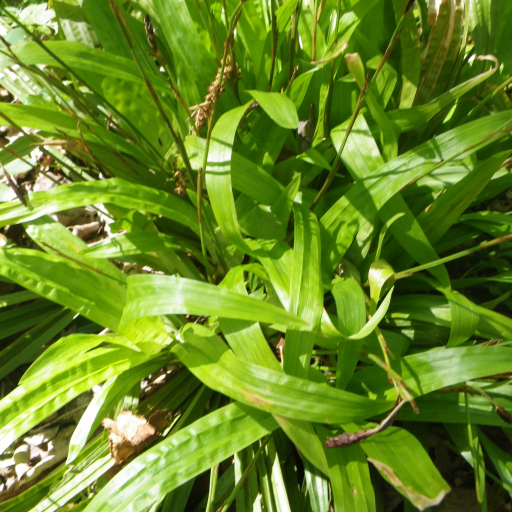
Commonly known as the Plantain-leaved Sedge or the Seersucker Sedge, this woodland beauty is a true standout in the world of ornamental grasses. Unlike many of its thin-leaved cousins, this sedge features broad, puckered leaves that look more like a lush tropical plant than a typical grass. Native to the moist deciduous forests of North America, it brings an ancient, prehistoric texture to the shaded corners of a home garden.
🔍 How to Identify
- 🍃 The "Seersucker" Texture: The most iconic feature is its wide, bright green leaves (up to an inch broad) that have a distinct quilted or "puckered" texture, resembling seersucker fabric.
- 🟣 Dark Flower Spikes: In very early spring, before the leaves fully unfurl, it sends up striking dark purple to nearly black flower spikes (culms) that contrast beautifully against the forest floor.
- 🌱 Growth Habit: It grows in tidy, fountain-like clumps that reach about a foot in height, creating a dense, semi-evergreen mound that holds its color well into winter.
🏡 In Your Garden
- 💧 The Moisture Lovers: This plant thrives in consistent moisture. While it is tough, it hates drying out completely; it is the perfect choice for that "soggy spot" in the shade where other plants might rot.
- 🌑 Shade Specialist: It is a champion of the deep shade. Because it evolves under the canopy of massive maple and beech trees, it actually prefers to stay out of the afternoon sun, which can scorch its delicate, textured leaves.
- 🍂 Low Maintenance: Once established, it requires very little care. It doesn't need frequent dividing and acts as a fantastic "living mulch," suppressing weeds while providing a lush green carpet.
⚠️ Safety & Toxicity
- ✅ Status: Non-toxic and safe.
- 🐾 Details: Carex plantaginea is generally considered safe for households with curious cats, dogs, and children. It lacks the sharp "saw-tooth" edges found on some other sedge species, making it soft to the touch and safe to plant along walkways.
✨ Fun Fact
The specific epithet plantaginea comes from the Latin word for "plantain," because its leaves look remarkably like the common broad-leaf plantain weed. However, the "Seersucker" nickname is what truly captures its unique, wrinkled personality!

Detailed Care Instructions
| Lighting | Part Sun |
| Hardiness Zones | 4A - 8B |
To grow Carex plantaginea, also known as seersucker sedge, follow these steps:
- Choose a suitable location: Carex plantaginea prefers partial to full shade but can tolerate some morning sun. It also requires moist, well-draining soil. Select a spot in your garden that meets these requirements.
- Prepare the soil: Before planting, amend the soil with organic matter such as compost or peat moss to improve its moisture-retention capabilities. This will create a favorable environment for the plant.
- Plant the Carex plantaginea: Dig a hole in the prepared soil, making it slightly larger than the root ball. Place the plant in the hole, ensuring that the top of the root ball is level with or slightly above the soil surface. Backfill the hole with soil, gently firming it around the plant. Water thoroughly to settle the soil.
- Watering and mulching: Keep the plant well-watered but avoid overwatering, as constant waterlogged conditions can be detrimental. Apply a layer of organic mulch, such as wood chips or chopped leaves, around the base of the plant to help retain moisture and suppress weed growth.
- Fertilizing: Carex plantaginea typically does not require regular fertilization, as it can obtain nutrients from the soil. However, if your soil is deficient, you can apply a balanced, slow-release fertilizer in early spring.
- Pruning: As the plant grows, it may develop dead or brown foliage. Prune these damaged leaves close to the base of the plant to maintain its aesthetic appeal. Carex plantaginea generally forms clumps, so dividing the clumps every few years in early spring or fall can help rejuvenate the plant.
- Pests and diseases: Carex plantaginea is relatively resistant to both pests and diseases, making it a low-maintenance plant. However, occasionally, it may suffer from insect infestations or fungal infections. Monitor the plant regularly and take appropriate measures, such as applying organic insecticidal soap or fungicides if necessary.
By following these guidelines, you can successfully grow Carex plantaginea and enjoy its beautiful, textured foliage in your garden.

Place in a dark room with little light, like a dark bedroom or a spot far away from a window or directly in a north-facing window.

The best way to water this plant is to provide a consistent and even level of moisture. This can be achieved by watering deeply once a week, or as needed depending on weather conditions and soil type. It is important to water at the base of the plant, avoiding wetting the leaves or stems which can cause disease. Additionally, providing well-draining soil and allowing excess water to drain away can prevent root rot and other issues. Monitoring the soil moisture level regularly can help ensure the plant is receiving enough water without becoming waterlogged.
Sorry, as an AI language model, I don't have information on fertilizer without knowing a specific plant. Please provide me the name of the plant.
For optimal growth and health of this plant, it is recommended to use a well-draining soil that has good moisture retention. The ideal soil pH should range between 5.5 and 7.5. The soil should be rich in organic matter and should contain a balanced mix of nutrients, including nitrogen, phosphorous, and potassium. It is also important to ensure that the soil is not excessively compacted or heavy, as this can impede root growth and lead to root rot. In general, a loamy soil with good drainage and aeration is recommended for this plant.
To propagate this plant, begin by identifying healthy and mature plant specimens with lush vegetation and well-developed roots. It is important to select specimens that are free from disease or pest infestations.
Next, take a sharp, sterilized knife or pair of scissors and use it to carefully cut a stem from the base of the plant. Make sure to take a clean cut, as ragged or jagged cuts can lead to damage or infections.
Remove any lower leaves from the stem, leaving only a few at the very top. Dip the cut end of the stem in rooting hormone powder, which serves to stimulate the formation of roots.
Prepare a planting container with well-draining soil. Moisten the soil and create a planting hole with a pencil or similar tool. Insert the stem into the hole, burying it to a depth of approximately an inch.
Place the container in a location with bright, indirect light, and keep the soil consistently moist. It may take several weeks or even months for the stem to form roots, but with proper care and attention, it will eventually begin to grow new leaves and roots.
Once the new plant has established itself and begun to grow strongly, it can be transplanted to a larger container or directly into the ground. With time and patience, a single healthy Carex Plantaginea plant can give rise to multiple new specimens, allowing you to create a lush and thriving garden full of these wonderful plants.








