Plant Overview
Often called the Tussock Sedge or Upright Sedge, this plant is the true architect of the American marshland. Over many years, it creates its own "islands" by growing into dense, elevated mounds that rise above the water level. These distinctive hummocks provide critical high-ground habitat for wetland creatures during seasonal flooding.
🔍 How to Identify
- 📐 Triangular Stems: Like most true sedges, it follows the rule "sedges have edges"—if you roll the stem between your fingers, you will feel three distinct corners.
- 🌿 The Tussock Habit: Look for a plant that grows in a tight, mop-like clump; as old leaves die, they form a "trunk" or pedestal that lifts the green growth upward.
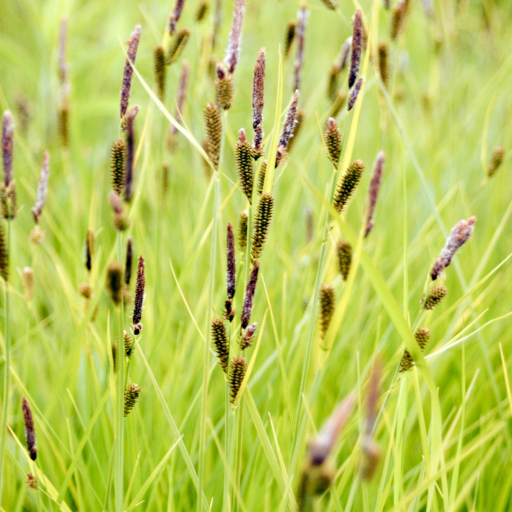
- 🌾 Dark Flower Spikes: In late spring, it produces slender, reddish-brown to nearly black flower spikes that stand upright at the tips of the stems.
🏡 In Your Garden
- 💧 The Rain Garden Anchor: This is a powerhouse for erosion control. Because it loves "wet feet," it is the perfect solution for low spots in your yard where water tends to pool after a storm.
- 🛠️ Low Maintenance Resilience: Unlike delicate ornamental grasses, Tussock Sedge is incredibly hardy. It can survive both temporary droughts and long periods of total immersion under water.
⚠️ Safety & Toxicity
- 🛡️ Non-Toxic Status: This plant is generally considered safe and non-toxic for dogs, cats, and livestock.
- ⚔️ Microscopic Teeth: While not poisonous, the leaf edges are very finely serrated. Always wear gardening gloves when pruning or dividing them to avoid itchy "grass cuts" on your hands.
✨ Fun Fact
The root system of Carex stricta is so incredibly dense and tough that early pioneers and hunters used to use the dried, elevated tussocks as literal stepping stones to navigate deep, mucky swamps without sinking!

Detailed Care Instructions
Here are some steps to help you grow Carex stricta, also known as tussock sedge:
- Choosing the right location: Carex stricta prefers moist to wet conditions, so choose a location that has access to water, either through regular rainfall or irrigation. It also thrives in full to partial sun.
- Soil preparation: Prepare the soil by removing any weeds or grasses in the area. Carex stricta can tolerate a wide range of soil types, but it prefers slightly acidic to neutral soils. If the soil is too sandy or clay-heavy, consider amending it with organic matter, such as compost, to improve drainage and fertility.
- Planting: Carex stricta is typically planted as bare-root plugs or divisions. Dig holes that are slightly larger than the root plugs and place them in the ground. Space the plants about 6 to 12 inches apart to allow room for growth. Gently backfill the holes and press the soil around the roots to remove any air pockets.
- Watering: After planting, water the Carex stricta thoroughly to settle the soil and ensure adequate moisture for the roots. The plants should be kept consistently moist, but not waterlogged, for the first few weeks until they establish themselves. Thereafter, water as needed to maintain moisture levels.
- Fertilization: Generally, Carex stricta does not require additional fertilization. However, if your soil lacks nutrients, a slow-release, balanced fertilizer can be applied in early spring.
- Mulching: Applying a layer of organic mulch around the base of the plants can help retain moisture, suppress weeds, and regulate soil temperature. Maintain a thin layer of mulch, making sure not to suffocate the plants.
- Pruning: Carex stricta does not require regular pruning. However, you can remove any dead or discolored foliage as needed to maintain a neat appearance and improve airflow.
- Propagation: If you wish to propagate more Carex stricta plants, you can do so by dividing the clumps every few years in early spring when new growth starts. Dig up the clump, carefully separate the sections, and replant them in the desired location.
Remember to check the specific care requirements for Carex stricta in your area, as they can vary depending on your climate and growing conditions.

Place in a bright room that is sun drenched almost all day. Or directly in a south-facing window.

To water this particular plant, it is important to consider the specific needs and environment of the plant. One method for determining when to water the plant is to feel the top inch of the soil with your fingers. If the soil is dry, it is time to water.
When watering the Carex Stricta, it is important to water deeply and thoroughly, ensuring that the water reaches the roots of the plant. However, it is also important to not overwater the plant, as this can lead to root rot and other issues.
It is recommended to water the plant in the morning, allowing any excess moisture on the leaves to dry off during the day. Additionally, it is important to avoid getting water on the leaves when watering, as this can encourage the growth of fungi and other plant diseases.
Finally, it is important to consider the drainage of the soil and the pot or container the plant is in. If the soil or container does not allow for proper drainage, it may be necessary to repot the plant or adjust the soil to ensure that excess water can drain away from the roots.
For optimal growth and health, begin fertilizing the plant during the early spring months when new growth begins to emerge. Use a slow-release fertilizer with a balanced N-P-K ratio to avoid burning the plant. Apply the fertilizer at a rate of 1 tablespoon per square foot of soil around the plant, taking care to distribute evenly. Water the plant thoroughly after fertilizing to help the nutrients absorb into the soil. Repeat fertilization every 4-6 weeks throughout the growing season, ceasing fertilization in late summer to avoid encouraging new growth that may not have time to harden off before winter.
When planting the Carex Stricta plant, it is important to use a fertile, well-drained soil that is rich in organic matter. The soil should have a pH level between 5.0 and 7.5. It is recommended to use a soil that is moist but not waterlogged, as the plant prefers a consistently wet environment but cannot tolerate standing water. Additionally, the soil should be able to retain its moisture, as the plant will require regular watering to maintain its health. It is important to avoid using soil that is high in clay as this can lead to drainage issues. Instead, a soil that is sandy or loamy is ideal for the Carex Stricta plant. Adding compost or other organic matter to the soil can help improve its overall quality and provide the nutrients that the plant needs to thrive.
To propagate this plant, you will need to first gather mature plant specimens from established plants. Using a sharp and clean pair of scissors or pruning shears, cut off sections of the stem that have grown new roots or rhizomes. Be sure to cut at least a few inches away from the base of the plant to ensure that it is healthy and can continue to grow.
Once you have gathered the desired plant specimens, you can then plant them in a well-draining potting mix. You can also use a combination of sand and peat moss or cactus soil to ensure that the soil is not too dense which can harm the roots during propagation.
Carefully dig a small hole in the soil and then place the plant specimen in it. Be sure to make the hole deep enough to bury the roots and rhizomes without damaging them. You can also gently press the soil around the plant to provide a stable support structure.
Water the plant thoroughly immediately after planting, and then keep the soil moist but not waterlogged. You can also cover the plants with a plastic bag or plastic wrap to create a mini greenhouse that will help keep them moist and promote root growth.
After a few weeks, you should see new growth emerging from the plant specimens. Keep an eye on the plants and be patient while they grow and establish new roots. Once the roots have taken hold and the plants are growing vigorously, you can move them to a larger pot or transplant them to their final outdoor location.








