Plant Overview
Often called the Weak Sedge, this diminutive plant is a master of survival in some of the world's harshest, driest environments. Unlike its moisture-loving cousins that prefer marshes, Carex supina chooses the rugged life on sun-scorched slopes and sandy steppes. Its name "supina" refers to its tendency to sprawl or lie flat, a clever strategy to avoid the brunt of cold mountain winds.
🔍 How to Identify
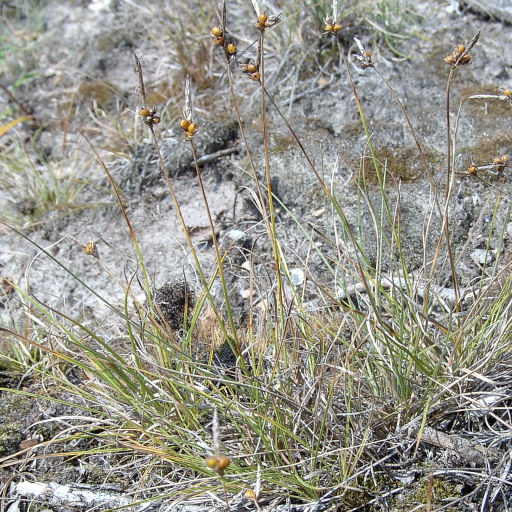
- 🌿 Growth Habit: It forms small, dense tufts that often lean or lie low to the ground. It is much shorter than most ornamental sedges, rarely exceeding a few inches in height.
- 📐 Triangular Stems: True to the "Sedges have edges" rule, the stems are distinctly three-sided and feel sharp when rolled between the fingers.
- 🌾 Seed Heads: Look for tiny, globular clusters of flowers that turn a warm cinnamon-brown as they mature, tucked closely among the yellowish-green leaf blades.
🏡 In Your Garden
- 🪨 The Rock Garden Hero: This is an ideal plant for "difficult" spots where the soil is thin or sandy. It thrives in well-drained, gravelly areas where thirstier plants would quickly wither.
- ☀️ Sun Over Shade: Unlike many woodland sedges, Carex supina craves light. It is a slow grower that hates competition, so it performs best when given its own space away from aggressive, leafy perennials.
⚠️ Safety & Toxicity
- ✅ Non-Toxic: Carex supina is generally considered safe and poses no known threat to humans or animals.
- 🐾 Pet Friendly: This plant is non-poisonous to cats and dogs. Its narrow, grass-like leaves might be tempting for pets to nibble on, which usually results in no harm other than a slight stomach upset from fiber.
✨ Fun Fact
- 🌬️ The Arctic Circle Traveler: This tiny plant is "circumpolar," meaning it can be found encircling the entire globe in the far North. It lives in a continuous ring through Siberia, Northern Europe, Greenland, and Canada!

Detailed Care Instructions
Growing Carex supina, also known as weak creeping sedge or snake sedge, can be relatively straightforward if you follow a few key steps. This sedge is a versatile ground cover that is well-suited for shady areas and can grow in a range of soil types. Here are some essential guidelines to help you successfully grow Carex supina:
1. Selecting the Right Location
- Light Requirements: Carex supina thrives in partial to full shade. It can tolerate some morning sun but prefers shaded areas, making it an excellent choice for under trees or in shaded garden corners.
- Soil: Well-draining, loamy soil is ideal. This sedge can adapt to various soil types, including sandy or clay soils, but it performs best in moist, fertile soil.
2. Planting
- Timing: The best time to plant Carex supina is in the spring or early fall when the weather is cooler and more consistent.
- Spacing: Space plants about 12 to 18 inches apart, depending on the desired density of the ground cover.
- Planting Depth: Dig a hole that is large enough to accommodate the root ball. Place the plant in the hole so that the top of the root ball is level with the soil surface. Fill in with soil and lightly tamp down to remove air pockets.
3. Watering
- Initial Watering: Water thoroughly after planting to help the plant establish its roots.
- Ongoing Watering: Keep the soil consistently moist, especially during dry periods. Carex supina prefers evenly moist conditions but can tolerate short periods of dryness once established.
4. Mulching
- Apply a layer of organic mulch around the plants to help retain soil moisture and reduce weed growth. Keep mulch a few inches away from the base of the plants to prevent rot.
5. Fertilizing
- Carex supina generally doesn't require heavy fertilization. However, you can apply a balanced, slow-release fertilizer in the spring to promote healthy growth.
6. Maintenance
- Pruning: Trim back any dead or damaged foliage as needed. In late winter or early spring, you can trim the plants to a height of a few inches to encourage fresh growth.
- Division: Every few years, you may need to divide the plants to prevent overcrowding and to rejuvenate growth. This can be done in the spring or fall.
7. Pest and Disease Control
- Carex supina is generally resistant to most pests and diseases. However, keep an eye out for signs of trouble and treat accordingly. Ensure good air circulation around the plants to help prevent fungal diseases.
8. Companion Planting
- Carex supina pairs well with other shade-loving plants such as hostas, ferns, and astilbes.
By following these guidelines, you can successfully grow and maintain Carex supina, creating a lush, green ground cover that enhances the beauty and health of your garden's shady areas.

Place in a bright room that is sun drenched almost all day. Or directly in a south-facing window.

Carex supina is a low-maintenance groundcover plant that thrives in a wide range of soil conditions, including moist environments. To ensure proper growth, focus on the following watering guidelines:
1. Consistent Moisture: This plant prefers consistently moist soil. Therefore, it is important to water it regularly, especially during dry periods. Aim to keep the soil consistently damp but not waterlogged.
2. Watering Frequency: During the initial growing period, it is crucial to water the plant more frequently to help establish a strong root system. After establishment, watering can be reduced, but make sure to monitor the soil and water whenever it feels dry to the touch.
3. Watering Depth: Water thoroughly so that moisture reaches the root zone. Deep watering encourages deeper rooting, making the plant more drought-tolerant in the long run.
4. Avoid Overwatering: While the plant likes moist conditions, overwatering can lead to root rot and other issues. Ensure proper drainage in the soil to prevent water from stagnating.
5. Seasonal Adjustments: Be mindful of seasonal changes. In hotter months, you may need to water more frequently, while in cooler, wetter periods, you can reduce the watering frequency.
6. Mulching: Applying mulch around the base of the plant can help retain soil moisture, suppress weeds, and moderate soil temperature, reducing the need for frequent watering.
By adhering to these guidelines, you can help ensure that your Carex supina plant remains healthy and vigorous.
Here are the fertilizing instructions for Carex supina:
- Soil Preparation: Ensure the soil is well-draining and rich in organic matter before planting. You can amend the soil with compost or well-rotted manure to improve its fertility.
- Timing: Fertilize the plant in the early spring and again in mid-summer. This timing supports the plant’s growth phases.
- Type of Fertilizer: Use a balanced, slow-release granular fertilizer with an equal ratio of nitrogen (N), phosphorus (P), and potassium (K), such as a 10-10-10 or 14-14-14 formula.
- Application Rate: Follow the manufacturer's instructions on the fertilizer package. Typically, apply around 1 to 2 pounds of granular fertilizer per 100 square feet of planting area.
- Application Method:
- Granular: Spread the granular fertilizer evenly around the base of the plants, ensuring you do not let the granules touch the foliage directly, as it can cause burns.
- Watering: After applying the granular fertilizer, water the area thoroughly to help the fertilizer penetrate the soil and reach the roots.
- Granular: Spread the granular fertilizer evenly around the base of the plants, ensuring you do not let the granules touch the foliage directly, as it can cause burns.
- Liquid Fertilizer Option: If you prefer, you can use a liquid fertilizer diluted to half the recommended strength. Apply it during your regular watering routine, generally every 4-6 weeks during the growing season.
- Mulching: Apply a layer of organic mulch around the plants to help retain moisture, moderate soil temperature, and add nutrients to the soil as it breaks down.
- Maintenance: Regularly check the plant's growth and adjust the fertilization schedule if needed. If the plant shows signs of nutrient deficiency (such as yellowing leaves), a more frequent or stronger application might be necessary.
By following these instructions, you can ensure that your Carex supina receives the nutrients it needs to thrive.
Carex supina thrives best in well-draining, moderately fertile soil that retains moisture but does not become waterlogged. Here are the key characteristics to look for in the soil:
- Texture: Aim for a loamy soil mix, which is a balanced blend of sand, silt, and clay. This type of soil promotes good drainage while still retaining enough moisture to meet the plant's needs.
- Moisture: The soil should be consistently moist but well-drained. Overly wet or boggy conditions can lead to root rot, while dry soil can stress the plant.
- pH Level: Slightly acidic to neutral soil with a pH range of 6.0 to 7.0 is ideal. This pH range ensures that the necessary nutrients are readily available for the plant.
- Organic Matter: Incorporate organic matter, such as compost or well-rotted manure, to improve soil fertility and structure. This addition helps retain moisture and provides essential nutrients.
- Aeration: Ensure the soil is well-aerated to facilitate root growth and nutrient uptake. You can achieve this by avoiding compacted soils and possibly adding organic material to loosen the structure.
By providing these soil conditions, you create an optimal environment for Carex supina to flourish. Regular monitoring and maintenance of soil moisture and health will help ensure the plant's vigor and longevity.
Carex supina is a type of sedge commonly found in moist environments. Here’s a detailed guide on how to propagate this plant:
Propagation Methods
Division
- Time to Divide: The best time to divide this plant is in the early spring or late fall when it is not actively growing.
- Preparation:
- Choose a healthy, mature plant.
- Water the plant thoroughly a day before you plan to divide it to reduce stress.
- Choose a healthy, mature plant.
- Digging Up the Plant: Carefully dig around the root zone to remove the plant from the soil. Be sure to get as much of the root system as possible.
- Dividing the Plant:
- Gently shake off excess soil from the roots.
- Use a sharp, sterilized knife or spade to divide the root clump into smaller sections. Each section should have several shoots and a portion of the root system.
- Gently shake off excess soil from the roots.
- Replanting Divisions:
- Prepare new planting holes with similar soil conditions to where the parent plant was growing.
- Plant the divisions at the same depth they were previously growing.
- Water thoroughly to settle the soil around the roots.
Seed Propagation
- Prepare new planting holes with similar soil conditions to where the parent plant was growing.
- Seed Collection: Collect seeds from mature plants in late summer or early autumn. Make sure the seeds are fully ripe.
- Seed Preparation: Clean the seeds to remove any chaff or debris.
- Sowing Seeds:
- Use a seed-starting mix or a well-draining soil mix.
- Sow the seeds on the soil surface. These seeds are typically small and may need light to germinate, so do not bury them deeply.
- Lightly press the seeds into the soil to ensure good soil contact.
- Use a seed-starting mix or a well-draining soil mix.
- Germination Conditions:
- Keep the soil consistently moist but not waterlogged.
- Maintain a moderate temperature around 15–20°C (59–68°F). A temperature-controlled environment or a propagation mat can aid in maintaining consistent warmth.
- Seeds may take several weeks to germinate, so be patient.
- Keep the soil consistently moist but not waterlogged.
- Transplanting Seedlings:
- Once seedlings have several true leaves and are large enough to handle, they can be transplanted into individual pots or directly into the landscape.
- Harden off the seedlings by gradually exposing them to outdoor conditions over a period of 7-10 days.
Layering (Less Common)
- Once seedlings have several true leaves and are large enough to handle, they can be transplanted into individual pots or directly into the landscape.
- Preparation: Select a low-growing stem that can be easily bent down to the ground.
- Ground Contact: Dig a small trench where the stem will touch the ground.
- Bury the Stem:
- Wound the stem slightly (optional, to encourage rooting).
- Bury a portion of the stem in the trench, leaving the tip exposed.
- Secure the buried portion with a small stone or a U-shaped pin to keep it in contact with the soil.
- Wound the stem slightly (optional, to encourage rooting).
- Care and Separation:
- Keep the buried portion consistently moist.
- After several weeks or months, roots should develop at the buried section.
- Once established, the new plant can be cut away from the parent and transplanted to its new location.
Tips for Successful Propagation
- Keep the buried portion consistently moist.
- Soil: Ensure the soil is well-draining and rich in organic matter.
- Watering: Keep the soil consistently moist, especially during the establishment phase.
- Location: Choose a location that mimics the natural habitat of the plant—partial shade and moist conditions are ideal.
- Monitor for Pests: Keep an eye out for pests and diseases, and manage them promptly.
By following these steps, you can successfully propagate Carex supina and enjoy its growth in your landscape.








