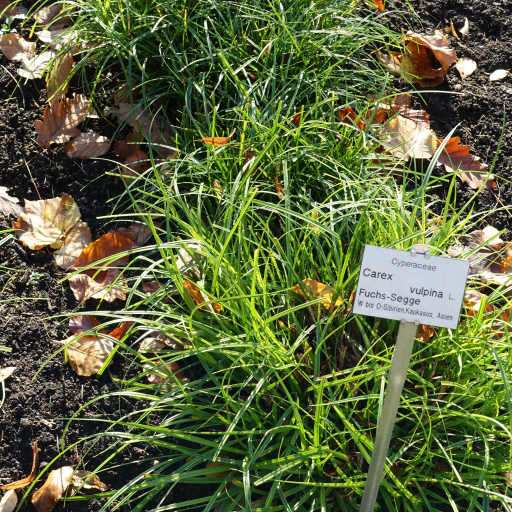
Plant Overview
Known as the True Fox-sedge, this architectural beauty is a master of the marshlands. It gets its name from its distinctive, bushy flower spikes that resemble a fox's tail swaying in the breeze. While it might look like a common grass at first glance, it belongs to the Cyperaceae family, famous for the saying: "Sedges have edges."
🔍 How to Identify
- 🦊 The "Fox Tail": Its most striking feature is the dense, compound flower head that turns a deep, rusty brown as it matures, mimicking a fox’s brush.
- 📐 Triangular Stems: If you roll the stem between your fingers, you’ll feel three distinct flat sides. These stems are thick, sturdy, and slightly "winged."
- 🍃 Sharply Pointed Leaves: The leaves are long, channeled, and can grow up to 10mm wide, often forming dense, lush green clumps (tussocks).
🏡 In Your Garden
- 💧 The Thirst Factor: This plant is a "wet-feet" specialist. It is the perfect choice for the margins of a pond, a bog garden, or a "rain garden" where the soil stays consistently damp or even waterlogged.
- 🌍 Soil Architect: It thrives in heavy clay soils where other plants might struggle to breathe. Its deep root system helps stabilize soil and prevents erosion along banks and ditches.
⚠️ Safety & Toxicity
- ✅ Status: Generally non-toxic and safe for curious pets and children.
- ✂️ Sharp Edges: While not poisonous, the leaf margins can be quite sharp. It is recommended to wear gardening gloves when pruning or dividing the plant to avoid "paper-cut" style irritations on your hands.
✨ Fun Fact
The specific epithet vulpina comes from the Latin word vulpes, meaning "fox." In historical botany, it was often used as a bio-indicator; finding it in the wild usually signals the presence of a healthy, ancient wetland ecosystem that has remained undisturbed for a long time.

Detailed Care Instructions
To grow Carex Vulpina, also known as Fox Sedge, follow these steps:
- Choose a suitable planting location: Fox Sedge prefers moist to wet soil conditions, so select an area with good drainage. It can tolerate full sun to partial shade.
- Prepare the planting area: Clear away any weeds or debris from the planting area. Loosen the soil to a depth of 6-8 inches, and mix in some organic matter like compost to improve soil fertility and moisture retention.
- Planting: Dig a hole that is large enough to accommodate the root ball of the plant. Place the Carex Vulpina plant in the hole and backfill with soil, ensuring that the crown of the plant is level with or slightly above the surrounding soil. Gently firm the soil around the plant.
- Watering: Immediately after planting, give the plant a thorough watering to settle the soil and promote root establishment. In the following weeks, keep the soil consistently moist but not soggy, especially during dry periods.
- Mulching: Apply a layer of organic mulch around the base of the plant to retain soil moisture and suppress weed growth. Make sure to leave some space around the stem of the plant to prevent rot.
- Maintenance: Carex Vulpina requires minimal maintenance once established. Regularly check the moisture levels of the soil and water as needed to keep it consistently moist. Trim back any dead or damaged foliage in early spring to encourage new growth.
- Propagation: If you want to propagate more Carex Vulpina plants, you can do so by divided clumps in early spring. Dig up the plant carefully, separate the clumps into smaller sections, and replant them in suitable locations.
Remember to consider your local climate and growing conditions to ensure the best results when growing Carex Vulpina.

Place in a bright room that is sun drenched almost all day. Or directly in a south-facing window.

Carex Vulpina is a type of plant that requires regular watering in order to thrive. When watering this plant, it is important to make sure that the soil is evenly moist, but not waterlogged.
To water Carex Vulpina, start by checking the soil with your finger. If the top inch of soil is dry to the touch, then it is time to water. When watering, use a watering can or hose with a gentle spray nozzle to avoid compacting the soil or damaging the plant.
Water the soil around the plant, rather than the leaves or stems, to ensure that the roots receive the moisture they need. Water until the soil is moist throughout, but be careful not to overwater, as this can lead to root rot and other problems.
During periods of hot, dry weather, Carex Vulpina may require more frequent watering. Keep an eye on the soil moisture and adjust your watering schedule as needed to ensure that the plant remains healthy and happy.
To fertilize this plant, apply a slow-release fertilizer in the early spring or late fall. Use a balanced 10-10-10 or 12-12-12 fertilizer and apply according to package instructions, typically 1 cup for every 10 square feet of soil area. Water the plant thoroughly after applying the fertilizer to help it absorb the nutrients. Avoid over-fertilizing as it can harm the plant and the environment.
The ideal soil for Carex Vulpina plant should be well-draining and have a pH range of 5.5 to 7.0. It should be rich in organic matter and have good moisture retention capacity. The soil texture should be loamy or sandy loam, as these types of soil provide good aeration and are conducive for root growth. It is also important to avoid heavy or clay soils, as they tend to hold too much water, leading to root rot. Additionally, the soil should be free of weeds, diseases, and pests, and should be properly fertilized before planting. Carex Vulpina requires a fairly acidic soil, so the use of a soil acidifier, such as sulfur or peat moss, may be necessary to adjust the pH level.
To propagate this plant, first take a sharp, sterilized knife and cut off a healthy and mature section of the stem. Remove any excess leaves from the bottom of the stem, leaving only a few at the top. Dip the cut end of the stem in rooting hormone powder. Plant the stem in a pot filled with moist soil or in a well-prepared garden bed. Keep the soil moist, but not wet, and provide the plant with bright, indirect light. The new plant should begin to root and grow within a few weeks.








