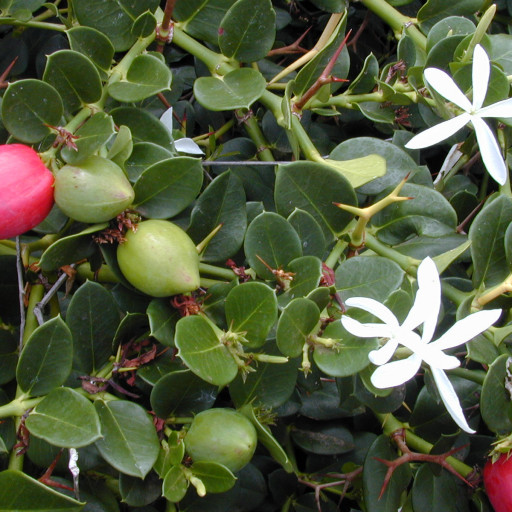
Plant Overview
Often called the Natal Plum or the "Large Num-Num" in its native South Africa, this resilient evergreen is a favorite for coastal gardeners. It is famous for its striking contrast: delicate, jasmine-scented white flowers that bloom alongside formidable, fork-shaped thorns. Whether used as a protective "living fence" or a decorative shrub, it brings a touch of the subtropical seaside to any landscape.
🔍 How to Identify
- 🍃 The Foliage: Thick, leathery, oval-shaped leaves that are a deep, glossy emerald green year-round.
- 🌸 The Blooms: Waxy, star-shaped white flowers that emit a heavy, sweet fragrance, particularly potent at night to attract pollinators.
- 🔱 The Spines: One of its most distinctive features is its "Y-forked" thorns; these bifurcated spines are sharp and sturdy, growing along the stems.
- 🍎 The Fruit: Large, plum-like berries that turn from a bright green to a deep, vibrant crimson red when fully ripe.
🏡 In Your Garden
- 🌊 Coastal Warrior: This plant is incredibly salt-tolerant and thrives in "sea spray" zones where other plants might wither, making it a hero for beachfront properties.
- ✂️ The Perfect Hedge: Because it responds beautifully to pruning and possesses those intimidating thorns, it is widely used as a "security hedge" that is as beautiful as it is impassable.
- ☀️ Drought Resilience: While it loves regular watering to produce fruit, its thick leaves help it store moisture, allowing it to survive dry spells once its root system is established.
⚠️ Safety & Toxicity
- 🚫 Mixed Safety: While the ripe fruit is edible and delicious, the rest of the plant (stems, leaves, and unripe berries) contains a milky white latex that is toxic.
- 🐾 Pet Warning: Ingestion of the foliage can cause digestive upset in dogs and cats. Additionally, the sharp thorns can cause physical injury to curious pets or small children.
- 🍓 The Ripe Rule: Only consume the fruit when it is soft and dark red. When cut, a ripe fruit should have a sweet, cranberry-like flavor, but beware of the sticky (though harmless) latex inside.
✨ Fun Fact
In its native South Africa, the fruit is traditionally used to make a ruby-red jam that is prized for its high Vitamin C content and tart, refreshing flavor—often described as a cross between a strawberry and a cranberry!

Detailed Care Instructions
| Color | White |
| Soil Ph | 6.1–7.5 |
| Humidity | Normal |
| Lighting | Full Sun |
| Soil Type | Sandy |
| Bloom Time | Year-Round |
| Difficulty | Medium |
| Plant Type | Shrub |
| Mature Size | 2 To 8 Feet, But Can Grow To 20 Feet Depending On Variety |
| Native Area | South Africa |
| Temperature | 18°C - 25°C |
| Sun Exposure | Full To Partial Sun |
| Hardiness Zones | 9–11 |
To grow Carissa macrocarpa, also known as Natal Plum, you can follow these steps:
- Choose the right location: Natal Plum prefers full sun to partial shade. Select a spot in your garden that receives at least 6 hours of direct sunlight per day.
- Soil preparation: Natal Plum thrives in well-draining soil. Prepare the planting area by loosening the soil and adding organic matter like compost or well-rotted manure. This will improve drainage and provide nutrients to the plant.
- Planting: Dig a hole slightly larger than the size of the plant's root ball. Place the plant in the hole, making sure the soil line of the plant matches the soil line of the garden. Backfill the hole with soil, gently firming it around the roots.
- Watering: After planting, water the Natal Plum deeply to settle the soil. Keep the soil evenly moist during the first few weeks until the plant establishes its root system. Afterward, water it regularly but avoid overwatering, which can lead to root rot.
- Mulching: Apply a layer of organic mulch around the base of the plant, such as wood chips or shredded bark. This helps retain moisture, suppresses weeds, and protects the roots from extreme temperatures.
- Fertilization: Feed the Natal Plum with a balanced, slow-release fertilizer in early spring. Follow the instructions on the packaging for the appropriate amount to use.
- Pruning: Natal Plum can be lightly pruned to shape it or remove any damaged or dead branches. Prune after the flowering period to avoid cutting off potential blooms.
- Pests and diseases: Natal Plum is generally resistant to pests and diseases. However, keep an eye out for common garden pests like aphids, mealybugs, or scales. Treat any infestations promptly with appropriate insecticides or homemade remedies.
- Propagation: Carissa macrocarpa can be propagated from seeds, stem cuttings, or root cuttings. Seeds may take longer to germinate, while stem or root cuttings are a quicker method to grow new plants.
By following these steps, you should be able to successfully grow Carissa macrocarpa in your garden. Remember to provide adequate sunlight, water, and care to ensure a healthy and thriving plant.

Place in a bright room that is sun drenched almost all day. Or directly in a south-facing window.

To properly water this plant, one should ensure that the soil is first moistened before watering. This can be done by checking the top inch of soil for dryness. If the soil feels dry, slowly pour water onto the soil around the base of the plant until it starts to trickle out of the drainage holes. Avoid getting water on the leaves or flowers as this can lead to fungal growth and disease. It's important to let the soil dry out slightly between watering to prevent root rot. It's also recommended to use room temperature or lukewarm water when watering, as cold water can shock the plant's roots.
The best time to fertilize this plant is in the spring when it begins to produce new growth. Use a balanced fertilizer with equal parts nitrogen, phosphorus, and potassium. Be careful not to over-fertilize as this plant is sensitive to excessive amounts of nutrients. Water the plant thoroughly before and after applying the fertilizer to avoid burning the roots. Repeat the process every 4-6 weeks during the growing season. Remember to always follow the instructions on the fertilizer label.
The ideal soil for Carissa Macrocarpa is well-drained, loamy soil that is slightly acidic with a pH level between 5.5 and 6.5. It should be rich in organic matter and nutrients, and should have good water retention capacity, while still allowing excess water to drain away. The soil should also be free of any contaminants, such as pesticides or herbicides, and should not be compacted. A good option for soil mix would be a blend of peat moss, sand, perlite, and compost, which would ensure good drainage, aeration, and nutrient retention, while still being relatively lightweight.
To propagate this plant, you will need to select a healthy stem or shoot that has several leaves and nodes. Use a clean, sharp knife or pruning shears to take a cutting that is at least six inches long. Remove any leaves from the bottom two inches of the stem. Dip the cut end of the stem into rooting hormone powder, tapping off any excess, and then place it into a pot filled with moist soil or a mixture of perlite and peat moss. Cover the pot with a plastic bag or wrap to create a greenhouse-like environment. Keep the soil evenly moist and place the pot in bright, indirect sunlight. Within a few weeks, the cutting should begin to form roots and new growth. Once the new plant is established, it can be transplanted into a larger pot or planted outside in a well-drained area with full sun or partial shade.
Common pests of the natal-plum include Scale insect, mealybugs, aphids. Make a habit of checking your natal-plum frequently for pests so that any infestations can be caught and managed early.








