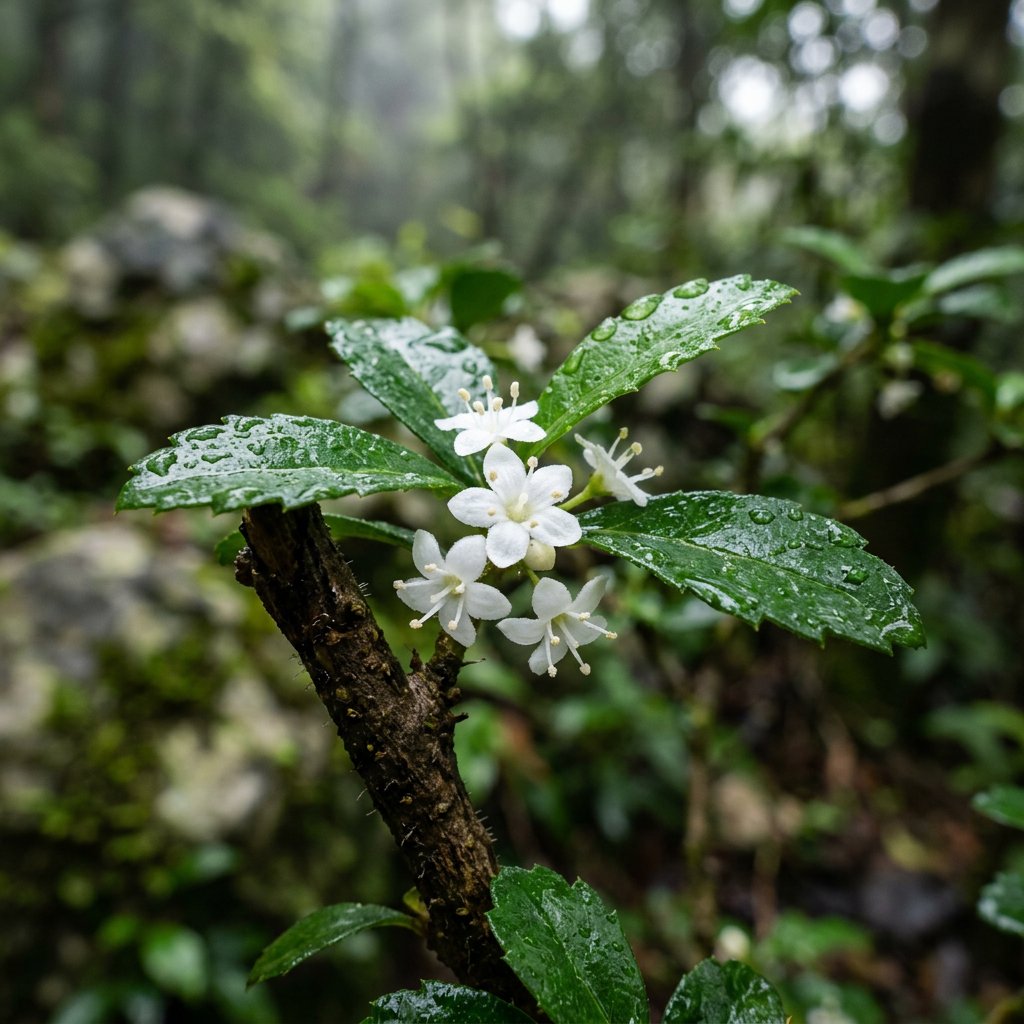
Plant Overview
Often called the Fukien Tea Tree, this elegant evergreen is a crown jewel in the world of bonsai. Originally hailing from the Fukien province of China and parts of Southeast Asia, it carries an air of ancient tranquility. In its natural habitat, it grows as a dense, sprawling shrub, but in our homes, it is celebrated as a "living sculpture" that can bloom all year round.
🔍 How to Identify
- 🍃 Leaf Texture: The leaves are small, dark green, and leathery. They have a unique "obovate" shape, meaning they are wider at the tip than at the base, often featuring three to five small lobes at the apex.
- ⚪ Bristly Dots: If you look closely at the top of the leaves, you will see tiny white dots. These aren't pests; they are small, stiff hairs that give the foliage a slightly rough, sandpaper-like feel.
- 🌸 Starry Flowers: It produces dainty, five-petaled white flowers that look like tiny stars nestled against the dark foliage. These are often followed by small, round berries that turn from green to a vibrant red.
🏡 In Your Garden
- 🌡️ The Tropical Temperament: This plant is a true tropical soul and is very sensitive to temperature swings. It thrives in warmth and will "protest" by dropping its leaves if it is exposed to cold drafts or if the temperature dips below 50°F (10°C).
- 💧 Humidity is Key: Unlike many hardy houseplants, the Fukien Tea Tree hates dry air. It prefers a humid microclimate; placing it on a pebble tray or misting it regularly helps prevent the leaves from becoming brittle and falling off.
- 🪴 Watering Nuance: It is known for being a bit "dramatic" regarding water. It has a high transpiration rate, meaning it breathes out moisture quickly. If the soil dries out completely, the plant can wilt rapidly, but it also dislikes sitting in stagnant water which can lead to root rot.
⚠️ Safety & Toxicity
- 🐾 Mildly Toxic: The Carmona retusa is generally considered low-risk, but it is not entirely "pet-safe."
- 🍒 Berry Caution: The small red berries can be very attractive to curious cats, dogs, or small children. Ingesting the berries or foliage may cause mild gastrointestinal upset, including drooling or vomiting. It is best kept on a high shelf out of reach.
✨ Fun Fact
In the Philippines, the leaves of this plant were historically used as a substitute for tea and for medicinal purposes to treat stomach coughs and inflammation, which is how it earned its "Tea Tree" nickname!

Detailed Care Instructions
To successfully grow the Carmona Retusa plant, also known as the Fukien tea tree, follow these guidelines:
- Lighting: Place the plant in a location with bright, indirect sunlight. Avoid direct sunlight as it can scorch the leaves.
- Temperature: The plant prefers warm temperatures between 65-80°F (18-27°C). Protect it from cold drafts and extreme temperatures.
- Watering: Water the plant when the soil surface feels slightly dry. Avoid overwatering, as it can cause root rot. Ensure proper drainage by using a well-draining potting mix.
- Humidity: The Carmona Retusa plant thrives in humid environments. Increase humidity by placing the pot on a tray filled with water or using a humidifier.
- Fertilizer: Feed the plant with a balanced liquid fertilizer every two weeks during the growing season (spring and summer). Reduce feeding during winter.
- Pruning: Regularly trim and shape the plant to encourage bushier growth. Prune any dead, damaged, or excessively long branches.
- Repotting: Repot the Carmona Retusa when it outgrows its current container, usually every 2-3 years. Use a slightly larger pot with fresh potting mix.
- Pest control: Watch out for common houseplant pests like aphids, mealybugs, or spider mites. If necessary, treat the infestation promptly using appropriate insecticides or natural remedies.
- Resting period: The Carmona Retusa may enter a dormant phase during winter. During this period, reduce watering and fertilization but ensure the plant receives sufficient indirect light.
- Observation and care: Regularly inspect the plant for any signs of stress, disease, or pests. Adjust your care routine accordingly to maintain its health and vitality.
By providing proper lighting, temperature, watering, humidity, and care, you can successfully grow and maintain a Carmona Retusa plant.

Place in a window with dappled sun or a spot in the middle of a room. Or directly in a window facing west or east.

Carmona Retusa plant prefers to be watered with distilled or rainwater as it is sensitive to chemicals that may be found in tap water. The soil should be allowed to dry slightly between waterings, but not to the point of becoming completely dry. Watering should be done at the base of the plant or around the edge of the pot to prevent water from accumulating in the center of the plant. Overwatering can cause root rot and other problems, so it is important to be careful not to overdo it. In general, Carmona Retusa plants need moderate watering and can tolerate some drought, but should not be left dry for extended periods of time.
To fertilize this plant, use a balanced, water-soluble fertilizer every two weeks during the growing season from spring to fall. Dilute the fertilizer according to the package instructions and use it to water the plant. Avoid over-fertilizing, as it can harm the plant. During the winter months, fertilize the plant sparingly or not at all, as it will not be actively growing. Always follow the instructions on the fertilizer package and keep the soil moist but not waterlogged.
Carmona Retusa is a type of plant that requires well-draining soil to thrive. The ideal soil for this plant should be rich in nutrients while allowing excess moisture to drain away easily. It is essential to avoid using heavy soil that tends to retain water as this may cause root rot.
The recommended soil type for Carmona Retusa is a peat-based soil mix that is designed for bonsai plants. This soil mix is typically composed of peat moss, perlite, and granite grit, which helps to improve drainage and provide the plant with adequate aeration.
To ensure optimal growth, it is necessary to repot the plant every two years using fresh soil. During repotting, it is important to carefully remove the old soil and prune the roots to prevent potential diseases and encourage new growth. After repotting, it is vital to water the plant thoroughly to help it establish itself in the new soil.
Carmona Retusa plant can be propagated through stem cuttings. Firstly, choose a healthy stem from the plant that is at least 4-6 inches long. Then, make a clean cut at a 45-degree angle on the stem, just below a node. Remove any leaves that are within 2 inches of the bottom of the stem. The cuttings should be of a green and healthy appearance, not brown, wilted or damaged.
Next, fill a small container or pot with moist potting soil and make a hole in the soil. Dip the cut end of the stem into rooting hormone powder and then insert it into the hole. Gently press the soil around the cutting to secure it in place. Mist the cutting lightly with water to keep the soil moist.
Place the container in a bright spot that is protected from direct sunlight. Avoid placing it in direct sunlight until it is well established. Mist the cutting every few days to keep the soil moist.
After 2-3 weeks, the cutting should start to develop roots. To check if roots have developed, gently tug on the stem. If it resists being pulled out, then it has rooted. Once the roots have formed and the cutting is strongly rooted, you can transplant it into a larger pot or directly into the garden.
Common pests of the scorpionbush include Scale insect, mealybugs, spider mites, whiteflies. Make a habit of checking your scorpionbush frequently for pests so that any infestations can be caught and managed early.








