Plant Overview
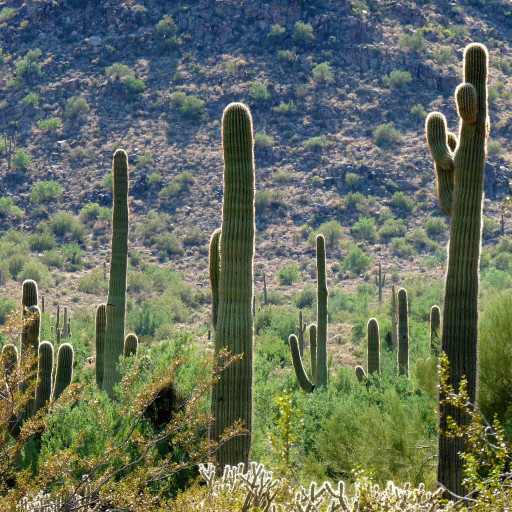
The Saguaro (pronounced "suh-war-oh") is the undisputed monarch of the Sonoran Desert and an iconic silhouette of the American West. Often called the "Sentinel of the Desert," this massive columnar cactus is steeped in cultural history, particularly for the Tohono O'odham people who consider them to be a form of humanity. While they can reach the height of a four-story building, they are famously slow-growers, spending their first decade barely larger than a thumb.
🔍 How to Identify
- 🌵 Columnar Trunk: A thick, waxy green stem with deep vertical "pleats" or ribs that allow the plant to expand like an accordion when it drinks water.
- ⚔️ Spine Clusters: Sharp, grey-to-brown spines line the edges of the ribs, providing shade for the plant's skin and protection from thirsty animals.
- 💪 The Arms: Massive branches that curve upward. These legendary "arms" usually don't even begin to sprout until the cactus is between 50 and 75 years old.
- 🌸 Crown Flowers: In late spring, the tops of the stems produce waxy, creamy-white flowers with yellow centers—the official state flower of Arizona.
🏡 In Your Garden
- ☀️ Sun Worshiper: The Saguaro requires intense, direct sunlight to thrive. In indoor or shaded settings, they will "stretch" (etiolate), becoming weak and pale. If you are growing a young one, it mimics its natural "nurse tree" environment and can handle a tiny bit of afternoon shade, but mature plants want full exposure.
- 🏜️ Drainage is Destiny: These giants have a wide, shallow root system designed to catch rain quickly, but they hate "wet feet." They must be planted in a gritty, desert-specific mix. Because of their weight and shallow roots, they are notoriously difficult to transplant once they reach a certain size, as they can easily topple if not braced correctly.
⚠️ Safety & Toxicity
- 🌵 Status: Physically hazardous but chemically safe.
- 🩹 Details: The Saguaro is not toxic to humans, dogs, or cats if nibbled. However, its spines are incredibly sharp and can cause deep puncture wounds or skin infections. Always keep these giants far away from walkways, play areas, or anywhere a curious pet might stumble.
✨ Fun Fact
The Saguaro is a high-rise apartment for desert wildlife! Gila Woodpeckers and Gilded Flickers drill holes into the fleshy stem to create nesting cavities. The cactus protects itself by secreting a resin that hardens into a woody, waterproof "boot" inside the hole, which remains long after the cactus has died.

Detailed Care Instructions
| Color | Green With White Flowers |
| Soil Ph | 7 |
| Humidity | Dry |
| Lighting | Full Sun |
| Toxicity | Non-Toxic |
| Soil Type | Well-Draining |
| Bloom Time | First Bloom At Around 35-40 Years Of Age |
| Difficulty | Easy |
| Plant Type | Cacti |
| Mature Size | 40-50 Feet |
| Native Area | Sonoran Desert, Usa |
| Temperature | 20°C - 35°C |
| Sun Exposure | Full Sun |
| Hardiness Zones | 9 |
To grow Carnegiea gigantea, also known as the saguaro cactus or giant cactus, you can follow the steps below:
- Climate: Saguaro cacti are native to the Sonoran Desert, so they thrive in hot, arid climates. They require full sun exposure and a minimal amount of rainfall.
- Seeds and Propagation: Obtain saguaro cactus seeds from a reputable source. The seeds are typically collected from mature saguaro cacti during the fruiting season. You can also propagate from cuttings, although it is less commonly done due to the slow growth of the plant.
- Soil: Use a well-draining soil mix specifically formulated for cacti and succulents. Avoid heavy clay soils that retain too much moisture, as this can lead to rotting of the roots.
- Containers: Start by planting the seeds or cuttings in small containers. Choose a pot with drainage holes to prevent waterlogging.
- Watering: Initially, water the seeds or cuttings lightly to keep the soil slightly moist. Once they establish roots and start growing, reduce watering to mimic the desert conditions. Allow the soil to dry out between waterings, and be cautious not to overwater as it can cause root rot.
- Transplanting: As the plant grows, it will eventually outgrow its container. Transplant it into a larger pot or, if you live in a suitable climate, you can move it outdoors. Ensure that the new pot has enough drainage holes.
- Temperature: Saguaro cacti prefer hot daytime temperatures, around 80-90°F (27-32°C). They can tolerate some cooler temperatures, but it's essential to protect them from freezing temperatures, which can be fatal.
- Fertilizer: Feed the saguaro cactus with a slow-release, low-nitrogen cactus fertilizer once or twice a year during its active growing season. Follow the fertilizer manufacturer's instructions for application rates.
- Pruning: Saguaro cacti generally do not require pruning unless a branch becomes damaged or diseased. In such cases, carefully remove the affected area using sterile pruning tools.
- Patience: It's important to note that saguaro cacti grow very slowly. It can take several years for them to reach even a foot in height. Exercise patience and enjoy the process of watching your plant gradually develop.
Remember, Carnegiea gigantea is a protected species in its natural habitat, so ensure that you grow it responsibly and legally.

Place in a bright room that is sun drenched almost all day. Or directly in a south-facing window.

This plant should be watered deeply once every two to three weeks during the growing season. When watering, it is important to soak the soil evenly around the base of the plant and avoid getting water on the leaves. It is recommended to use a drip irrigation system or a hose with a gentle spray attachment to water this plant. During the winter months, this plant requires very little water and should only be watered sparingly, if at all. It is important to make sure the soil is completely dry before watering again. Overwatering can lead to root rot and other issues, so it is important to be cautious and not water too frequently.
The recommended fertilizing instructions for this plant are to apply a slow-release fertilizer in early spring and again in mid-summer. Use a fertilizer specifically formulated for cacti and succulents, and follow the manufacturer's instructions for application rates. Avoid fertilizing in late fall and winter. Over-fertilization can cause damage to the plant, so apply sparingly and ensure the soil is well-draining and dry before fertilizing.
Carnegiea Gigantea is a desert plant that requires a well-draining soil that is rich in minerals. The soil should have a sandy texture and a pH level that ranges from slightly acidic to neutral. It should be able to retain some moisture without becoming waterlogged, as this can cause root rot and other problems. Organic matter such as compost and mulch can be added to the soil to increase its fertility and water retention capabilities. It is important to avoid using heavy, clay-based soils or soils that have a high salt content, as these can be detrimental to the health of the plant.
The process of propagating this plant involves collecting seeds from the mature plant. The seeds are typically found within the fruit of the plant, which looks like a greenish-yellow pod. Once the fruit has dried and turned brown, it can be opened to reveal the seeds inside.
To stratify the seeds, they should be placed in a damp paper towel and stored in a cool, dark location for several weeks. This process simulates the winter season and allows the seeds to prepare for germination.
After stratification, the seeds can be planted in a well-draining soil mix and kept moist but not waterlogged. They should be kept in a warm location with indirect sunlight until they germinate.
Once the seedlings have grown a few true leaves, they can be transplanted into their own pots and given more direct sunlight. As they mature, they can be gradually acclimated to outdoor conditions and eventually planted in their permanent location.
Common pests of the saguaro cactus include Scale insect, mealybugs, spider mites. Make a habit of checking your saguaro cactus frequently for pests so that any infestations can be caught and managed early.








