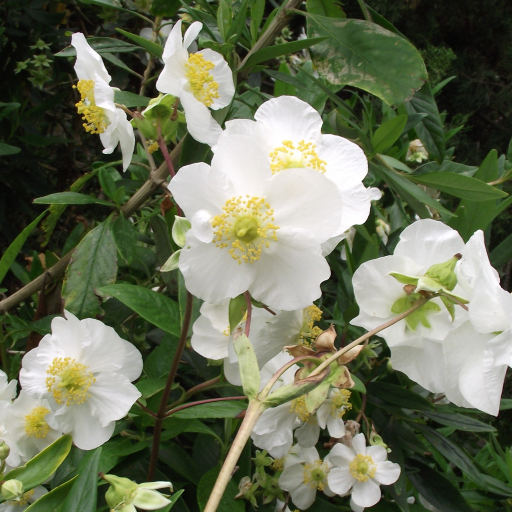
Plant Overview
Commonly known as the Bush Anemone, this stunning evergreen shrub is a true "living relic" of California’s botanical history. Found naturally in only a tiny pocket of the Sierra Nevada foothills, it has become a worldwide garden favorite for its "Fried Egg" flowers and elegant, leathery foliage. It carries an air of prehistoric resilience, having survived in a very restricted range for thousands of years.
🔍 How to Identify
- 🌼 The Flowers: Large, showy white blossoms with five to seven overlapping petals. The center is a prominent, dense cluster of bright golden-yellow stamens, making them look like miniature poached eggs.
- 🍃 The Foliage: Long, lance-shaped leaves that are a deep, glossy green on top and a soft, velvety grayish-white underneath. They are thick and leathery to the touch.
- 🪵 The Bark: As the plant matures, the older stems develop a distinctive papery, peeling bark that adds subtle architectural interest during the winter months.
🏡 In Your Garden
- 💧 Drainage is Non-Negotiable: Because it evolved in the rocky foothills, this plant will quickly succumb to root rot if sitting in heavy, soggy soil. It prefers a "neglectful" approach to watering once established—overwatering is its primary enemy.
- ✂️ Pruning Strategy: The Bush Anemone can become "leggy" or thin over time. To keep it lush and mounded, it’s best to tip-prune the branches immediately after the summer flowering season ends.
- 🌱 Stable Roots: It possesses a somewhat sensitive root system that dislikes being disturbed. Choose its "forever home" carefully, as it may pout or fail if transplanted once it has matured.
⚠️ Safety & Toxicity
- ✅ Safe Status: Carpenteria californica is generally considered non-toxic to humans, dogs, and cats.
- 🌿 Skin Sensitivity: While not poisonous, some gardeners with sensitive skin might experience mild irritation from the fine hairs on the underside of the leaves or the sap during heavy pruning. Wearing gloves is always a smart practice.
✨ Fun Fact
The Bush Anemone is one of the rarest shrubs in the world in its natural habitat. It is endemic to only a small area between the Kings and San Joaquin Rivers in California—a total range of just a few square miles! Even though it is rare in the wild, it thrives in gardens from London to Seattle.

Detailed Care Instructions
| Humidity | Normal |
| Lighting | Full Sun |
| Difficulty | Medium |
| Hibernation | Cold Period |
| Hardiness Zones | 8 - 9 |
To grow Carpenteria Californica, also known as bush anemone, follow these steps:
- Choose the right location: Carpenteria Californica prefers full sun to light shade. It can tolerate some shade, but it will bloom less profusely. Ensure the soil is well-draining.
- Soil preparation: Amend the soil by adding organic matter like compost to improve its fertility and drainage.
- Planting: Dig a hole that is slightly wider and deeper than the plant's root ball. Place the plant in the hole, ensuring that the top of the root ball is level with the ground. Backfill the hole with soil, firming it gently around the plant.
- Watering: Water the newly planted Carpenteria Californica deeply and regularly to help establish its roots. Once established, it is quite drought-tolerant but still benefits from regular watering during dry spells.
- Mulching: Apply a layer of organic mulch around the base of the plant to help retain moisture, suppress weed growth, and regulate soil temperature.
- Pruning: Carpenteria Californica requires minimal pruning, usually limited to removing dead or damaged branches. Prune in late winter or early spring before new growth appears.
- Fertilizing: Feed the plant with a balanced organic fertilizer in the spring and early summer to promote healthy growth and abundant flowering. Follow the package instructions for application rates.
- Propagation: Carpenteria Californica can be propagated through stem cuttings. Take 4-6 inch long cuttings from the current year's growth in late spring or early summer. Remove the lower leaves, dip the cut end in rooting hormone, and plant the cutting in a well-draining soil mixture. Provide bottom heat and mist regularly until roots develop.
- Maintenance: Regularly monitor the plant for pests or diseases. Remove any damaged or diseased foliage promptly. Monitor watering and adjust as needed during different seasons or weather conditions.
Overall, Carpenteria Californica is a relatively low-maintenance plant once it is established. It is known for its lovely white flowers and glossy green leaves, making it a charming addition to gardens and landscapes.

Place in a bright room that is sun drenched almost all day. Or directly in a south-facing window.

To water this plant, first check the moisture of the soil by sticking your finger about one inch deep into the soil. If the soil feels dry, it is time to water. Ensure that the water is applied directly to the soil around the plant's root ball and not on its foliage. Use a watering can or a gentle stream from a hose to avoid waterlogging the soil. Water only until the soil is moist but not saturated, and allow it to drain properly. Watering once or twice a week depending on the climate and soil condition is sufficient. Avoid overwatering as it can lead to root rot.
To fertilize this plant, use a balanced fertilizer with equal amounts of nitrogen, phosphorus, and potassium. Apply the fertilizer in late winter or early spring, just before new growth begins. Use a slow-release fertilizer to avoid damaging the plant with too much fertilizer at once. Water the plant thoroughly before and after fertilizing, and avoid getting fertilizer on the leaves or stems. Repeat the fertilization process once or twice throughout the growing season.
Carpenteria Californica thrives best in well-drained, slightly acidic soil with a pH range of 5.5 to 6.5. The soil should be a mixture of sand, loam, and organic matter, such as compost or peat moss. This plant prefers soil that is moist but not waterlogged, and it requires good drainage to prevent root rot. The addition of perlite or vermiculite can help improve the soil's drainage and aeration. While this plant can tolerate some dryness, it is important to ensure that it is adequately watered during hot, dry periods. Avoid using heavy or clay soils, as they can choke the roots and inhibit the plant's growth.
To propagate this plant, take semi-hardwood cuttings in late spring or early summer. Remove the leaves from the bottom half of the stem, dip the cut end in rooting hormone, and plant the cutting in a pot filled with a well-draining potting mix. Keep the soil moist and place the pot in a bright, indirect location. In a few weeks, the cutting should develop roots. Once roots have formed, the new plant can be transplanted into a larger pot or directly into the ground.








