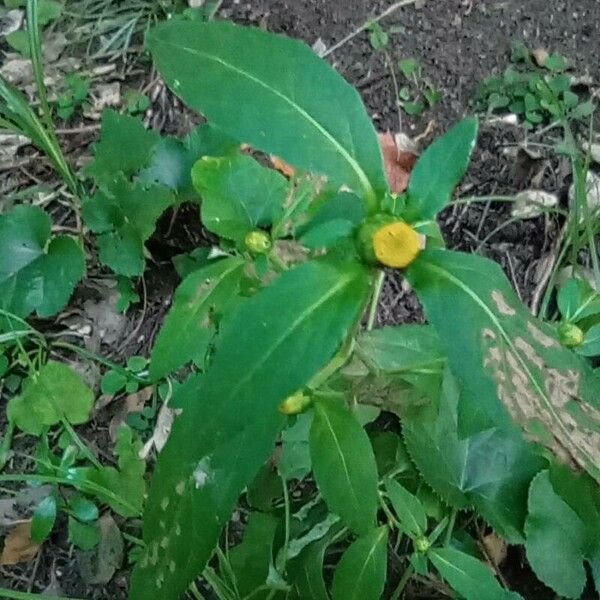
Plant Overview
Known affectionately in East Asia as the "Spreading Carpesium," Carpesium divaricatum is a wild beauty often found gracing the edges of forests and shaded hillsides. While it lacks the flashy petals of a rose, its architectural structure and golden, button-like flower heads have earned it a place in traditional herbal lore. It is a plant that tells a story of resilience, thriving in the dappled light where other flowers might struggle.
🔍 How to Identify
- 🌼 The Flowers: Look for small, yellowish-green "buttons" or disc-shaped heads. They lack long outer petals (ray florets), giving them a minimalist, spherical appearance.
- 🌿 Branching Habit: The species name divaricatum refers to its "divaricate" stems, which spread out at wide, almost horizontal angles, creating a zig-zag or bushy silhouette.
- 🍃 Leaf Texture: The leaves are generally ovate or lance-shaped, featuring a soft, slightly hairy texture and wavy or lightly toothed edges.
- 📐 Nodding Heads: As the flower heads mature, they often "nod" or droop downward, a classic characteristic of the Carpesium genus.
🏡 In Your Garden
- ⛅ The Edge-Dweller: In a garden setting, this plant mimics its natural habitat—it loves "in-between" spaces. It thrives in partial shade or filtered sunlight, making it perfect for woodland gardens or understory planting.
- 💧 Drainage is Key: While it enjoys consistent moisture, it hates "wet feet." Ensure your soil is rich in organic matter but drains freely to prevent root rot.
- 🌱 Wild Aesthetic: This isn't a plant for a formal, manicured border. It is best used for "wilding" a corner of the yard where its unique branching structure can provide texture and visual interest among ferns and hostas.
⚠️ Safety & Toxicity
- 🐾 General Caution: While Carpesium divaricatum is used in traditional medicine for its anti-inflammatory properties, it is not a culinary herb.
- 👶 Keep Out of Reach: There is limited data on its toxicity to household pets and small children. To be safe, treat it as an ornamental plant only and prevent ingestion, as concentrated compounds in wild plants can cause stomach upset or allergic reactions.
✨ Fun Fact
The name "Carpesium" comes from the Greek word karpesion, which refers to a piece of straw or a dry twig. This likely describes the appearance of the plant's withered stems and fruit in the autumn, which persist long after the green leaves have faded!

Detailed Care Instructions

Place in a window with dappled sun or a spot in the middle of a room. Or directly in a window facing west or east.

Some plants require more regular watering than others, which should be done every few days. It's critical to maintain the soil moist all of the time. The water requirements of the same plant placed in pots with varying sizes will differ. Because the water in the smaller pot evaporates faster than the water in the larger pot, it will require more watering. Regardless of pot size, the surface should constantly be maintained moist.








