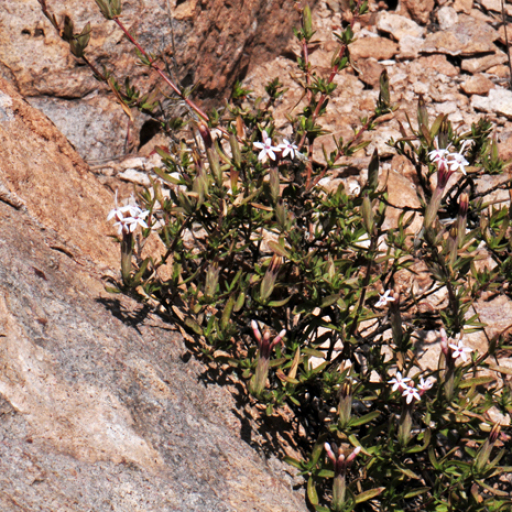
Plant Overview
Known as Bigelow’s Bristlehead or the Rose-tassel, this resilient perennial is a hidden gem of the high deserts and rocky canyons of the American Southwest and Northern Mexico. Named after John Milton Bigelow, a pioneering 19th-century botanist, this plant transforms rugged, arid landscapes into delicate patches of lavender and pink during the spring. It is a true survivor that perfectly balances tough desert endurance with an airy, feathery elegance.
🔍 How to Identify
- 🌸 The "Bristle" Bloom: Unlike traditional daisies, the flower heads are narrow and composed only of disc florets. Long, thread-like styles protrude outward, giving the blooms a fuzzy, tassel-like appearance.
- 🍃 Slender Foliage: The leaves are small, narrow, and grow in opposite pairs along the stems. They often have a slightly leathery texture, an adaptation that helps the plant retain moisture in scorching heat.
- 🪵 Woody Foundation: It is a perennial subshrub, meaning it develops a woody base over time. It typically stays low to the ground, forming a tidy mound that rarely exceeds a foot in height.
🏡 In Your Garden
- ⛰️ Rocky Roots: This plant naturally thrives in oak-juniper woodlands and limestone slopes. In a garden setting, it demands exceptional drainage; it will struggle in heavy clay or soil that stays "wet" for too long.
- ☀️ Sun and Shelter: While it loves the bright desert sun, Bigelow’s Bristlehead often tucks itself into the dappled shade of larger shrubs or rock overhangs in the wild. It is an ideal choice for xeriscaping or rock gardens where it can mimic its natural canyon habitat.
⚠️ Safety & Toxicity
- 🛡️ General Safety: Carphochaete bigelovii is not known to be toxic to humans, dogs, or cats. It is generally considered a "friendly" native plant for residential landscapes.
- 🧤 Contact Sensitivity: As with many members of the Aster family, the fine bristles on the seeds or the sap within the stems may cause very mild skin irritation for people with specific plant allergies. Wearing gloves while pruning is a simple precaution.
✨ Fun Fact
The name "Bristlehead" refers to the unique crown of long, stiff scales (called a pappus) that sits atop the seeds. These bristles act like tiny sails, allowing the seeds to catch desert breezes and "hitchhike" to new locations!

Detailed Care Instructions

Some plants require more regular watering than others, which should be done every few days. It's critical to maintain the soil moist all of the time. The water requirements of the same plant placed in pots with varying sizes will differ. Because the water in the smaller pot evaporates faster than the water in the larger pot, it will require more watering. Regardless of pot size, the surface should constantly be maintained moist.








