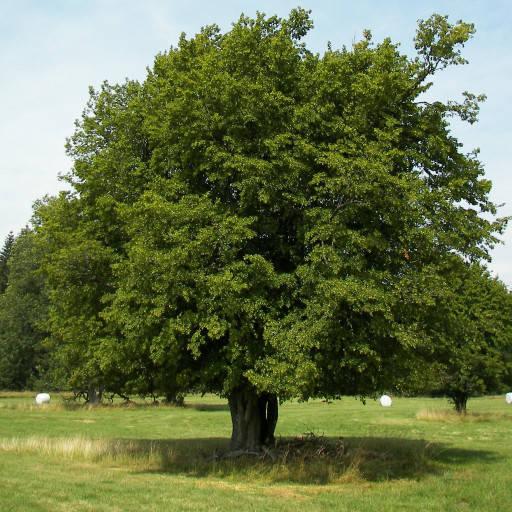
Plant Overview
Often called the "Ironwood" or "Musclewood," the European Hornbeam is the architectural backbone of classic European landscapes. Known for its incredibly dense, hard wood and its ability to be sculpted into living walls, this tree has been a favorite for centuries, from royal palace gardens to humble farm boundaries. It is a master of transformation, shifting from lush, pleated green in summer to a glowing copper-gold in the autumn.
🔍 How to Identify
- 🍃 Leaf Texture: The leaves are oval with sharply "doubly-serrated" edges. Their most striking feature is the deep, parallel veins that create a pleated, accordion-like texture you can feel with your thumb.
- 🪵 The Bark: On mature trees, the bark is smooth and silver-grey, but it develops distinct "muscular" ridges. It looks remarkably like flexed sinews or muscles under a thin skin.
- 🌰 Winged Seeds: In late summer, you’ll see clusters of small nutlets, each attached to a unique three-lobed leafy wing. These act like tiny helicopters to help the seeds catch the breeze.
🏡 In Your Garden
- ✂️ Structural Versatility: The Hornbeam is famous for "pleaching"—a technique where trees are woven together to create a high hedge on stilts. Because it responds so well to pruning, it’s the ultimate choice for formal screens or topiary.
- 🌱 Transplant Sensitivity: While it is a hardy tree once established, it has a sensitive root system that dislikes being moved. Choose its "forever home" carefully, ensuring the soil is well-drained to avoid root rot during its first few seasons.
- 💨 Wind Resistance: Thanks to its exceptionally dense wood and deep rooting habit, it is an excellent windbreak. It can withstand heavy gales that might snap the branches of softer trees like Maples or Willows.
⚠️ Safety & Toxicity
- ✅ Non-Toxic: The European Hornbeam is considered safe and non-toxic for humans, dogs, cats, and horses. It is a very "family-friendly" tree for backyard play areas.
- 🤧 Pollen Note: Like many deciduous trees, it produces catkins in the spring. While not a major allergen for most, those with severe hay fever may notice a reaction during its brief flowering window.
✨ Fun Fact
The wood of the Hornbeam is so heavy and hard that it was traditionally used to make the moving parts of windmills, ox yokes, and even the "hammers" inside traditional pianos! It is one of the few woods that is historically difficult to work with unless your tools are razor-sharp.

Detailed Care Instructions
| Color | Yellow (Male) And Green (Female) |
| Soil Ph | 4 To 7.4 |
| Lighting | Full Sun |
| Toxicity | Non-Toxic |
| Soil Type | Moist, Well-Drained |
| Bloom Time | March |
| Plant Type | Deciduous Tree |
| Mature Size | 30 To 40 Feet Tall |
| Sun Exposure | Full Shade To Full Sun |
| Hardiness Zones | 3-9 |
To grow Carpinus betulus (common hornbeam) plants, you can follow these steps:
- Choose a suitable location: Carpinus betulus prefers well-draining soil and thrives in full sun to partial shade. Make sure the planting area is large enough to accommodate the tree's eventual size.
- Prepare the soil: Before planting, loosen the soil and remove any weeds or grass from the planting area. Mix in organic matter such as compost or peat moss to improve the soil's fertility and drainage.
- Planting: Dig a hole slightly larger than the root ball of the young Carpinus betulus. Place the tree in the hole, making sure that the root collar (the point where the roots meet the trunk) is level with or slightly above the soil surface. Backfill the hole with soil, firming it gently around the roots to remove any air pockets.
- Watering: Water the newly planted tree thoroughly to settle the soil around the roots. Afterward, it is essential to provide regular watering, especially during dry spells or the first year after planting.
- Mulching: Apply a layer of organic mulch such as wood chips or bark around the base of the tree, leaving several inches of space around the trunk. Mulch helps to conserve moisture, suppress weeds, and maintain a more consistent soil temperature.
- Pruning: Carpinus betulus generally requires minimal pruning, but occasional maintenance pruning can shape the tree and remove any dead, damaged, or crossing branches. Prune during late winter or early spring before new growth begins.
- Fertilizing: If the soil lacks nutrients, you can apply a balanced slow-release fertilizer in early spring. Follow the package instructions for the appropriate dosage.
- Protecting from pests: Monitor the tree for any pest infestations, such as aphids or caterpillars. Use appropriate organic or chemical controls if necessary.
- Winter protection: Young Carpinus betulus trees may benefit from a layer of mulch around the base in winter to insulate the roots and protect against frost.
By following these steps, you can successfully grow Carpinus betulus plants and enjoy their beautiful foliage and growth.

Place in a window with dappled sun or a spot in the middle of a room. Or directly in a window facing west or east.

1. Determine the water requirements of the plant: Before watering the plant, it is important to understand how much water it needs. Research the specific water requirements of the species to ensure that you give it adequate hydration.
2. Water deeply: Carpinus Betulus plants require deep watering rather than frequent, light watering. Water the plant thoroughly, ensuring that the water reaches the roots. Inadequate watering can result in stunted growth, wilting, and even death.
3. Monitor the soil moisture: Check the soil moisture regularly by inserting your finger into the soil to a depth of 1-2 inches. If the soil feels dry, it is time to water the plant. However, if the soil feels moist, leave the plant alone.
4. Water in the morning: Watering in the morning is the best time since it gives the plant enough time to dry off before nightfall. This reduces the chances of fungal growth, which can be prevalent in damp conditions.
5. Avoid waterlogging: Overwatering can lead to waterlogging, which happens when the soil is saturated with water. This can lead to the plant's roots drowning and dying. To avoid this, ensure that the soil has good drainage and the water is not pooling around the roots.
6. Mulch the soil: Mulching the soil around the plant can help retain moisture and keep the soil cool. This can benefit the plant in the hot summer months when the soil can dry out quickly.
7. Adjust watering according to weather conditions: During hot and dry weather, the plant will require more frequent watering to survive. Conversely, during cold and wet weather, the plant may not require as much water, so adjust your watering schedule according to weather conditions.
8. Use a watering can or hose: Water the plant using a watering can or hose and direct the water to the base of the plant rather than the leaves. This reduces the risk of fungal diseases and also ensures that the water reaches the roots where it is most needed.
- Acquire a balanced fertilizer with equal amounts of nitrogen, phosphorus, and potassium.
- Apply the fertilizer during the early spring or late fall when the plant is dormant.
- Mix the fertilizer with water according to package instructions.
- Pour the fertilizer mixture around the base of the plant.
- Avoid getting the fertilizer on the leaves or foliage as this can burn the plant.
- Water the plant thoroughly after applying the fertilizer.
- Avoid over-fertilizing as this can damage the plant.
The suggested type of soil to use with this plant is a well-draining soil that is rich in nutrients. It should have a pH level of approximately 6 to 7.5 to support the growth of the Carpinus Betulus plant. The soil should also have good water retention capacity to ensure that the plant's roots are hydrated adequately without being waterlogged. Additionally, the soil should be loamy and fertile, with a good balance of sand, silt, and clay to promote healthy root growth and overall plant health. It is also recommended to use a soil mix that contains organic matter such as compost or peat moss to enhance the soil structure, nutrient content, and soil water-holding capacity, thereby fostering optimal growth conditions for this plant.
To propagate this plant, take a cutting from the stem of a mature individual in late summer or fall when the wood is semi-hardened. Cut a section of stem that is about 6 inches long and has a couple of leaves attached. Remove the lower leaves and make a slanting cut at the base of the stem. Dip the cut end in rooting hormone and plant it in a pot containing moistened sand or peat moss. Cover the pot with a plastic bag to create a mini greenhouse and place it in a warm, bright spot, but away from direct sunlight. Keep the soil moist and watch for roots to form in four to six weeks. Transfer the new plant to a larger pot or outside in the garden the following spring.
Common pests of the european hornbeam include Scale insect, aphids, larvae. Make a habit of checking your european hornbeam frequently for pests so that any infestations can be caught and managed early.








