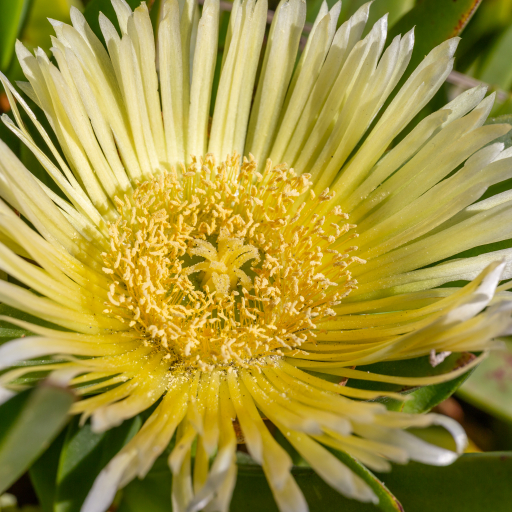
Plant Overview
Commonly known as the "Pigface" or "Ice Plant," Carpobrotus is a resilient, sun-loving succulent that turns coastlines into vibrant carpets of color. Originally from South Africa, these plants have traveled the globe, earning the nickname "Sea Fig" because of their edible, fig-like fruits. While they are celebrated for their ability to stabilize sand dunes, their aggressive growth has made them a "beautiful villain" in some ecosystems where they crowd out native species.
🔍 How to Identify
- 📐 Triangular Leaves: The most striking feature is the thick, fleshy, three-sided leaves that look like green (sometimes reddish) bananas or fingers.
- 🌸 Radiant Blooms: It produces large, daisy-like flowers with hundreds of thin petals in neon shades of pink, purple, or bright yellow.
- 🛤️ Mat-Forming Habit: It grows in dense, heavy mats that sprawl across the ground, with stems that can reach several meters in length, rooting wherever they touch the soil.
🏡 In Your Garden
- 🌊 Coastal Warrior: This plant is the ultimate choice for seaside gardens. It thrives in salty air and poor, sandy soil where other plants would wither, acting as a natural shield against wind erosion.
- 💧 The "Lazy" Succulent: The biggest mistake gardeners make is over-caring for it. It hates wet feet (rotting easily in soggy soil) and prefers to be left alone in the harshest sun you can find.
- 🚫 Space Invader: Because it roots so easily from any broken piece, it can quickly escape its pot or flower bed. In California and parts of Europe, it is considered highly invasive, so keep it contained if you live near wild coastal areas.
⚠️ Safety & Toxicity
- 🐾 Pet Friendly: Carpobrotus is generally considered non-toxic to dogs, cats, and horses, making it a safe choice for a pet-filled backyard.
- 👶 Kid Safe: The plant is not known to be poisonous; in fact, the juice from the leaves is often used similarly to Aloe Vera to treat minor scratches or sunburns.
- ⚠️ Footing Hazard: Be careful when walking near it; the thick, moisture-filled mats can be surprisingly slippery on slopes.
✨ Fun Fact
The name Carpobrotus comes from the Greek words karpos (fruit) and brota (edible). In South Africa, the fruit of the Carpobrotus edulis species is used to make a traditional, salty-sweet treat known as "Sour Fig Jam."

Detailed Care Instructions

Place in a bright room that is sun drenched almost all day. Or directly in a south-facing window.

When the top few inches of soil dry out, water your plants. If the top few inches of soil are still moist, do not water your plant. Wait a few days, then poke your finger into the soil to see if anything has changed. Overwatering poses a disease risk, such as the development of fungal diseases in the roots. These plants have adaptations in there leaves that allow them to survive in low water supply.
These plants do best in dry environments, however they do require a lot of sunlight. If these plants are kept in humid settings for an extended period of time, fungus will grow. It may result in leaf loss, pathogen attack, and plant death. However, if the relative humidity goes below 20°C (68°F), they can handle it.







