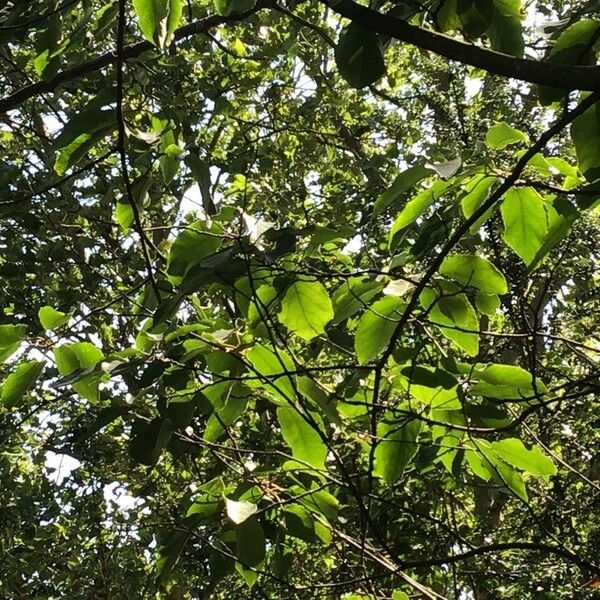
Plant Overview
Known as the Goat Horn Tree, Carrierea calycina is one of the most mysterious and elegant gems of the botanical world. Native to the mountain valleys of China and Vietnam, it was brought to the West by legendary plant hunters who were captivated by its waxy, cup-shaped blooms. While it remains a rarity in local nurseries, its presence in a garden marks the owner as a true connoisseur of unique, architectural flora.
🔍 How to Identify
- 🌼 The "Ghost" Flowers: The tree produces drooping clusters of creamy-white, cup-shaped flowers. Interestingly, these aren't true petals but large, waxy sepals that give the tree a ghostly, ethereal glow when in full bloom.
- 🍃 Lustrous Foliage: The leaves are large, oval, and leathery with a glossy finish and finely serrated edges. They emerge with a bronze tint before turning a deep, rich green.
- 🐐 Goat Horn Pods: True to its name, the tree produces curious, curved seed capsules after flowering. These woody pods look remarkably like the miniature horns of a mountain goat.
🏡 In Your Garden
- 🌳 Woodland Ambience: This tree thrives in conditions that mimic a forest edge. It loves "cool feet"—meaning plenty of organic mulch over its roots—and a spot that offers dappled shade rather than scorching, direct afternoon sun.
- 🌬️ Shelter is Key: Because of its somewhat brittle wood and large leaves, it hates high-wind areas. Plant it in a sheltered corner of the garden to prevent the branches from snapping and to keep the delicate flowers from being blown away prematurely.
- 💧 Moisture Consistency: It is not a "set it and forget it" tree regarding water. It prefers consistently moist, well-drained soil and may drop its leaves if subjected to a prolonged summer drought.
⚠️ Safety & Toxicity
- 🛡️ Low Risk: Carrierea calycina is not widely known to be toxic to humans or common household pets like cats and dogs.
- 🧤 Pruning Care: While not poisonous, the serrated edges of the leaves and the woody nature of the seed pods can be scratchy. It is always a good practice to wear gardening gloves when pruning or handling the tree's debris.
✨ Fun Fact
The tree was famously championed by the great plant hunter Ernest "Chinese" Wilson in the early 20th century. He considered it one of the most beautiful flowering trees in the Northern Hemisphere, yet it remains so rare today that finding one in a private garden is considered a "holy grail" for many arborists.

Detailed Care Instructions

Place in a bright room that is sun drenched almost all day. Or directly in a south-facing window.

When the top few inches of soil dry out, water your plants. If the top few inches of soil are still moist, do not water your plant. Wait a few days, then poke your finger into the soil to see if anything has changed. Overwatering poses a disease risk, such as the development of fungal diseases in the roots. These plants have adaptations in there leaves that allow them to survive in low water supply.








