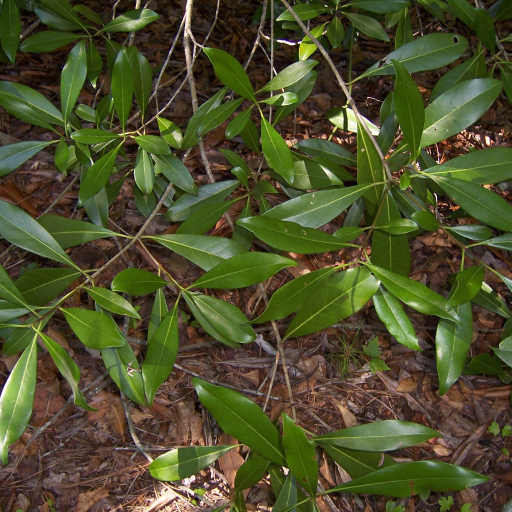
Plant Overview
Often referred to as the American Devilwood or Wild Olive, this native of the Southeastern United States is a hidden gem of the maritime forest. While its tiny white flowers might look modest, they pack a punch with a fragrance so sweet it rivals its famous cousin, the Sweet Tea Olive. Its "devilish" nickname doesn't come from its appearance, but from the frustration of early woodsmen who found its fine-grained wood nearly impossible to split or saw.
🔍 How to Identify
- 🍃 Leathery Foliage: The leaves are thick, evergreen, and glossy, arranged oppositely along the stems. They have a smooth margin and a deep green hue that lasts all year.
- 🌼 Hidden Blooms: In early spring, look for small, bell-shaped creamy white flowers tucked into the leaf axils. Though tiny, their scent is heavy, sweet, and carries surprisingly far on a breeze.
- 🫐 Olive-Like Fruit: By late summer and autumn, the plant produces small, dark blue or purple "drupes" that resemble miniature olives, providing a feast for local songbirds.
🏡 In Your Garden
- 🌊 Coastal Warrior: This is a top-tier choice for seaside gardens. It has a high tolerance for salt spray and sandy soils, making it a rugged yet elegant screen for coastal properties.
- 🌳 Slow and Steady: Unlike many garden shrubs that take over quickly, the American Devilwood is a slow grower. This makes it an excellent choice for a low-maintenance hedge that won’t require constant pruning.
- ☁️ Versatile Light: While it thrives in the dappled shade of an understory, it can handle full sun if the soil is kept consistently moist and acidic.
⚠️ Safety & Toxicity
- ✅ Generally Safe: Cartrema americana is not known to be toxic to humans or common household pets. It is a "friendly" addition to family landscapes.
- 🪓 Physical Hazard: The primary "danger" of this plant is to your garden tools! As the name Devilwood implies, the wood is incredibly hard and dense. Attempting to prune thick, old branches with manual shears may result in broken blades or hand fatigue.
✨ Fun Fact
The American Devilwood is a close relative of the tree that produces edible olives (Olea europaea). While you can't press these "wild olives" for cooking oil, they are a vital energy source for migrating birds and local wildlife during the colder months.

Detailed Care Instructions

Place in a window with dappled sun or a spot in the middle of a room. Or directly in a window facing west or east.

The presence of a dry surface layer of soil does not indicate that the plant requires water. Instead, stick your finger 1-2" (3-5 cm) deep in the soil to feel dampness or moisture content. If the soil seems dry, it's time to water your greens. If the soil is still moist, however, it is better not to water your plant and instead wait a day or two. Overwatering or waterlogging raises the risk of root rot. So if the soil takes longer than a week to dry, check the light conditions because it's likely that the plant isn't getting enough light. It's fine if the upper layer of soil is dry between waterings, but the deeper soil layer should always have some moisture.








