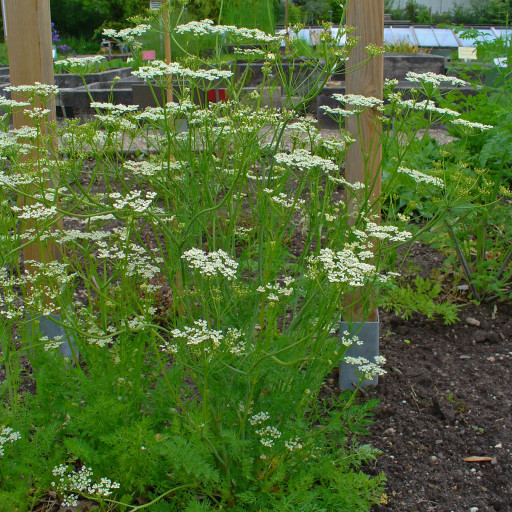
Plant Overview
Known affectionately as "Meridian Fennel" or "Persian Cumin," Caraway (Carum carvi) is one of the oldest herbs used in Europe, with seeds even being found in prehistoric lake dwellings. While it looks like a delicate wildflower, it is a powerhouse of flavor, famous for giving rye bread its soul and sauerkraut its signature zing. In ancient times, it was believed that anything containing caraway was protected from theft and that a sprinkle of its seeds would keep a fickle lover from straying.
🔍 How to Identify
- 🌿 The Foliage: The leaves are finely divided and feathery, resembling a mix between a carrot top and a sprig of dill. They grow in a low rosette during the first year.
- 🌸 The Blooms: In its second year, it sends up a tall, branched stem topped with "umbels"—delicate, umbrella-shaped clusters of tiny white or occasionally pinkish flowers.
- Seed The Fruit: What we call "seeds" are actually small, crescent-shaped fruits. They are dark brown with five distinct, pale ridges and emit a sharp, pungent aroma when crushed.
🏡 In Your Garden
- ⏳ The Biennial Wait: Caraway is a biennial, meaning it focuses on growing leaves and a strong taproot in its first year, then flowers and produces seeds in its second. Patience is a virtue with this plant!
- 🌱 Root Sensitivity: Because it grows a long, carrot-like taproot, caraway hates being moved. It is best to sow seeds directly into their permanent home in the garden rather than starting them in pots.
- ☀️ Sun & Soil: It thrives in full sun and well-drained soil. It isn’t a "heavy feeder," but it does appreciate a spot where the soil doesn't stay soggy, which could rot its precious root.
⚠️ Safety & Toxicity
- ✅ Status: Generally safe and edible for humans.
- 🐾 Pet Caution: While not strictly toxic in small nibbles, the concentrated essential oils in caraway seeds can cause digestive upset or skin irritation in dogs and cats if consumed in large quantities.
- 🎭 The Lookalike Rule: Always be 100% certain of your identification. Caraway belongs to the Apiaceae family, which includes delicious herbs like parsley but also the deadly Poison Hemlock. Never forage "wild caraway" unless you are an expert.
✨ Fun Fact
In the Middle Ages, caraway was a staple in "love potions." It was believed that placing caraway seeds in a lover's pocket would ensure they remained faithful, and farmers even placed it in chicken feed to prevent their hens from wandering off!

Detailed Care Instructions
| Humidity | Dry |
| Difficulty | Medium |
| Hardiness Zones | 4 - 10 |
To grow Carum Carvi, or caraway, follow these steps:
- Choose the right location: Caraway plants grow best in full sun, but they can tolerate some shade. Make sure the area has well-draining soil.
- Prepare the soil: Caraway prefers sandy or loamy soil. Add organic matter, such as compost or well-rotted manure, to improve soil fertility and drainage.
- Sow the seeds: Caraway is typically grown from seeds. Sow the seeds directly into the ground in spring, once the danger of frost has passed. Plant the seeds about ¼ inch deep and space them at least 10-12 inches apart.
- Watering: Keep the soil consistently moist during germination. Once the plants are established, water them regularly, but avoid overwatering as it can cause root rot.
- Fertilizer: Caraway plants are not heavy feeders and usually don't require much fertilizer. A balanced slow-release fertilizer applied at the beginning of the growing season should be sufficient.
- Weed control: To prevent weed competition, keep the area around the Carum Carvi plants free of weeds. Regularly remove any unwanted plants that may appear.
- Harvesting: Caraway seeds are typically harvested when the umbels turn brown and dry. Cut the umbels and hang them upside down in a well-ventilated area to dry further. Once completely dry, rub the umbels to collect the seeds.
- Storage: Store the harvested seeds in a cool, dry place in an airtight container.
By following these steps, you should be able to successfully grow Carum Carvi plants.

Place in a bright room that is sun drenched almost all day. Or directly in a south-facing window.

Carum Carvi is a herbaceous plant that typically grows in moist soil and requires regular watering. To water this plant, you should keep the soil consistently damp, but not waterlogged. Be careful not to over-water it, as this can lead to root rot and other issues.
To water the plant properly, you should use a watering can or a hose with a gentle spray nozzle. Water the plant when the top inch of soil feels dry to the touch. Avoid watering the leaves, as this can encourage fungal growth and other diseases.
During the hot summer months, you may need to water the plant more frequently. Be sure to check the soil moisture levels daily and adjust your watering schedule as necessary.
In general, Carum Carvi prefers well-draining soil that retains moisture. You can improve soil drainage by adding organic matter such as compost or aged manure to the soil. This will help to retain moisture and also provide nutrients to the plant.
Finally, it's important to note that Carum Carvi is a hardy plant that can tolerate some drought. However, consistent watering will help to ensure healthy growth and a bountiful harvest.
To fertilize this plant, apply a balanced fertilizer with equal amounts of nitrogen, phosphorus, and potassium. Use a slow-release fertilizer, and apply it around the base of the plant. Water the plant well after fertilization. Avoid over-fertilizing, as this can lead to reduced flavor and aroma of the plant's seeds.
Carum Carvi is a plant that belongs to the Apiaceae family, and it requires well-draining soil with a neutral to slightly alkaline pH. The preferred soil composition includes a mixture of loamy, sandy, and clay soils. This type of soil allows for proper drainage and aeration, which is essential for the successful growth of Carum Carvi. Additionally, the soil should be rich in organic matter to provide essential nutrients and improve soil structure. It is also recommended to add lime or dolomite to the soil to ensure the ideal pH range. Ultimately, the right soil for Carum Carvi should be well-balanced, nutrient-rich, and support healthy plant growth.
Carum Carvi can be propagated by collecting its seeds in the fall when the fruit has turned brown and dried on the plant. The seeds can then be sown directly in the ground or in pots during the early spring. The soil should be well-draining and contain compost or fertilizer. The seeds should be planted at a depth of 2-3 times their length and spaced about 1-2 inches apart. The planting area should be kept moist but not waterlogged. Germination typically occurs within 10-14 days. Once the plants have reached a mature height of 12-18 inches, they can be harvested for their aromatic seeds or used for culinary purposes.








