Plant Overview
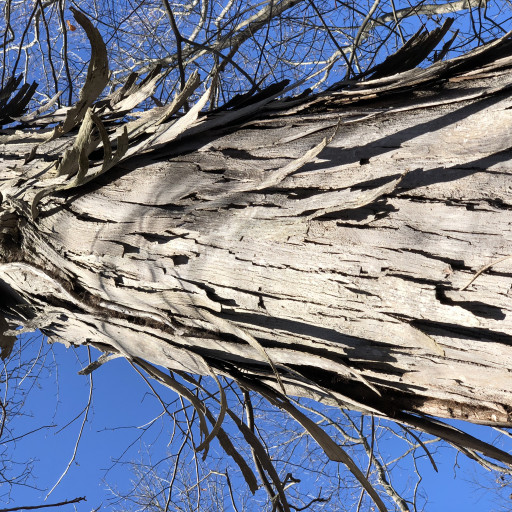
Known as the "Shagbark Hickory," this tree is one of the most charismatic giants of the North American forest. It is instantly recognizable by its "messy" appearance, with long, grey plates of bark that peel away from the trunk in thick curls. While it looks like it might be shedding its skin, this rugged exterior is actually a fortress of protection for a tree that can live for over 350 years.
🔍 How to Identify
- 剥 The Bark: The most distinct feature; mature trees have long, vertical strips of bark that curve outward at both ends, giving the trunk a shaggy or "exploded" appearance.
- 🍃 Leaf Structure: Features large, pinnately compound leaves usually consisting of 5 (rarely 7) teardrop-shaped leaflets with finely toothed edges.
- 🌰 The Fruit: Produces a large, round nut encased in a very thick, woody green husk that turns dark brown and splits into four clean sections when ripe.
🏡 In Your Garden
- 🌳 The Taproot Challenge: The Shagbark Hickory develops a massive, deep taproot almost immediately after germination. This makes it notoriously difficult to transplant, so it is best to plant it exactly where you want it to stay for the next few centuries.
- 🦇 A Wildlife Hotel: If you have one of these in your yard, you are hosting a mini-ecosystem. The peeling bark provides essential roosting spots for several species of bats, including the endangered Indiana bat, who tuck themselves behind the plates during the day.
- 🍂 Fall Radiance: While it provides deep shade in the summer, it turns a breathtaking, luminescent golden-yellow in the autumn, often standing out as the brightest tree in the landscape.
⚠️ Safety & Toxicity
- ✅ Human Safety: The nuts are entirely edible and widely considered the sweetest and most delicious of all wild North American hickory nuts.
- 🐾 Pet Safety: While not toxic, the large, hard shells can pose a choking hazard or cause intestinal blockages in dogs if swallowed whole.
- 🌱 Juglone Production: Like its cousin the Black Walnut, this tree produces a chemical called juglone, though in much lower concentrations. Sensitive plants like tomatoes or azaleas may struggle if planted directly beneath the canopy.
✨ Fun Fact
The Shagbark Hickory is the reason for the nickname of the 7th U.S. President, Andrew Jackson. Known as "Old Hickory," he was said to be as tough and unyielding as the wood of this tree, which is so dense and shock-resistant that it is still the preferred material for making axe handles and baseball bats.

Detailed Care Instructions
| Soil Type | Well-Drained Soil |
| Plant Type | Deciduous Tree |
| Mature Size | Height Of 130 Feet |
| Native Area | 4-8 |
| Sun Exposure | Full To Partial Sun |
To grow Carya ovata, also known as the shagbark hickory tree, follow these steps:
- Choose the right location: Hickory trees prefer full sun, so select a location that receives at least 6-8 hours of direct sunlight per day. The soil should be well-draining and fertile.
- Collect or purchase seeds: Obtain shagbark hickory seeds from a reputable nursery or collect them from mature trees in the fall. The seeds have a hard shell, so a cold stratification process is necessary to improve germination.
- Cold stratification: Soak the seeds in water for 24 hours, then place them in a sealed plastic bag with some damp peat moss or vermiculite. Store the bag in the refrigerator for 90-120 days. This mimics the cold winter conditions that break seed dormancy.
- Soil preparation: While the seeds are undergoing stratification, prepare the planting site by removing any weeds or grass. Loosen the soil and amend it with organic matter, like compost, to improve its fertility.
- Planting: Plant the hickory seeds in the spring after the last frost date. Dig a hole twice as deep as the seed's length and place the seed in it with the pointed end facing down. Cover the seed with soil and gently pack it down.
- Watering and mulching: Keep the soil evenly moist, but not waterlogged. Water the newly planted seeds regularly, especially during dry periods. Apply a layer of mulch around the base of the seedling to conserve moisture and suppress weed growth.
- Care and maintenance: Once the seedlings emerge, provide regular watering and ensure they receive adequate sunlight. Protect them from pests, such as rabbits or deer, by using barriers or deterrents. Prune any damaged or dead branches as needed.
- Long-term care: As the hickory tree grows, make sure to provide regular watering during dry spells and apply a balanced fertilizer in early spring. Mulch around the base of the tree to retain moisture and suppress weed growth. Monitor for any signs of pests or diseases and address them promptly.
- Patience: Growing a hickory tree from seeds can take several years before it reaches maturity and starts producing nuts. Be patient, as the tree will reward you with its unique shaggy bark and delicious hickory nuts.
Remember to check with local authorities or nurseries for any specific guidelines or regulations related to planting and growing Carya ovata in your area.

Place in a bright room that is sun drenched almost all day. Or directly in a south-facing window.

Carya Ovata is a tree that requires regular watering, especially during the summer months when the soil is prone to drying out. It is important to water the tree deeply, providing enough water to penetrate the soil to a depth of at least six inches. The frequency of watering will depend on the climate and soil conditions, but it is generally recommended to water the tree once or twice a week.
To water Carya Ovata, you should use a watering can or a garden hose with a gentle nozzle to avoid damaging the tree or its roots. Slowly and evenly pour the water around the base of the tree, making sure that the water is distributed evenly and penetrates deeply into the soil. It is best to water the tree early in the morning or late in the evening when the temperatures are cooler to avoid rapid evaporation.
It is essential to avoid over-watering the tree as this can result in root rot and other fungal diseases. You should only water the tree when the top inch of soil is dry to the touch. Additionally, it is advisable to add a layer of mulch around the base of the tree to help retain moisture in the soil and prevent the growth of weeds.
Overall, proper watering is essential for the growth and health of Carya Ovata, and it should be done with care and attention to the tree's individual needs and requirements.
For optimal growth, fertilize this plant in the early spring before new growth appears and in the fall after leaves have dropped. Use a balanced fertilizer with equal parts of nitrogen, phosphorus, and potassium, and apply according to the package instructions. Be careful not to over-fertilize as this can lead to damage or death of the plant. Avoid fertilizing during periods of drought or extreme heat, as this can also cause stress and damage to the plant.
The ideal soil for Carya Ovata plant is a well-draining soil with a pH level ranging between 6.0 to 7.5. The soil should be rich in organic matter, such as compost and leaf litter, to provide necessary nutrients for the plant's growth. It is recommended to use a loamy soil type with good drainage to prevent waterlogging, which can cause root rot. Additionally, the soil should have good aeration, allowing for proper root development. It is also important to avoid using heavy clay soils, which can hinder root development and nutrient absorption.
One way to propagate this plant is through seed collection and propagation. Collect mature seeds from the plant in the fall, ensuring they are fully ripe and viable. Clean and dry the seeds, and then stratify them by placing them in a moist medium (such as sand or vermiculite) at a temperature range of 33-41°F (0.5-5°C) for 90-120 days. After stratification, sow the seeds in a well-drained soil mix, covering them with a thin layer of soil. Keep the soil moist, and the seed will germinate in 1-3 months. Another way to propagate this plant is through grafting, which involves joining a stem of the desired tree (called the scion) onto the rootstock of a closely related species for support. Cuttings can also be used, but success rates are often lower than other methods. Take hardwood cuttings in the fall and keep them moist and in a protected environment until they develop roots.








