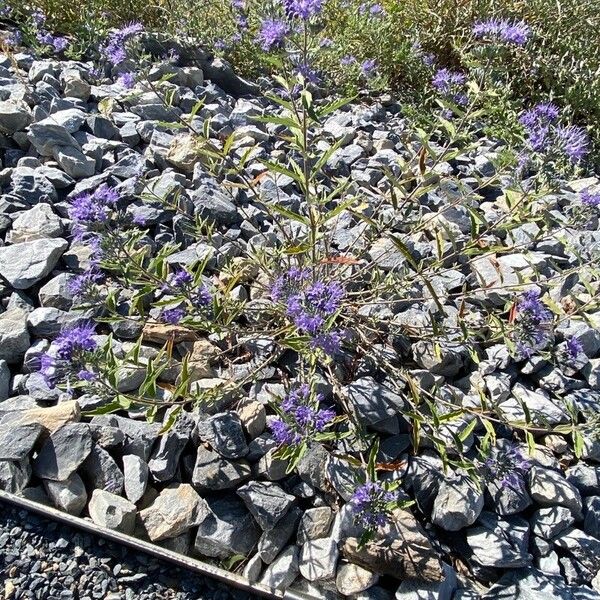
Plant Overview
Often called the "Bluebeard" or "Blue Mist Shrub," this garden favorite is a late-summer firework that brings a cooling splash of azure to the landscape. It is a hybrid beauty, born from a chance cross-pollination in an English garden in the 1930s. Known for its airy, ethereal appearance, it acts as a crucial bridge for pollinators when the rest of the garden begins to fade.
🔍 How to Identify
- 🍃 The Foliage: Look for narrow, lance-shaped leaves that are grey-green on top and silvery underneath, giving the entire shrub a shimmering quality.
- 🪻 The Blooms: Clusters of "fringed" flowers appear in fluffy bundles (cymes) along the upper stems, resembling a blue cloud or a misty beard.
- 👃 The Scent: If you gently crush a leaf, it releases a spicy, herbal fragrance that is often compared to a mix of eucalyptus and mint.
🏡 In Your Garden
- ☀️ Sun and Drainage: This shrub is a sun-worshipper and demands well-drained soil. It is notoriously prone to "wet feet," so avoid planting it in soggy spots where its roots might rot over winter.
- ✂️ The Spring Haircut: Because it produces flowers on "new wood" (the growth that happens in the current year), it benefits from being cut back hard in early spring. This keeps the plant compact and maximizes the flower count.
- 🦋 Pollinator Magnet: It is one of the most effective plants for attracting late-season butterflies and bees, providing a vital nectar source just before the colder months arrive.
⚠️ Safety & Toxicity
- ✅ General Safety: Caryopteris is generally considered non-toxic to humans, cats, and dogs, making it a safe choice for family backyards.
- 🌿 Skin Sensitivity: While not poisonous, the aromatic oils in the foliage can occasionally cause mild skin irritation or contact dermatitis in individuals with very sensitive skin during heavy pruning.
✨ Fun Fact
Despite its common name "Blue Spirea," this plant is not a Spirea at all. It was traditionally classified in the Verbena family but has recently been moved by botanists into the Mint family (Lamiaceae), which explains its square-ish stems and fragrant leaves!

Detailed Care Instructions
To grow Caryopteris Clandonensis plant, also known as Bluebeard or Blue Mist, follow these steps:
- Choose the right location: Caryopteris Clandonensis thrives in full sun to partial shade. Ensure the area has well-draining soil and good air circulation.
- Timing: Plant the Bluebeard in spring or early fall when the soil is warm and workable.
- Prepare the soil: Amend the soil with organic matter, such as compost or well-rotted manure, to improve drainage and fertility.
- Dig a hole: Dig a hole slightly larger than the plant's root ball. Make sure to space multiple plants at least 3 to 5 feet apart.
- Plant the Bluebeard: Place the plant in the hole and backfill with soil, gently firming it around the roots. Ensure the plant is at the same level as it was in the container or nursery pot.
- Watering: Give the newly planted Bluebeard a thorough watering and then follow a regular watering schedule. Water deeply but avoid overwatering, as it can lead to root rot.
- Mulching: Apply a layer of organic mulch around the base of the plant. This helps retain moisture, suppress weeds, and regulate the soil temperature.
- Pruning: Caryopteris Clandonensis benefits from regular pruning to maintain its shape and promote blooming. Prune in late winter or early spring to remove dead wood and encourage new growth.
- Fertilizing: Apply a balanced slow-release fertilizer in spring, following the product instructions. Avoid over-fertilization, as it can reduce flowering.
- Pests and diseases: Bluebeard is relatively pest and disease resistant. However, keep an eye out for common garden pests like aphids and spider mites. Treat them with organic insecticidal soap or horticultural oil if necessary.
- Winter care: In areas with cold winters, provide winter protection by applying a layer of mulch around the base of the plant. This helps insulate the roots and prevent frost damage.
By following these steps, you can successfully grow and care for Caryopteris Clandonensis plants.

Place in a bright room that is sun drenched almost all day. Or directly in a south-facing window.

Caryopteris Clandonensis is a perennial flowering plant that requires adequate watering for its healthy growth. Here are some details on how to water this plant effectively:
1. Watering Frequency: Caryopteris Clandonensis prefers moderately moist soil. It is recommended to water the plant deeply once a week during the growing season, especially in hot and dry weather conditions.
2. Soil Moisture: Before watering, always check the soil moisture level by inserting your finger into the soil up to the first knuckle. If the soil feels dry, it's time to water the plant. Avoid overwatering, as excessive moisture can lead to root rot or other diseases.
3. Watering Technique: Use a watering can or a garden hose with a spray nozzle to water the plant. Water the base of the plant, aiming to keep the foliage dry to prevent fungal diseases. Avoid watering late in the day to allow the plant and soil to dry before evening.
4. Deep Watering: When watering, ensure that the water penetrates deep into the soil to encourage the plant's roots to grow deeper. Apply water slowly to give the soil enough time to absorb it and prevent runoff.
5. Mulching: Apply a layer of organic mulch, such as wood chips or straw, around the plant. Mulching helps retain soil moisture, reducing the frequency of watering required. It also helps regulate soil temperature and prevents weed growth.
6. Drought Tolerance: Once established, Caryopteris Clandonensis can tolerate mild drought conditions. However, during extended periods of drought, provide extra water and monitor the plant's condition to ensure it does not suffer from water stress.
Remember, the watering needs of plants can vary based on factors such as climate, soil type, and plant age. It's important to observe the plant and adjust the watering schedule accordingly.
- Choose a balanced fertilizer: Select a fertilizer that has an equal or similar ratio of nitrogen (N), phosphorus (P), and potassium (K). Look for a fertilizer with an NPK ratio such as 10-10-10 or 14-14-14.
- Apply in spring: Start fertilizing the Caryopteris Clandonensis plant in early spring, once the soil has thawed and the plant begins to show signs of new growth.
- Dilute the fertilizer: Mix the fertilizer with water according to the manufacturer's instructions. Typically, diluting 1 tablespoon of fertilizer in 1 gallon (4 liters) of water is a suitable concentration.
- Water the plant beforehand: Ensure the plant is well-watered before applying fertilizer. This will help prevent the roots from burning when the fertilizer is applied.
- Apply the fertilizer evenly: Pour the diluted fertilizer mixture around the base of the plant, taking care not to let it touch the plant's leaves or stem. Distribute the fertilizer evenly in a circular motion.
- Avoid over-fertilizing: Do not use excessive amounts of fertilizer as it can lead to nutrient imbalance or burn the plant's roots. Follow the dosage instructions provided with the fertilizer and avoid applying more frequently than recommended.
- Water after fertilizing: After applying the fertilizer, thoroughly water the plant to help the nutrients penetrate the soil and reach the plant's roots.
- Monitor the plant's response: Pay attention to the plant's growth and overall health after fertilizing. If the plant shows signs of excessive growth or discoloration, reduce the frequency or concentration of fertilizer.
- Repeat fertilization: For optimal growth, repeat the fertilization process every 4-6 weeks throughout the growing season. Avoid fertilizing in late summer or fall as this can stimulate new growth that may not have time to harden off before winter.
- Adjust fertilization based on soil conditions: Regularly test the soil pH and nutrient levels to determine if any adjustments need to be made to the fertilization routine. This will help ensure that the plant receives the necessary nutrients to thrive.
Remember to always follow the specific fertilizer product instructions and consult with a gardening professional for personalized advice based on your plant's specific needs.
Caryopteris clandonensis is a flowering plant that belongs to the Verbenaceae family. When selecting soil for this particular plant, it is essential to consider its preferred growing conditions.
The soil should be well-draining to prevent the plant's roots from becoming waterlogged. Excessive moisture can lead to root rot, which can be detrimental to the plant's health. Therefore, it is recommended to choose a loose and sandy soil mix that promotes good drainage.
Caryopteris clandonensis prefers slightly acidic to neutral soil pH levels ranging from 6.0 to 7.0. It is beneficial to amend the soil with organic matter such as compost or well-rotted manure to improve its fertility and nutrient content. Organic amendments also enhance the soil's moisture-retaining capacity while maintaining proper drainage.
Additionally, this plant thrives in soil that is rich in nutrients. Consider incorporating a slow-release fertilizer into the soil during planting or applying it as top dressing during the growing season to provide the necessary nutrients. Following the recommended fertilizer dosage is crucial to prevent over-fertilization, which can damage the plant.
Overall, a well-draining soil mix with a slightly acidic to neutral pH, enriched with organic matter, and supplemented with appropriate nutrients will provide an optimal growing environment for Caryopteris clandonensis. It is always a good practice to monitor the plant's specific needs and adjust the soil conditions accordingly for healthy growth and abundant flowering.
Caryopteris Clandonensis, a perennial woody shrub native to East Asia, can be propagated through several methods. Here are the steps to propagate Caryopteris Clandonensis:
- Select a healthy, mature plant from which you want to propagate. Ideally, choose a plant that is at least two years old and free from diseases or pests.
- Propagation can be done using stem cuttings, which are taken during the growing season, usually in late spring or early summer. Prepare a clean, sharp pair of pruning shears or scissors.
- Identify suitable stems for cutting. Look for non-flowering shoots that are healthy and about 4-6 inches in length. Avoid selecting stems that are excessively woody or weak.
- Make a clean cut just below a leaf node (the point where a leaf is attached to the stem). Removing leaves from the lower one-third to one-half of the stem will provide an area for roots to develop.
- Optionally, you can dip the base of the cutting in a rooting hormone powder or gel. This can promote faster and more reliable root development, although it is not necessary.
- Prepare a suitable propagation medium. A well-draining mix of equal parts perlite and peat moss is commonly used. Fill a small, clean pot with this mixture.
- Make a hole in the propagation medium using a pencil or your finger. Insert the base of the cutting into the hole, ensuring at least 2-3 leaf nodes are buried beneath the surface.
- Firmly press the medium around the stem to secure the cutting in place. Mist the cutting lightly with water to improve humidity.
- Place the potted cutting in a shaded area, away from direct sunlight. Mini-greenhouses or clear plastic bags can be used to create a more humid environment around the cutting.
- Regularly check moisture levels and mist the cutting if the medium feels dry. Avoid overwatering, as excessive moisture can lead to rotting.
- Root development usually occurs within 4-6 weeks. You can gently tug on the cutting to check if it has developed a sufficient root system. Once roots are established, transplant the cutting into a larger pot or directly into a well-prepared garden bed.
By following these steps, you can successfully propagate Caryopteris Clandonensis, a beautiful shrub known for its attractive blue flowers and aromatic foliage.







