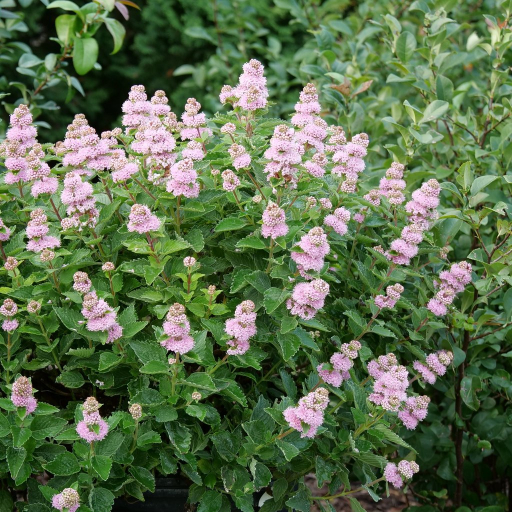
Plant Overview
Known affectionately as the "Bluebeard" or "Blue Mist Spiraea," Caryopteris incana is a late-summer superstar that brings a cooling cloud of azure to the garden just as other flowers begin to fade. Originating from East Asia, this deciduous shrub is a favorite for those looking to bridge the gap between summer blooms and autumn colors. Its aromatic foliage and soft, fuzzy texture make it as much a tactile experience as a visual one.
🔍 How to Identify
- ☁️ Flower Clusters: Dense, rounded "cymes" of tiny, bright blue to violet flowers that appear to hover in tiers above the foliage like a blue mist.
- 🌿 Aromatic Leaves: Long, lance-shaped leaves with coarsely toothed edges; they release a pleasant, spicy, or herbal scent when crushed.
- Silver Sheen:** The undersides of the gray-green leaves are covered in fine, silvery hairs, giving the whole plant a soft, frosted appearance.
🏡 In Your Garden
- ✂️ Pruning Nuance: This plant blooms exclusively on "new wood" (growth from the current season). To keep it from becoming leggy and to ensure a massive floral display, it should be cut back hard to about 6 inches in early spring.
- ☀️ Sun & Drainage: While it is incredibly drought-tolerant once established, it is notoriously sensitive to "wet feet." It requires sharply draining soil to survive the winter, as soggy roots in cold weather are its primary enemy.
- 🦋 Pollinator Magnet: It is often described as a "living magnet" for honeybees, bumblebees, and butterflies, providing a critical late-season nectar source when other food is scarce.
⚠️ Safety & Toxicity
- ✅ General Safety: Caryopteris incana is generally considered non-toxic to humans, dogs, and cats.
- 🧤 Skin Sensitivity: While not poisonous, the fuzzy texture of the leaves and the concentrated oils can occasionally cause mild skin irritation for people with very sensitive skin during heavy pruning. Wearing gloves is a simple precaution.
✨ Fun Fact
The name Caryopteris is derived from the Greek words karyon (nut) and pteron (wing), referring to the winged shape of the plant's small, dry fruits!

Detailed Care Instructions
To grow Caryopteris incana (Bluebeard), follow these steps:
- Planting Location: Choose a planting location that receives full sun to partial shade. Select a well-draining soil with a pH level between 6.5 and 7.5. If your soil is heavy or clay-like, amend it with organic matter like compost or well-rotted manure.
- Planting Time: The best time to plant Caryopteris incana is in spring or early fall.
- Preparation: Dig a hole twice the width and slightly deeper than the root ball of the plant. Remove any weeds or grass from the area and loosen the soil.
- Planting: Place the root ball into the hole and make sure the top of the root ball is level with the soil surface, or slightly above. Backfill the hole with soil and gently firm it around the roots.
- Watering: Water the plant thoroughly after planting to settle the soil and establish good root growth. Afterward, provide regular, deep waterings to keep the soil evenly moist. Avoid overwatering, as it may lead to root rot.
- Mulching: Apply a layer of organic mulch around the base of the plant to suppress weed growth, conserve moisture, and regulate soil temperature.
- Fertilization: Feed Caryopteris incana with a balanced, slow-release fertilizer in early spring. Follow the package instructions for application rates. Avoid applying excessive nitrogen, as it can promote vegetative growth instead of flowering.
- Pruning: Prune the plant in early spring to remove dead or damaged branches. Additionally, cut back the plant by one-third to one-half of its height to encourage vigorous growth and abundant flowering.
- Winter Care: Caryopteris incana is generally hardy, but in colder regions, apply a layer of mulch around the base of the plant in late fall to protect the roots from freezing temperatures.
- Maintenance: Regularly monitor the plant for pests, such as aphids or spider mites, and treat them accordingly. Remove spent flowers to encourage continuous blooming.
By following these steps, you can successfully grow Caryopteris incana and enjoy its beautiful blue flowers and attractive foliage in your garden.

Place in a bright room that is sun drenched almost all day. Or directly in a south-facing window.

To properly water this plant, it is important to understand its water needs and preferences. It is recommended to water it deeply and infrequently, allowing the soil to dry out slightly between watering. Overwatering can lead to root rot and other issues.
When watering, it is best to avoid wetting the leaves and instead water at the base of the plant. This will help prevent fungal diseases and other issues. Additionally, it is important to avoid watering during the hottest part of the day, as this can cause the water to evaporate before it reaches the roots.
One option to ensure the plant receives the appropriate amount of water is to use a drip irrigation system. This allows for slow, consistent watering that can be adjusted based on the plant's needs. Mulching around the base of the plant can also help retain moisture in the soil.
Overall, it is important to monitor the soil moisture level and adjust watering as needed based on weather conditions and the plant's growth stage.
To fertilize this plant, you should apply a slow-release fertilizer in early spring before new growth appears. Make sure to follow the manufacturer's instructions for application rates and methods. Avoid over-fertilizing, as this can damage the plant. If you prefer an organic approach, you can use well-aged compost or a balanced organic fertilizer. Apply the fertilizer evenly around the base of the plant and water well. For best results, fertilize annually.
Caryopteris Incana is a plant species that requires well-draining soil that is nutrient-rich. The ideal soil for this plant would be a mixture of loamy soil consisting of sand, silt, and clay that is slightly acidic in pH. This would facilitate drainage and prevent waterlogging, which can cause root rot. Adding organic matter such as compost or aged manure to the soil would also enhance fertility and improve soil texture. Additionally, applying a balanced slow-release fertilizer to the soil during the growing season would promote optimal growth and blooming of the plant.
One way to propagate this plant is through softwood cuttings taken in late spring or early summer. Select healthy, non-flowering stem sections that are approximately 4-6 inches long. Remove the lower leaves and dip the cut end in rooting hormone powder. Plant the cuttings in a well-draining potting mix and keep them in a protected area with bright indirect light. Water the cuttings as needed to keep the soil moist but not waterlogged. After several weeks, roots should begin to form and new growth will appear. Once the cuttings have established roots and are growing well, they can be transplanted into larger pots or directly into the garden.








