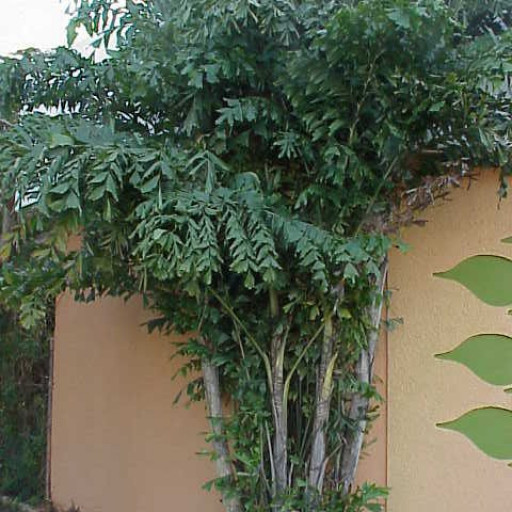
Plant Overview
The Caryota mitis, widely known as the Fishtail Palm, is nature’s version of a tropical mosaic. Originating from the lush rainforests of Southeast Asia, it earned its name from its unique, ragged-edged leaflets that look remarkably like the fins of a fish or jagged pieces of fabric. Unlike the typical "feather" or "fan" palms, this plant creates a dense, multi-stemmed screen that adds a sophisticated, jungle-like texture to any room or patio.
🔍 How to Identify
- 🍃 The Leaflets: This is the only palm genus with "bipinnate" leaves. Each individual leaflet is triangular and jagged at the ends, mimicking the shape of a fish's tail.
- 🎋 Clumping Stems: It grows in thick clusters rather than a single solitary trunk, often appearing bushy and full from the base up, similar to bamboo.
- 📿 The Inflorescence: When mature, it produces long, drooping clusters of flowers that hang down like heavy, beaded necklaces.
🏡 In Your Garden & Home
- 💧 Humidity is Key: While it is a hardy grower, dry indoor air is its greatest enemy. It thrives best when misted frequently or placed near a humidifier; otherwise, those beautiful "tails" will quickly develop crispy, brown tips.
- 🪴 The Taproot Rule: This palm is notoriously "transplant sensitive." It prefers to stay in the same pot for as long as possible, as disturbing its root ball can cause the plant to go into a sudden, dramatic decline.
- ☀️ Light Nuance: It loves bright, indirect light. Direct midday sun can scorch the delicate ragged edges of the leaves, while too much shade will make the growth leggy and sparse.
⚠️ Safety & Toxicity
- 🚫 Irritant Warning: The small, reddish-purple berries are NOT edible. They contain microscopic needle-like crystals of calcium oxalate.
- 🧤 Skin & Ingestion: Touching the flesh of the fruit can cause severe skin irritation and itching (contact dermatitis). If ingested by pets or children, it causes intense burning of the mouth and throat. It is best kept out of reach of curious nibblers.
✨ Fun Fact
The Fishtail Palm is "monocarpic," which means an individual stem will flower once from the top down and then die. However, don't panic! Because it is a clumping palm, the plant itself survives by constantly sending up new "suckers" from the base to replace the old stems.

Detailed Care Instructions
To grow Caryota Mitis plants, also known as the Fishtail Palm, follow these steps:
- Climate: Ensure that you are in a suitable climate for this tropical plant. Caryota Mitis thrives in warm, humid conditions and is generally hardy in USDA zones 10-11. It can also be grown indoors as a houseplant in other climates.
- Light: Provide bright, indirect sunlight for your Fishtail Palm. Avoid direct sunlight as it can scorch the leaves. Place it near a window that receives filtered light or provide artificial grow lights if growing indoors.
- Soil: Use a well-draining potting mix that is rich in organic matter. The soil should hold moisture but not become waterlogged. A mix of peat moss, perlite, and some sand works well.
- Potting: Choose a spacious pot with good drainage holes to accommodate the plant's root system. Transplanting every few years is recommended to provide enough space for the plant to grow.
- Watering: Keep the soil evenly moist but not soggy. Allow the top inch of soil to dry out slightly before watering again. Avoid overwatering, as Caryota Mitis is susceptible to root rot. Yellowing or drooping leaves may indicate overwatering, while wilted or crispy leaves may indicate underwatering.
- Humidity: Maintain a humid environment for your Fishtail Palm. You can increase humidity by misting the leaves with water daily, placing a tray of water near the plant, or using a humidifier.
- Fertilizer: Feed your Caryota Mitis plant with a balanced liquid fertilizer every month during the growing season (spring and summer). Follow the package instructions for the appropriate dosage.
- Pruning: Remove any dead, damaged, or yellowed leaves periodically. Pruning is not necessary unless you wish to shape the plant for aesthetic reasons.
- Propagation: Caryota Mitis can be propagated through seeds or by dividing the offshoots (pups) that develop at the base of the plant. Wait until the offshoots have grown a few leaves before separating them and planting them in their own pots.
- pests and diseases: Monitor your Fishtail Palm for common pests like spider mites, scale insects, and mealybugs. If necessary, treat them with insecticidal soap or neem oil. Ensure good airflow around the plant to minimize the risk of fungal diseases.
By following these care instructions, your Caryota Mitis plant should grow into a healthy and beautiful specimen.

Place in a window with dappled sun or a spot in the middle of a room. Or directly in a window facing west or east.

To water this plant, you should first determine if the soil is dry to the touch. If the soil is dry, you should water the plant thoroughly until water starts to come out of the drainage holes at the bottom of the pot. It is important to never let the soil completely dry out, as this can cause damage to the roots. However, overwatering can also be harmful to this plant, leading to root rot. It is best to water this plant when the top inch of soil feels dry, and to ensure that the soil has good drainage to prevent water from sitting in the pot. Additionally, this plant prefers to be watered with filtered or distilled water, as it is sensitive to minerals and chlorine in tap water.
To fertilize this plant, use a balanced fertilizer with equal proportions of nitrogen, phosphorus, and potassium. During the growing season, apply the fertilizer every two weeks, diluting it to half the recommended strength. Avoid fertilizing during the dormant season. Water the plant well before and after fertilizing to prevent root burn.
The Caryota Mitis plant prefers well-draining soil that is enriched with organic matter. The soil should be slightly acidic to neutral with a pH range of 5.5 to 7.0. It is beneficial to mix in sand or perlite to improve drainage and promote root health. The soil should be kept consistently moist but not waterlogged, as waterlogged soil can lead to root rot. Overall, a high-quality potting mix designed for tropical plants would be a good choice for the Caryota Mitis plant.
To propagate this plant, you can take the seeds from the fruit of an existing plant and plant them in a well-draining soil mix. It is important to keep the soil consistently moist and maintain a warm environment for germination. Once the seedlings have grown to a height of 6-8 inches, they can be transplanted into individual pots with a nutrient-rich soil mix. The plant should be kept in bright, indirect sunlight and watered regularly. It may take several years for the plant to mature and develop its characteristic trunk and fronds.
Common pests of the fishtail palm include Scale insect, mealybugs, spider mites. Make a habit of checking your fishtail palm frequently for pests so that any infestations can be caught and managed early.








