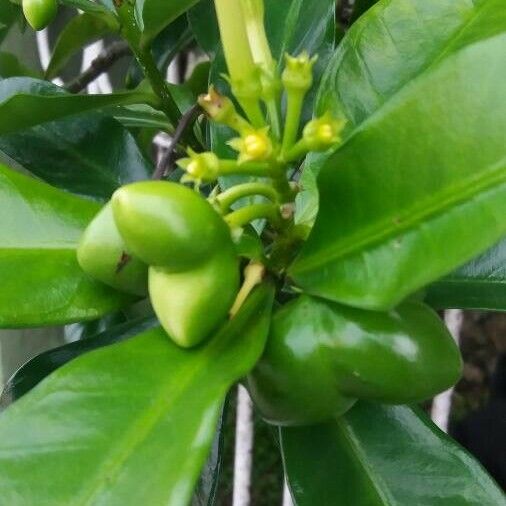
Plant Overview
Known as "Akits" in its native Yucatán Peninsula, Cascabela gaumeri is a sun-loving tropical treasure that looks like a permanent burst of sunshine. Often called the Yucatán Yellow Oleander, this resilient shrub or small tree is a close relative of the common Oleander but carries a more delicate, airy grace. In its homeland, it is a survivor, standing tall against the salty breezes and dry heat of the Central American coast.
🔍 How to Identify
- 🌿 The Foliage: Features long, narrow, lance-shaped leaves that are a deep, glossy green. They have a leather-like texture that helps the plant retain moisture during dry spells.
- 🎺 The Blooms: Produces elegant, trumpet-shaped flowers that are usually a vibrant lemon yellow or a soft apricot orange. They often emit a subtle, sweet fragrance in the heat of the day.
- 🥥 The Fruit: It bears unique, triangular or "gem-shaped" green fruits that eventually ripen to a dark, woody black. These fruits contain the plant’s infamous seeds.
🏡 In Your Garden
- ☀️ Sun & Soil: This plant is a "sun-worshipper" that thrives in full light. It is incredibly drought-tolerant and prefers well-draining, even sandy soil, making it a perfect candidate for xeriscaping or coastal gardens.
- ✂️ Growth Habit: While it can reach the size of a small tree, many gardeners keep it as a managed shrub. It responds well to pruning, but you must be cautious—the milky white latex (sap) that leaks from cuts can be very messy and irritating to the skin.
⚠️ Safety & Toxicity
- 🚫 Status: EXTREMELY TOXIC.
- 🐾 Details: Like all members of the Cascabela genus, every part of this plant contains cardiac glycosides. If ingested, it can cause severe heart rhythm issues, nausea, and dizziness. It is highly dangerous to dogs, cats, and livestock. Always wear gloves when pruning and ensure it is planted away from areas where children play.
✨ Fun Fact
In traditional Mayan culture, the dried, hollow seeds of the Cascabela were often used to create rhythmic rattles and percussion instruments known as "sonajas," which were worn around the ankles during ceremonial dances.

Detailed Care Instructions
To grow Cascabela Gaumeri plant, also known as the Cascabela thevetia or Yellow Oleander, follow these steps:
- Obtaining seeds or a sapling: You can purchase Cascabela Gaumeri seeds or saplings from a local nursery or online plant sellers. If you have access to an existing plant, you can also collect seeds from the plant's dried flowers.
- Selecting the location: Cascabela Gaumeri plants thrive in full sunlight, so select a spot in your garden that receives at least 6-8 hours of direct sunlight daily. Ensure that the soil is well-drained and slightly acidic.
- Preparing the soil: Before planting, loosen the soil and remove any weeds or rocks. Add organic matter, such as compost or well-rotted manure, to enrich the soil and improve drainage.
- Planting the seeds or sapling: If sowing seeds, prepare a small hole, about 1-2 inches deep, and place one seed into each hole. Cover the seeds with soil and lightly pat it down. Water gently to keep the soil moist but not waterlogged. If using a sapling, make a hole slightly deeper and wider than the root ball and gently place the plant into the hole. Backfill with soil, ensuring the root collar is level with or slightly above the ground.
- Watering: Water the plant regularly, especially during the initial growth phase, to keep the soil evenly moist. However, avoid overwatering as it can lead to root rot.
- Fertilizing: Feed your Cascabela Gaumeri plant with a balanced, slow-release fertilizer once every three to four months, following the package instructions. This will provide the necessary nutrients for healthy growth.
- Pruning: Prune your plant to maintain its shape and remove dead or damaged branches. Cascabela Gaumeri can be pruned in late winter or early spring before new growth begins.
- Protection from extreme temperatures: In colder climates, protect your plant from frost by covering it during harsh winter months or moving it indoors. Cascabela Gaumeri is native to tropical regions and thrives in warm temperatures.
- Pests and diseases: Keep an eye out for pests such as aphids or mealybugs. If you notice an infestation, treat it with insecticidal soap or the appropriate pesticide. Regularly inspect the plant for signs of diseases like leaf spots or root rot and take necessary action promptly.
Remember to always wear gloves and exercise caution when handling Cascabela Gaumeri as all parts of the plant are toxic if ingested. Keep it out of reach of children and animals.
To properly water this particular plant, you should first assess the soil moisture level before watering. To do so, insert your finger about an inch deep into the soil, and if it feels dry, then it's time to water. It's important not to over-water, as this can lead to root rot. When watering, use room temperature water and pour slowly at the base of the plant, allowing the water to soak into the soil. Avoid getting water on the foliage as this can increase the risk of fungal diseases. Water until the excess starts draining out of the bottom of the pot, taking care not to leave the plant standing in any excess water. The frequency of watering will depend on various factors such as the size of the pot, temperature, and humidity levels, but typically, it's recommended to water once or twice a week.
To effectively fertilize the Cascabela Gaumeri plant, first ensure that the soil is well-draining and rich in organic matter. The plant should be fed with a balanced fertilizer that has equal amounts of nitrogen, phosphorus, and potassium, which can be applied every two to three weeks during the growing season. During the dormant season, the plant should be fertilized less frequently, approximately once every two months. Avoid over-fertilizing the plant as this can result in burning of the roots and leaves. Additionally, applying a layer of compost or mulch around the base of the plant can help to boost nutrient levels and retain moisture in the soil.
The ideal soil for Cascabela Gaumeri plant should be well-draining with a pH level that ranges from slightly acidic to slightly alkaline. The soil should have a good balance of organic matter and should be loose enough to allow for proper aeration and root development. The plant also requires a soil that is rich in essential nutrients such as nitrogen, phosphorus, and potassium. It is recommended to use a soil mix that contains sand, peat moss, and perlite or vermiculite to ensure proper drainage and aeration. Additionally, the soil should be kept moist but not waterlogged as overwatering can lead to root rot and other diseases.
Propagation of this plant can be achieved through different methods such as seeds and vegetative propagation. For seeds, it is best to collect them from mature fruits and to soak them in water for about 24 hours before sowing. The seeds should be planted in well-draining soil and kept moist until germination occurs.
Vegetative propagation can be done through stem cuttings or division. Stem cuttings should be taken from healthy, mature stems and should be about 10-15 cm long. The leaves should be removed from the lower part of the stem, and the cutting should be planted in a well-draining soil mix. It is recommended that the cutting be treated with a rooting hormone before planting.
Division is another way to propagate this plant. It involves separating the plant into smaller sections, each with its own roots and shoots. This can be done by carefully digging up the plant and separating it into sections using a sharp knife. Each section should have at least one healthy shoot and root system.
Regardless of the propagation method used, it is important to keep the newly propagated plants in a warm, humid environment until they establish roots and begin to grow. Afterward, they should be slowly acclimated to the environment where they will be grown.








