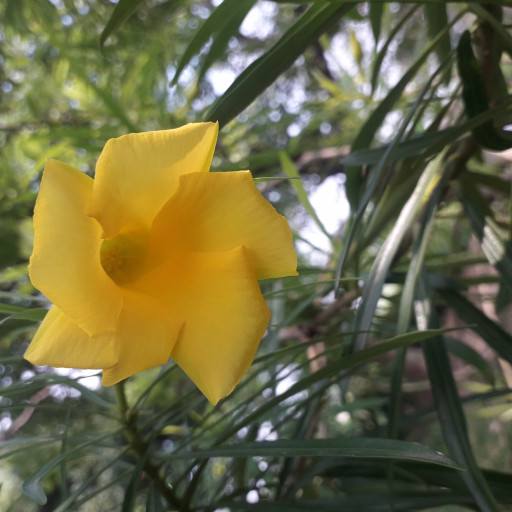
Plant Overview
Commonly called the "Yellow Oleander" or the "Lucky Nut," this tropical beauty brings a sun-kissed vibrance to any landscape. While its elegant, trumpet-shaped blooms and glossy foliage are mesmerizing, it carries an air of mystery and legendary danger. Native to Mexico and Central America, it is often used as a privacy screen or ornamental hedge, prized for its ability to thrive in intense heat where other plants might wither.
🔍 How to Identify
- 🍃 Glossy Foliage: The leaves are long, narrow, and lance-shaped, resembling willow leaves with a waxy, dark green finish that reflects the sunlight.
- 🎺 Trumpet Blooms: It produces clusters of funnel-shaped flowers, most commonly in a brilliant "canary" yellow, though soft apricot and orange varieties are also popular.
- 💎 Angular Fruit: It grows unique, green, diamond-shaped fruits that eventually ripen to a dull black color, hiding the large seeds inside.
🏡 In Your Garden
- 🌞 Sun & Heat Nuance: This plant is a true "sun-worshipper." It flourishes in full sun and becomes incredibly drought-tolerant once established. It is an excellent choice for coastal gardens as it handles salt spray remarkably well.
- 🪴 Drainage is Key: While it isn't picky about soil quality, it absolutely hates "wet feet." Ensure it is planted in well-draining soil, as stagnant water will quickly lead to root rot and yellowing leaves.
- ✂️ Pruning Style: It naturally grows as a large shrub but can be trained into a small, multi-trunked tree. Always wear gloves when pruning to avoid contact with its sticky, white latex sap.
⚠️ Safety & Toxicity
- 🚫 Extreme Toxicity: WARNING. All parts of this plant—leaves, flowers, fruit, and sap—contain potent cardiac glycosides. Ingestion can cause serious heart rhythm issues and is a major medical emergency.
- 🐾 Pets & Children: This plant is highly dangerous to dogs, cats, livestock, and children. It should never be planted near play areas or in pastures. Even the smoke from burning the wood can be toxic if inhaled.
✨ Fun Fact
The common name "Lucky Nut" comes from a tradition where the large seeds were carried in pockets as charms or used in jewelry. However, this is a dangerous practice, as the toxins can sometimes be absorbed through broken skin!

Detailed Care Instructions
To grow Cascabela Thevetia plant, also known as yellow oleander or lucky nut, you can follow these steps:
- Climate: Choose a location that has a warm and tropical climate. Yellow oleander plants thrive in areas with temperatures between 60-85°F (15-30°C) and can tolerate some drought but prefer moist conditions.
- Soil: Yellow oleander plants prefer well-draining soil with a pH level between 6.5-7.5. Mix organic matter like compost into the soil to improve its fertility.
- Planting: Purchase Cascabela Thevetia seeds or seedlings from a reputable nursery. Plant the seeds or seedlings in a prepared hole that is slightly larger than the root ball. Space multiple plants about 6-8 feet apart.
- Sunlight: Yellow oleander plants require full sunlight exposure for at least 6-8 hours each day. Ensure they are planted in a location where they will receive ample sunlight.
- Watering: Provide regular watering to the plants, especially during the first few months of growth. Once established, yellow oleander plants can withstand some drought but should still be watered when the soil feels dry.
- Fertilizer: Apply a balanced slow-release fertilizer to the plants every few months during the growing season to promote healthy growth.
- Pruning: Prune yellow oleander plants to maintain their shape and remove any dead or diseased branches. You may also choose to remove suckers that sprout from the base of the plant to focus its energy on vertical growth.
- Pests and Diseases: Monitor the plants for common pests like aphids, spider mites, or scale insects. Treat any infestations promptly with appropriate insecticides. Watch out for diseases such as root rot or leaf spot and take appropriate actions if detected.
- Propagation: Cascabela Thevetia plants can also be propagated through stem cuttings. Take 6-8 inch long cuttings from healthy plants, remove the lower leaves, and plant them in moist potting soil. Keep the soil consistently moist and place the pot in a warm location to facilitate root development.
- Safety Note: It is important to note that all parts of the Cascabela Thevetia plant are toxic if ingested. Take precautions to keep it away from children, pets, and livestock.
By following these steps, you should be able to successfully grow Cascabela Thevetia plant.

Place in a bright room that is sun drenched almost all day. Or directly in a south-facing window.

The best way to water the plant is to take care not to overwater it. A good rule of thumb is to allow the soil to dry out a bit between waterings. When watering, pour water directly on the soil, avoiding the leaves and stems. Use a watering can or hose with a gentle flow to avoid disturbing the soil or the plant's root system. Avoid standing water around the base of the plant, as this can create conditions that encourage root rot and other problems. Pay close attention to the plant's water needs during the summer months, as it may require more frequent watering during hot, dry weather.
For optimal fertilization of this plant, it is recommended to use a slow-release fertilizer high in phosphorus and potassium, with a ratio of 10-30-10. Apply the fertilizer evenly around the base of the plant, avoiding contact with the foliage. Water thoroughly after fertilizing. Fertilize once every four weeks during the growing season, from spring to fall. However, it is important not to over-fertilize as it may cause damage to the plant. Always follow the instructions on the fertilizer package and adjust the amount of fertilizer accordingly based on the size of the plant.
The recommended soil type for this plant is a well-draining, slightly acidic soil with a pH between 6.0 and 7.0. It is also recommended to amend the soil with organic matter such as compost or aged manure to improve soil quality and fertility. Avoid using heavy clay soils or soils with poor drainage as they can lead to root rot. Additionally, the plant prefers a soil that is rich in nutrients, so fertilizing regularly with a balanced fertilizer is recommended.
Cascabela Thevetia plant can be propagated through seeds or stem cuttings. For seed propagation, collect the mature fruits from the plant when they turn yellow. Remove the seeds from the fruits and soak them in water for about 24 hours. Sow the seeds in a pot filled with a well-draining potting mix and keep the soil moist. The seeds usually germinate within 2-3 weeks.
For stem cutting propagation, select a healthy stem from the plant and cut it just below a node using a sharp knife or pruner. Remove the leaves from the lower part of the stem and dip the cut end in rooting hormone powder. Plant the stem cutting into a pot filled with a well-draining potting mix and keep the soil moist. Cover the pot with a plastic bag to create a humid environment for the cutting. The cutting usually roots within 4-6 weeks.
Both methods of propagation require warm temperatures and bright, indirect light. Once the new plant has rooted, it can be transferred to a larger pot or planted directly in the ground. The plant prefers full sun to partial shade and well-draining soil. It also requires regular watering but can tolerate periods of drought.
Common pests of the luckynut include Scale insect, mealybugs, spider mites, aphids, larvae. Make a habit of checking your luckynut frequently for pests so that any infestations can be caught and managed early.








