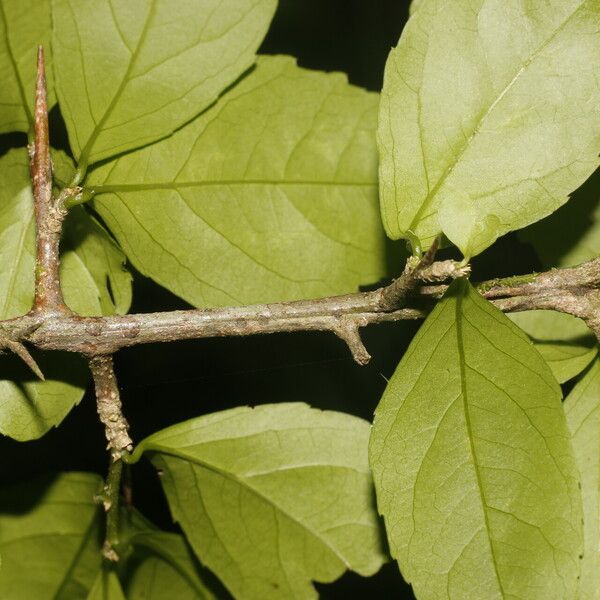
Plant Overview
Often called the "Witch’s Thorn" or "Guia-perro," Casearia aculeata is a resilient shrub or small tree native to the sun-drenched landscapes of the Caribbean and Central America. Known for its defensive personality, it guards its territory with sharp, needle-like spines, making it a natural fortress in the wild and a fascinating study in botanical self-defense.
🔍 How to Identify
- 🌵 The Armor: Features sharp, woody spines (thorns) that emerge from the leaf axils or along the branches; younger branches often display a distinct "zig-zag" growth pattern.
- 🍃 The Secret Map: If you hold a leaf up to the sunlight, you will see tiny, translucent "pellucid dots" and lines. These are not holes, but internal oil glands unique to its family.
- 🌼 Bundled Blooms: It produces clusters of small, inconspicuous white or yellowish-green flowers that lack petals, emerging in tight bundles (fascicles) where the leaves meet the stem.
🏡 In Your Garden
- 🧱 The Living Fence: Due to its dense growth and formidable thorns, this plant is frequently used in tropical regions as a natural security hedge or boundary marker to deter unwanted visitors.
- 🌊 Coastal Warrior: It is incredibly "tough-as-nails" when it comes to environment; it thrives in limestone-rich soils and is highly resistant to salt spray, making it ideal for seaside landscapes.
⚠️ Safety & Toxicity
- 🩹 Physical Hazard: The primary danger of Casearia aculeata is its sharp spines. They are strong enough to puncture skin and clothing, so heavy-duty leather gloves are a must during pruning.
- 🐾 Pet & Child Safety: While the plant is not widely recorded as highly toxic if ingested, its thorns pose a significant risk of injury to curious pets or children playing nearby.
✨ Fun Fact
- 🧪 Chemical Camouflage: Those "pellucid dots" in the leaves are essentially tiny chemical factories. They store secondary metabolites that give the leaves a bitter taste, protecting the plant from being eaten by most herbivores.

Detailed Care Instructions








