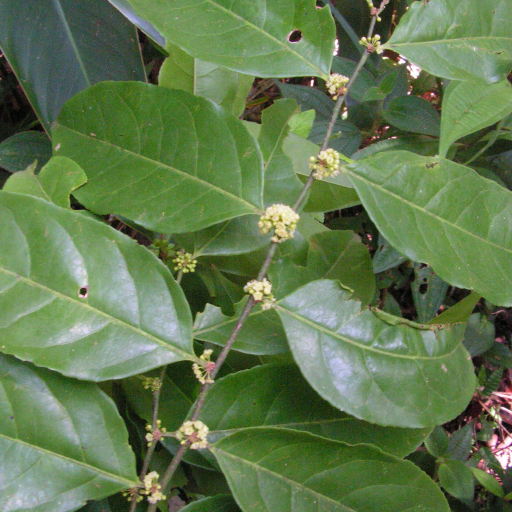
Plant Overview
Known widely in South America as Guassatunga or Chá-de-bugre, this hardy evergreen is a legendary figure in Brazilian folk medicine. It is often nicknamed the "Snake Plant" (not to be confused with the common houseplant) because of its historical use in treating forest bites and stings. Whether found as a sprawling shrub or a slender tree, it is prized for its glossy, "zigzag" branches and its incredible resilience in tropical landscapes.
🔍 How to Identify
- 🍃 Pellucid Dots: If you hold a leaf up to the sun, you will see tiny, translucent "windows" or dots. These are actually internal glands filled with essential oils.
- 🌿 Zigzag Stems: The leaves grow in an alternating pattern, giving the young branches a distinct, slightly bent or zigzagging appearance.
- 🍒 Tri-valved Fruit: The plant produces small, spherical green fruits that turn a vivid orange or red. When ripe, they split into three parts to reveal seeds nestled in a bright red, fleshy coating.
🏡 In Your Garden
- ☀️ Sun Seeker: This plant is a "pioneer species," meaning it loves being the first to colonize a space. It thrives in full sun but is remarkably patient with partial shade, making it a flexible choice for garden borders.
- 💧 Drought Defense: Once established, it is incredibly drought-tolerant thanks to its deep-reaching root system. It prefers well-draining soil and doesn't like "wet feet" (roots sitting in stagnant water).
⚠️ Safety & Toxicity
- ✅ Generally Safe: It is widely used in herbal teas and topical creams. However, "medicinal" does not mean "edible in bulk."
- 🧤 Skin Sensitivity: The high concentration of resins and essential oils in the leaves can cause mild dermatitis or a rash in people with sensitive skin if the leaves are crushed and handled frequently.
- 🐾 Pet Caution: While not listed as highly toxic, the presence of saponins can cause digestive upset (vomiting or drooling) in cats and dogs if they ingest a significant amount of the foliage or berries.
✨ Fun Fact
- 🧪 Nature’s Lab: Scientists are currently studying "Casearins" found in this plant—unique chemical compounds that show significant promise in modern medicine for their ability to neutralize certain types of snake venom and inhibit the growth of harmful cells.

Detailed Care Instructions
To grow Casearia sylvestris plant, also known as Christmas Bush or Baniré, follow these steps:
- Obtain seeds or cuttings: You can collect seeds from mature Casearia sylvestris fruits or purchase them from a reputable nursery. You can also take semi-hardwood cuttings from a healthy plant to propagate new ones.
- Prepare the soil: Casearia sylvestris prefers well-draining soil that is rich in organic matter. Mix compost or well-rotted manure into the soil to improve its fertility.
- Germination: If starting from seeds, soak them in water for 12-24 hours to soften the hard seed coat. Sow the seeds in seedling trays or pots filled with a seed-starting mix. Cover the seeds lightly with soil and water gently. Maintain a slightly damp soil surface, and the seeds should germinate within 2-4 weeks.
- Transplanting: Once the seedlings have grown to a suitable size (usually when they have developed several true leaves), carefully transplant them into larger pots or directly into the ground. Space each plant about 2-3 feet apart to allow for proper growth.
- Provide sunlight: Casearia sylvestris requires full sun to partial shade. Ensure your plant receives at least 6 hours of direct sunlight each day.
- Watering: Keep the soil consistently damp but not waterlogged. Water the plants deeply when the top inch of soil feels dry. Avoid overwatering, as it can lead to root rot.
- Fertilization: Apply a balanced slow-release fertilizer once every three months during the growing season to provide essential nutrients for healthy growth.
- Pruning: Casearia sylvestris responds well to pruning. Regularly trim back any dead or damaged branches to maintain the plant's shape and promote bushier growth.
- Protection from frost: If you live in a region with cold winters, provide protection from frost by covering the plant with a frost cloth or moving potted plants indoors.
- Pest and disease control: Monitor your plant for common pests like aphids or mealybugs. Treat any infestations promptly with appropriate insecticidal soap or natural remedies. Casearia sylvestris is relatively resistant to diseases, but ensure good air circulation and avoid overwatering to prevent fungal issues.
By following these guidelines, you can successfully grow and care for Casearia sylvestris plants in your garden or as potted specimens.
To water this plant, first observe the soil moisture content by sticking your finger into the soil up to the first knuckle. If the soil feels dry at this depth, thoroughly water the plant. However, if the soil still feels moist, wait before watering to avoid overwatering. When it is time to water, do so slowly and evenly to ensure the water permeates the soil. Avoid watering the leaves, as this can increase the likelihood of fungal growth and other diseases. Additionally, it is best to use room temperature water to avoid shocking the roots. Finally, be sure to allow any excess water to drain out of the pot, as standing water can rot the roots and damage the plant.
For optimal growth and development, this plant requires regular fertilization during the growing season. Begin by selecting a balanced, slow-release fertilizer with equal amounts of nitrogen, phosphorous, and potassium. Apply the fertilizer around the base of the plant, taking care not to let it touch the leaves or stems. Water the plant immediately after fertilizing to help the nutrients soak into the soil. Repeat this process every 4-6 weeks throughout the growing season, stopping fertilization in late summer. Remember to follow the instructions on the fertilizer packaging for specific application rates and timing.
When growing Casearia Sylvestris, it is important to choose a soil that provides adequate drainage and aeration. The soil should also be rich in organic matter and have a pH level between 6.0 to 7.0. A recommended soil mix consists of equal parts peat moss, perlite, and garden soil. Additionally, adding some sand to the soil mix can help increase drainage. It is important to ensure that the soil is moist, but not waterlogged, as overwatering can lead to root rot. When planting, ensure that the plant is placed at the same soil level as it was previously or slightly higher. Regular fertilization with a balanced, all-purpose fertilizer can also help promote healthy growth and development.
To propagate this particular plant, first, collect cuttings from the mother plant. Choose healthy stems with a diameter of around 1cm and a length of around 15cm.
Remove the lower leaves from the cutting, leaving only a few at the top. Dip the end of the cutting in rooting hormone to encourage root growth.
Prepare a pot with a well-draining soil mixture, such as a combination of peat moss, perlite, and sand. Make a hole in the soil and insert the cutting, gently pressing the soil around it to hold it in place.
Water the cutting thoroughly, making sure the soil is evenly moist but not waterlogged. Cover the pot with a plastic bag and place it in a warm, bright location.
Check the cutting regularly to make sure the soil stays moist. After a few weeks, you should see new growth starting to emerge. At this point, you can remove the plastic bag and continue to care for the new plant as you would any other.








