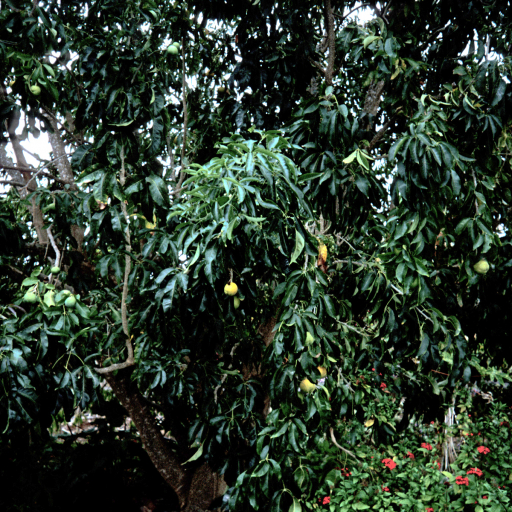
Plant Overview
Known as the "Mexican Apple" or "White Sapote," this evergreen tree produces what many call the "ice cream fruit" due to its incredibly creamy, custard-like texture and hints of peach and vanilla. Despite its name, it isn't a true sapote; it is actually a distant relative of the lemon and orange. Native to the highlands of Mexico and Central America, it has been a prized backyard treasure for centuries.
🔍 How to Identify
- 🍃 Hand-Shaped Leaves: The foliage is "palmately compound," meaning 3 to 5 leaflets radiate from a single point like the fingers of a hand. They are shiny, bright green, and have a leathery feel.
- 🍏 The Fruit: Round or slightly pear-shaped, the fruit remains green or turns a pale yellowish-green when ripe. The skin is notoriously thin—almost like a soft plum—making it very delicate to handle.
- 🌳 Growth Habit: This is a vigorous, medium-to-large tree with a broad, drooping canopy. The bark is light gray and often dotted with small, corky lenticels (breathing pores).
🏡 In Your Garden
- 🌱 Drainage is Key: While the White Sapote is a hardy grower, it "hates wet feet." It requires exceptionally well-draining soil to prevent root rot. Once established, it is surprisingly drought-tolerant and can handle light frosts that would kill a mango tree.
- ✂️ Vigorous Roots: Be mindful of where you plant it. The root system is aggressive and thirsty; keep it well away from septic lines, pipes, or garden pathways that might be lifted by growing roots.
- 🍎 Patience in Harvest: The fruit is a favorite of birds and squirrels. To save your harvest, pick the fruit while it is still hard but has turned from dark green to a lighter yellowish hue, then let it soften on your kitchen counter.
⚠️ Safety & Toxicity
- ✅ Fruit Edibility: The soft, white pulp is perfectly safe and delicious for humans. It is rich in vitamins A and C.
- 🚫 Seed Warning: The large, almond-shaped seeds are toxic and should never be eaten. They contain compounds that can cause a drop in blood pressure or drowsiness.
- 🐾 Pets & Children: While the fruit flesh is safe, ensure that pets (especially dogs) do not swallow the seeds. The leaves also contain bitter compounds used in traditional medicine as a sedative, so they should not be ingested.
✨ Fun Fact
The Aztec name for this plant was cochitzapotl, which translates literally to "sleep-sapote." It was widely believed that eating the fruit before bed would induce a deep, peaceful slumber and help cure insomnia!

Detailed Care Instructions
To grow a Casimiroa edulis plant, also known as white sapote or Mexican apple, follow these steps:
- Obtaining seeds or seedlings: You can buy Casimiroa edulis seeds online or from a reputable nursery. Alternatively, you can grow a new tree from the seeds of a fruit, which can be obtained from a ripe Casimiroa edulis fruit purchased at a local store or farmer's market.
- Germination: If you have seeds, soak them in water for about 48 hours before planting to improve germination rates. Plant the seeds in a seed-starting mix or a well-draining potting soil. Sow the seeds about 1 inch (2.5 cm) deep and cover them lightly with soil. Keep the soil moist but not waterlogged.
- Transplanting: Once the seedlings have grown to a height of at least 6-8 inches (15-20 cm) and have developed a strong root system, they can be transplanted to larger pots or the ground. Choose a location with well-drained soil and full sun exposure for optimal growth.
- Soil and Watering: Casimiroa edulis plants prefer well-draining soil, rich in organic matter. Make sure the soil is moist but not waterlogged. Water the plant regularly, especially during dry periods. However, be cautious to avoid overwatering, which can lead to root rot.
- Fertilization: Fertilize the plant once a month during the growing season (spring and summer) with a balanced fertilizer to enhance growth. Follow the manufacturer's instructions for dosage and application.
- Pruning: Prune your Casimiroa edulis plant to remove any dead or damaged branches. Additionally, light pruning can help maintain the desired shape and encourage new growth.
- Protection from Frost: Casimiroa edulis plants are sensitive to frost, so if you live in a colder climate, it's important to protect the young plant from freezing temperatures. Consider covering the plant with frost cloth or bringing it indoors during frosty nights.
- Pollination: Casimiroa edulis plants are usually self-fertile but may benefit from cross-pollination with another variety. If possible, plant multiple Casimiroa edulis trees or encourage pollinators, such as bees, to visit your garden.
- Harvesting: The fruits of Casimiroa edulis typically ripen in late summer or fall. The fruit should be allowed to ripen on the tree before harvesting by gently twisting or cutting it from the branch. Enjoy the fruit fresh or use it in various culinary preparations.
Casimiroa edulis trees can take several years to reach maturity and begin bearing fruit, so be patient and provide the necessary care and attention to ensure your plant thrives.

Place in a bright room that is sun drenched almost all day. Or directly in a south-facing window.

1. Determine the appropriate soil moisture level for the plant based on its natural habitat and growing conditions.
2. Ensure that the plant is planted in well-draining soil to prevent waterlogged roots.
3. Water the plant deeply and thoroughly, soaking the roots but avoiding waterlogging.
4. Water more frequently during the plant's growing season or during periods of drought.
5. Allow the soil to dry out slightly between watering, but avoid completely drying out the soil.
6. Avoid overwatering or underwatering as these can lead to root rot or dehydration.
7. Monitor the plant's growth and adjust the watering schedule as necessary.
To fertilize this plant, you should use a balanced fertilizer with equal amounts of nitrogen, phosphorus, and potassium. Apply the fertilizer every two to three months during the growing season, using a rate of 1 tablespoon per square foot of soil. Spread the fertilizer evenly around the base of the plant, being careful not to get any on the leaves or stems. Water the fertilizer in well after applying. Avoid fertilizing during the winter or during periods of drought or stress, as this can damage the plant.
For Casimiroa Edulis plants, a well-draining soil mix is ideal. It is recommended to use a soil mix that is slightly acidic to neutral with a pH range of 6.0-7.0. The soil mix should also be rich in organic matter and nutrients. A good mix can be made by combining equal parts of peat moss, perlite, and coarse sand, along with a small amount of vermiculite. This soil mix will provide good drainage and aeration, while also retaining enough moisture to keep the roots healthy. It is important to avoid heavy clay soils or soils that are prone to waterlogging as these can cause root rot and other issues. Regular fertilization and watering are also recommended to ensure the plant grows well.
To propagate this plant, you will need to gather fresh seeds from mature fruit. Once you have the seeds, you will need to soak them in warm water for 24 hours to soften the seed coat. After soaking, plant the seeds in a well-draining potting mix and cover with a thin layer of soil. Keep the soil consistently moist but not waterlogged, and place the pot in a warm and bright location.
The seeds will germinate in 2-4 weeks and will begin to grow quickly. Once the seedlings have reached a size where they can be handled, transplant them to individual pots. Keep the pots in a warm and bright location with consistent moisture until the plants are large enough to be planted in their permanent location outdoors.
Propagation can also be done by taking stem cuttings, but this is a more difficult method and should be attempted by experienced gardeners. Cuttings should be taken from new growth, and treated with rooting hormone before being placed in a well-draining potting mix. Keep the soil consistently moist and in a warm, bright location until roots have formed and the plant can be transferred to a larger pot or planted outside.








