Plant Overview
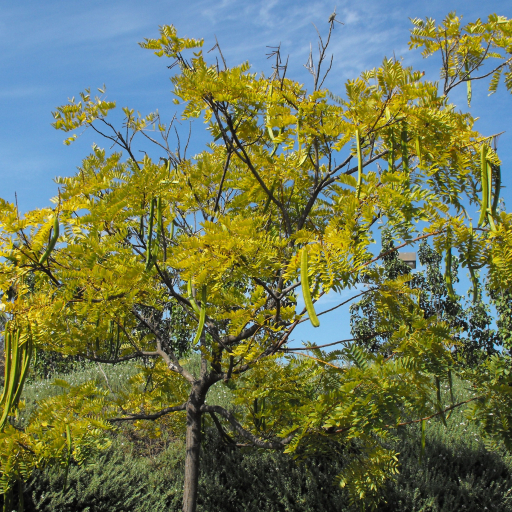
Known affectionately as the Gold Medallion Tree, this Brazilian beauty is a showstopper that brings a touch of tropical royalty to any landscape. During the summer, it transforms into a glowing beacon of yellow, covered in massive, globe-like flower clusters that look like golden ornaments. It is a favorite for those wanting a fast-growing shade tree that doesn't just sit there—it performs.
🔍 How to Identify
- 🌼 The Flowers: Large, terminal clusters of bright yellow blossoms that can reach up to 8 inches in diameter. They appear in mid-to-late summer, often covering the entire canopy.
- 🌿 The Foliage: Feathery, dark green leaves (pinnately compound) that give the tree a soft, airy texture even when it isn't in bloom.
- 🫛 The Seed Pods: After the flowers fade, long, dark brown woody pods appear. These can grow up to a foot long and hang like ornaments from the branches.
🏡 In Your Garden
- 🌳 Growth & Structure: This tree is loved for its "instant" shade. It grows rapidly and naturally forms a wide, spreading umbrella shape, making it perfect for patios or street-side planting.
- 💧 Establishment Nuance: While it is incredibly drought-tolerant once mature, it has a sensitive root system when young. Avoid moving it once planted, as it resents "transplant shock" and prefers to stay put in well-draining soil.
- 🌬️ Wind Sensitivity: Because it grows so fast, the wood can be somewhat brittle. It is best planted in a spot protected from heavy gusting winds to prevent branch breakage.
⚠️ Safety & Toxicity
- 🐾 Mild Toxicity: Like many members of the legume family, the seeds and pods contain compounds (anthraquinones) that can have a strong laxative effect if ingested.
- 👶 Precaution: Keep an eye on curious pets or children who might be tempted to play with or "taste" the fallen seed pods, as they can cause stomach upset or nausea.
✨ Fun Fact
Despite its delicate, feathery appearance, the Gold Medallion Tree is a survivor—it is one of the few tropical-looking trees that can actually handle light frosts once it is established, making it a "tough-as-nails" choice for Mediterranean climates!

Detailed Care Instructions
To grow Cassia leptophylla, also known as Gold Medallion tree or Gold Medallion cassia, follow these steps:
- Climate and location: Cassia leptophylla thrives in USDA hardiness zones 9 to 11, where temperatures don't drop below 20°F (-6°C). Choose a location with full sun exposure and well-draining soil.
- Soil preparation: Prepare the soil by removing any weeds or debris. Cassia leptophylla prefers a slightly acidic to neutral soil pH (6.0 to 7.5). Amend the soil with organic matter, such as compost, to improve drainage and fertility.
- Planting: Dig a hole that is approximately twice the size of the root ball. Place the plant in the hole, making sure it sits at the same depth as it was growing in the nursery container. Backfill the hole with soil, gently firming it around the roots. Water thoroughly after planting to settle the soil.
- Watering: After planting, water the Cassia leptophylla deeply and regularly to keep the soil moist but not waterlogged. Once established, it can tolerate some dryness, but regular watering during hot and dry periods is recommended.
- Fertilization: Apply a balanced slow-release fertilizer in early spring and early summer to promote healthy growth. Follow the manufacturer's instructions for dosage and application.
- Pruning: Prune Cassia leptophylla to maintain its shape and to remove any dead or diseased branches. It is best to prune it in late winter or early spring before new growth begins.
- Mulching: Apply a layer of organic mulch around the base of the plant. This helps conserve moisture, suppress weed growth, and insulate the roots from extreme temperatures.
- Pest and disease control: Cassia leptophylla is generally not prone to serious pest or disease problems. However, you should regularly inspect the plant for common issues like aphids or scale insects. Treat any pests promptly with insecticidal soap or neem oil.
Remember to research any specific growing conditions or recommendations for your specific region or microclimate, as they may vary.

Place in a bright room that is sun drenched almost all day. Or directly in a south-facing window.

Cassia Leptophylla plant needs regular watering to keep it healthy. Ensure that the soil is consistently moist but not waterlogged, as it may lead to root rot. One way to know when to water the plant is to insert a finger into the soil, and if it feels dry to the touch, water the plant. During the summer months, when the weather is hot and dry, the plant may require more frequent watering than usual. Additionally, avoid spraying water on the leaves as it may lead to fungal diseases. It is recommended to use a watering can or drip irrigation system to water the plant at the base.
- Choose a well-draining soil rich in organic matter.
- Fertilize once a month during growth season using a balanced fertilizer with equal N-P-K ratio.
- Apply the fertilizer to the soil around the base of the plant, avoiding contact with the stem or foliage.
- Water thoroughly after fertilizing to help the nutrients soak into the soil.
- Monitor the plant's growth and adjust fertilization as needed based on its response.
The ideal soil for the Cassia Leptophylla plant should be well-draining and rich in nutrients. It should have a slightly acidic to neutral pH level, between 6.0 to 7.5. The plant thrives in soil that is slightly moist, but not soggy or waterlogged, so ensure that drainage is adequate to prevent waterlogging. A suitable soil mixture can be created by mixing equal parts of garden soil, compost or peat moss, and sand or perlite to improve drainage. It is also recommended to avoid using heavy clay soils or soils that have high salinity levels. As a tropical plant, the Cassia Leptophylla prefers warm temperatures and a humid environment, so adding organic matter or mulch to the soil can help retain moisture and regulate temperature.
Propagation of this plant can be done using seeds or cuttings. To propagate using cuttings, cut a stem from the parent plant and remove the leaves from the lower half of the stem. Dip the cut end in rooting hormone powder and plant it in a potting mix that is kept moist. Place the cutting in a warm and bright location, but not direct sunlight. Keep the soil moist and in a few weeks, roots will start to form. Once the roots have developed, the plant can be transplanted into a larger pot or into the ground.
To propagate using seeds, gather seeds from the parent plant and plant them in a potting mix. Cover the seeds lightly with soil and keep the soil moist. Place the pot in a warm and bright location, but not direct sunlight. Seedlings should emerge in a few weeks. Once the seedlings have developed a few leaves, they can be transplanted into larger pots or into the ground.








