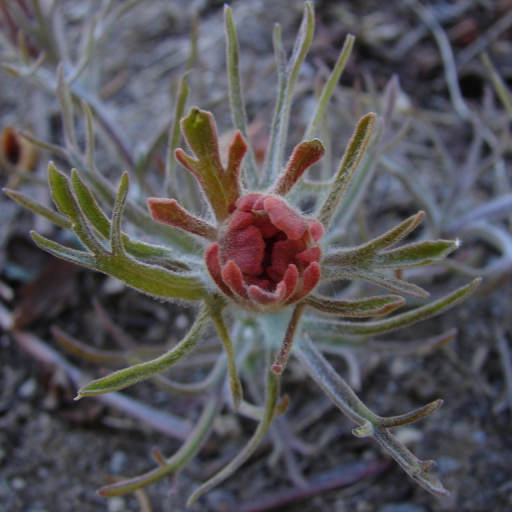
Plant Overview
Often called the Cobwebby Indian Paintbrush, this resilient mountain dweller looks like it has been delicately spun in a spider’s web. Native to the high-elevation rocky slopes of the Pacific Northwest and Northern California, it is a master of survival in harsh, windswept environments. Its ghostly, silver-grey appearance makes it a standout among the more vibrantly colored members of the Paintbrush family.
🔍 How to Identify
- 🕸️ The "Cobweb" Coating: The entire plant is covered in dense, tangled white hairs (pubescence) that give it a fuzzy, felt-like texture and a silver-green hue.
- 🎨 Muted Bracts: Unlike its bright red cousins, this species features bracts (modified leaves) that are usually a subtle dull yellow, ochre, or purplish-red.
- 📏 Compact Stature: It is a low-growing perennial, typically reaching only 10 to 30 centimeters in height, forming small, sturdy tufts among the rocks.
🏡 In Your Garden
- 🌱 The Secret Life of a Parasite: Like all Castilleja species, this plant is hemiparasitic. It hitches its roots onto those of neighboring plants (often grasses or buckwheats) to steal water and minerals. This makes it notoriously difficult to grow in a traditional garden without a "host" plant companion.
- 🏔️ Alpine Specialist: It thrives in poor, rocky, and extremely well-draining soil. In the wild, it acts as a hardy anchor for loose scree and volcanic slopes, enduring intense UV rays and freezing nights.
⚠️ Safety & Toxicity
- 🟢 Non-Toxic Assessment: The Cobwebby Indian Paintbrush is generally considered non-toxic to humans and pets upon contact.
- ☢️ Selenium Warning: A fascinating but cautious note—Paintbrushes are known to accumulate selenium from the soil in their tissues. If grown in selenium-rich ground, the plant can become toxic if ingested in large quantities by livestock or curious pets.
✨ Fun Fact
The "flowers" you see are actually a clever disguise! The colorful parts are modified leaves called bracts; the actual flowers are tiny, slender green tubes tucked hidden inside the woolly, colorful display.

Detailed Care Instructions
Growing Castilleja arachnoidea, commonly known as golden paintbrush, requires specific conditions. Here are some steps to help you grow this plant:
- Location: Choose a sunny spot in your garden with well-draining soil. Castilleja arachnoidea prefers full sun but can tolerate a little shade.
- Soil preparation: Prepare the soil by removing any weeds or grass. Loosen the soil and add organic matter like compost or aged manure to improve drainage and fertility.
- Seeds or transplants: You can start with either seeds or transplants. Purchase seeds from a reputable source or obtain transplants from a native plant nursery. If using seeds, stratify them in the refrigerator for a few weeks before sowing.
- Sowing or planting: Sow the seeds directly into the prepared soil in early spring to mid-summer. Alternatively, plant the transplants during the same time frame, spacing them about 8-12 inches apart.
- Watering: Water the newly planted seeds or transplants gently to keep the soil evenly moist until they establish. Afterward, water them during dry spells to avoid drought stress.
- Maintenance: Once the plants are established, they are relatively low-maintenance. However, ensure they receive adequate water during dry periods. Remove weeds to prevent competition for nutrients and space.
- Mulching: Apply a layer of mulch around the plants to conserve moisture, suppress weeds, and provide some insulation during extreme temperatures.
- Pruning and deadheading: After the golden paintbrush blooms, deadhead the spent flowers to encourage more blooms. Also, prune the plants back in late fall after the foliage has turned brown.
- Pest and disease control: Castilleja arachnoidea is generally resistant to pests and diseases. However, check for any signs of trouble like aphids, powdery mildew, or leaf spot. Address these issues promptly using appropriate organic methods.
Remember that Castilleja arachnoidea is a native plant species, so it is essential to respect local regulations and avoid collecting plants or seeds from the wild. Instead, choose ethically sourced seeds or transplants from reliable nurseries to contribute to conservation efforts.

Place in a bright room that is sun drenched almost all day. Or directly in a south-facing window.

To effectively water Castilleja arachnoidea, it is essential to consider a few important aspects. Firstly, understanding the specific watering requirements of the plant can help ensure its overall health and growth.
1. Determine watering frequency: Castilleja arachnoidea prefers moderate watering, as excessive moisture can lead to root rot. It is advisable to allow the top inch of soil to dry out slightly between waterings to prevent overwatering.
2. Observe soil moisture level: Before watering, it is recommended to check the soil's moisture content. Inserting a finger or a moisture meter into the soil can help determine if watering is required. If the soil feels slightly dry, it indicates that it is an appropriate time to water the plant.
3. Watering method: When watering Castilleja arachnoidea, it is advisable to use a gentle and slow-watering method. This can be achieved by using a watering can or a hose with a nozzle attachment to deliver a steady stream of water to the base of the plant. Avoid using strong water pressure that may dislodge the delicate roots or disturb the surrounding soil.
4. Watering depth: It is crucial to water the plant deeply, allowing the water to penetrate the root zone. This encourages the development of a strong and robust root system. Ensure that the water reaches a depth of at least 6-8 inches into the soil to adequately hydrate the plant.
5. Avoid foliage wetting: While watering, it is important to avoid wetting the foliage of Castilleja arachnoidea, especially during the evening or nighttime, as wet leaves can encourage the development of fungal diseases. Direct the water towards the base of the plant to prevent unnecessary moisture on the leaves.
6. Consider environmental factors: Factors such as temperature, humidity, and the plant's overall health can also influence the watering needs of Castilleja arachnoidea. During hot and dry conditions, the plant might require more frequent watering to compensate for increased water evaporation.
7. Mulching: Applying a layer of organic mulch around the base of the plant can help retain soil moisture and regulate temperature. This can reduce the frequency of watering required and provide a favorable environment for the plant's growth.
Remember to regularly monitor the plant's response to watering. Over time, you will develop a better understanding of its specific requirements and adapt the watering routine accordingly to ensure the optimal health and vitality of your Castilleja arachnoidea plant.
To properly fertilize the Castilleja arachnoidea plant, follow these instructions:
- Choose a well-balanced, water-soluble fertilizer with a ratio close to 10-10-10 or 20-20-20. The numbers represent the percentages of nitrogen (N), phosphorus (P), and potassium (K) in the fertilizer.
- Dilute the fertilizer according to the manufacturer's instructions. Typically, a tablespoon of fertilizer in a gallon of water is a suitable ratio, but always read the label for specific guidelines.
- Apply the fertilizer during the growing season, from spring to early summer. Avoid fertilizing during winter dormancy or late fall.
- Water the soil around the plant thoroughly before applying the fertilizer to ensure that the nutrients can be absorbed effectively.
- Use a watering can or a hose with a gentle spray attachment to apply the diluted fertilizer evenly to the soil around the base of the plant. Avoid splashing the foliage as this could lead to leaf burn.
- Keep the fertilizer away from the stem of the plant to prevent potential fertilizer burn. Maintain a distance of a few inches from the plant's base.
- After applying the fertilizer, water the plant again to help activate the nutrients and ensure they reach the roots.
- Monitor the plant's response to the fertilizer. If the foliage becomes discolored, wilts, or shows signs of fertilizer burn, reduce the amount or frequency of fertilization. Always err on the side of caution when fertilizing to avoid overfeeding the plant.
- Follow a regular fertilization schedule, typically every 4-6 weeks during the active growing season, to provide the plant with a steady supply of nutrients.
- Finally, remember that while fertilization can be beneficial, it's essential to provide Castilleja arachnoidea with proper soil conditions, adequate sunlight, and regular watering for optimal growth and health.
When selecting soil for Castilleja arachnoidea plant, it is important to consider the specific requirements of this species. The ideal soil composition for Castilleja arachnoidea should meet the following criteria:
- Well-draining: The soil should have good drainage to prevent waterlogging, as excessive moisture can lead to root rot and other issues. This plant prefers slightly dry conditions, so a well-draining soil will help maintain optimal moisture levels.
- Loamy texture: Castilleja arachnoidea thrives in soils with a loamy texture. Loam refers to a soil type that contains a balanced mixture of sand, silt, and clay. This composition ensures proper water retention while allowing excess water to drain away.
- Neutral pH level: Castilleja arachnoidea prefers soil with a neutral pH level, around 6.5 to 7.5. This means the soil should neither be too acidic nor too alkaline. Utilizing a pH testing kit will help determine if the soil pH requires adjustment.
- Organic matter: Incorporating organic matter into the soil can enhance its fertility and moisture retention capacity. Adding compost, well-rotted manure, or leaf mold to the soil mix can provide essential nutrients and improve the overall soil structure.
- Native soil type consideration: It is always beneficial to consider the plant's native habitat and try to replicate similar soil conditions. Castilleja arachnoidea is native to specific regions and has adapted to the soil types found there. If possible, replicating the native soil characteristics can help ensure the plant's success.
Remember to regularly monitor the soil moisture and adjust watering accordingly to maintain the proper moisture level. Additionally, providing the plant with adequate sunlight and temperature conditions, as per its requirements, will contribute to its overall health.
Propagation of Castilleja arachnoidea can be done through several methods such as seed collection, stratification, and sowing, as well as by taking stem cuttings. Here is a detailed guide on how to propagate this plant:
- Collecting seeds: In late summer or early fall, collect ripe seeds from mature Castilleja arachnoidea plants. Look for dry seed pods, which will typically contain multiple small seeds. Gently pluck the pods from the plant and place them in a container for later use.
- Seed stratification: Many native plants, including Castilleja arachnoidea, require a period of cold stratification to break seed dormancy. To stratify the seeds, place them in a sealed plastic bag with a moistened paper towel or a bit of damp peat moss. Keep the bag in the refrigerator for approximately 4-6 weeks, mimicking the cold temperatures of winter.
- Sowing seeds: After the cold stratification period has elapsed, prepare a planting tray or pot with a well-draining soil mix. Moisten the soil lightly before scattering the stratified seeds evenly on the soil surface. Press the seeds gently into the soil but do not cover them with additional soil.
- Provide the right conditions: Castilleja arachnoidea prefers full sun to partial shade and well-draining, sandy or loamy soil. Maintain a consistent level of moisture in the soil, ensuring it does not become waterlogged. Place the tray or pot in a location with bright, indirect light and maintain an average temperature of around 70-75°F (21-24°C).
- Germination and transplantation: Germination time can vary for Castilleja arachnoidea, taking anywhere from a couple of weeks to several months. Once the seedlings have grown a few inches tall and have developed a few sets of true leaves, they can be transplanted into individual pots with well-draining soil.
- Stem cutting propagation: Alternatively, Castilleja arachnoidea can be propagated through stem cuttings. Choose a healthy, non-flowering shoot and make a clean cut just below a node. Remove the lower leaves, leaving only a few at the top. Dip the cut end in a rooting hormone and plant it in a pot filled with a well-draining soil mix.
- Maintain optimal conditions: Whether you choose to propagate from seeds or stem cuttings, it is crucial to provide the right conditions for the plant's growth. Regularly water the pots or trays to keep the soil evenly moist but not soaked. Provide adequate levels of light and protect the young plants from extreme weather conditions.
By following these propagation methods, you can successfully grow new Castilleja arachnoidea plants and enjoy their unique beauty in your garden or landscape.








