Plant Overview
Commonly known as the Split-leaf Indian Paintbrush, this Andean native is a splash of fiery color often found dancing in the high-altitude mists of South America. While it looks like a delicate wildflower, it is actually a clever survivor that leads a secret double life as a "thief." In local folklore, these vibrant blooms are often called nature’s discarded brushes, left behind after the earth was painted.
🔍 How to Identify
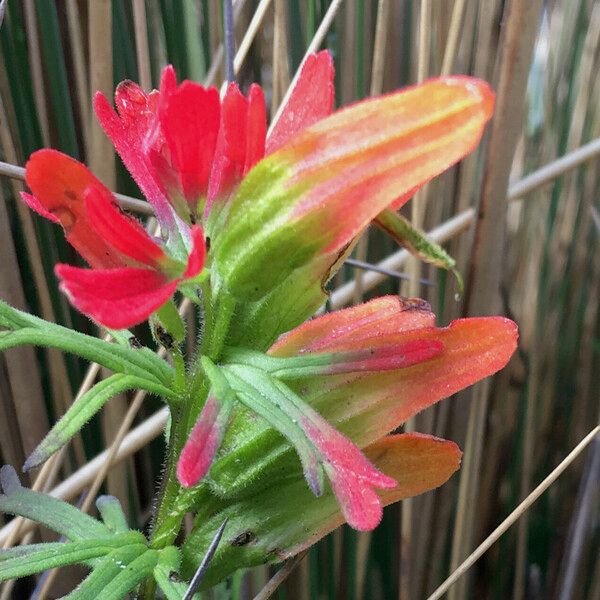
- 🎨 Vibrant Bracts: The most striking feature isn't the flower, but the "bracts"—modified leaves that look like they've been dipped in vivid scarlet or orange paint to attract pollinators.
- ✂️ Divided Foliage: True to its name (fissifolia meaning "split leaf"), the green leaves are deeply lobed or jagged, giving the plant a textured, feathery appearance.
- ☁️ Velvety Stems: The plant is often covered in fine, soft hairs that help it trap moisture and protect itself from the intense UV rays of mountain environments.
🏡 In Your Garden
- 🤝 The Hidden Connection: This plant is a "hemiparasite." It doesn't like to grow alone; instead, it uses its roots to "plug into" the roots of neighboring grasses or shrubs to steal extra nutrients and water.
- 🏔️ The Transplant Trap: Because it relies so heavily on its underground connection to other plants, the Split-leaf Indian Paintbrush is notoriously difficult to move. If you break its root-link to its host plant, it will often wither and die.
⚠️ Safety & Toxicity
- 🐾 Pet Safety: While generally considered non-toxic to touch, species in this family can accumulate selenium from the soil. If pets or livestock graze on them in large quantities, it can lead to selenium poisoning.
- 👶 Kid-Friendly: It is safe for children to be around, but due to its specialized diet and root system, it’s best enjoyed where it grows naturally rather than being picked or moved.
✨ Fun Fact
🧪 Chemical Warfare: Not only does this plant steal food from its neighbors, but it can also steal their defenses! If it attaches to a toxic host plant, it can absorb those bitter chemicals to make itself taste terrible to hungry insects and rabbits.

Detailed Care Instructions

Place in a bright room that is sun drenched almost all day. Or directly in a south-facing window.

Some plants require more regular watering than others, which should be done every few days. It's critical to maintain the soil moist all of the time. The water requirements of the same plant placed in pots with varying sizes will differ. Because the water in the smaller pot evaporates faster than the water in the larger pot, it will require more watering. Regardless of pot size, the surface should constantly be maintained moist.








