Plant Overview
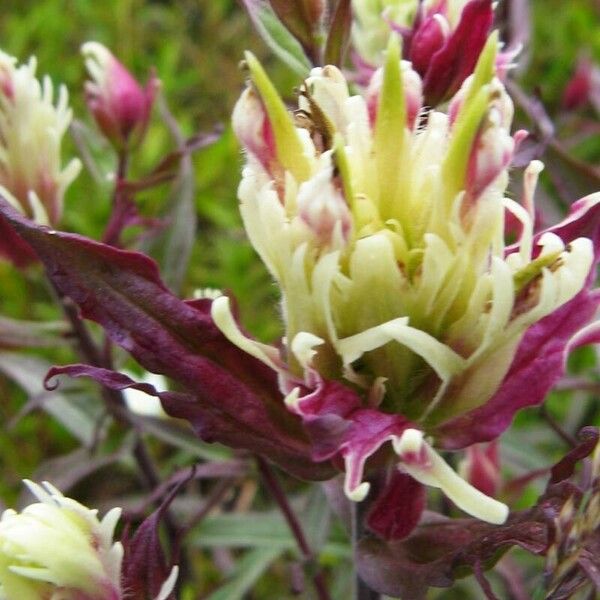
Often called the Sulphur Painted Cup, this pale beauty is the "ethereal cousin" of the common red Indian Paintbrush. Found dancing across subalpine meadows in Western North America, it looks as though its tips were dipped in a pot of lemon cream. It is a fascinating "vampire" of the plant world, living a double life as both a sun-catcher and a root-thief.
🔍 How to Identify
- 🌕 The Bracts: The most striking feature isn't actually a petal, but leaf-like "bracts." These are wide, lobed, and colored a pale sulphur-yellow or creamy white, hiding the tiny, tube-like green flowers within.
- 🌿 The Foliage: The leaves are narrow, lance-shaped, and alternate along a stem that can range from light green to a deep, dusky purple.
- ☁️ The Texture: If you look closely, the entire plant is covered in fine, soft hairs, giving it a slightly fuzzy or dusty appearance.
🏡 In Your Garden
- 🧛 The Secret Thief: This plant is "hemiparasitic." While it has green leaves for photosynthesis, it also sends out underground suckers to latch onto the roots of neighboring grasses or sagebrush to steal water and minerals.
- 🏔️ High-Altitude Diva: It is notoriously difficult to grow in traditional home gardens because it requires a specific host plant and the cool, moist-yet-well-draining soil of the mountains. It hates being moved due to its fragile parasitic root connections.
⚠️ Safety & Toxicity
- 🟢 Generally Safe: The Sulphur Painted Cup is not considered highly toxic to humans or common household pets.
- 🧪 Selenium Accumulator: Be cautious, as members of the Castilleja family are known for absorbing selenium from the soil. In areas with high mineral content, the plant can become toxic if eaten in large quantities by livestock or curious foragers.
✨ Fun Fact
Indigenous legends tell of a young brave who tried to paint the sunset but grew frustrated when his colors didn't match the sky; the Great Spirit provided him with these "brushes" to complete his work, and where he laid them down, these flowers began to grow!

Detailed Care Instructions

Place in a bright room that is sun drenched almost all day. Or directly in a south-facing window.

Some plants require more regular watering than others, which should be done every few days. It's critical to maintain the soil moist all of the time. The water requirements of the same plant placed in pots with varying sizes will differ. Because the water in the smaller pot evaporates faster than the water in the larger pot, it will require more watering. Regardless of pot size, the surface should constantly be maintained moist.








