Plant Overview
Known as the "Manchurian Catalpa," this elegant tree is a prized ornamental treasure from Northern China. Often grown for its neat, umbrella-like canopy, it brings a touch of imperial grace to smaller gardens and urban landscapes. It is a more refined, compact cousin to the giant Catalpas often seen in North America.
🔍 How to Identify
- 🍃 The Foliage: Features glossy, dark green leaves that are triangular or heart-shaped. Unlike its larger relatives, these leaves are smaller and taper into a very sharp, elegant point.
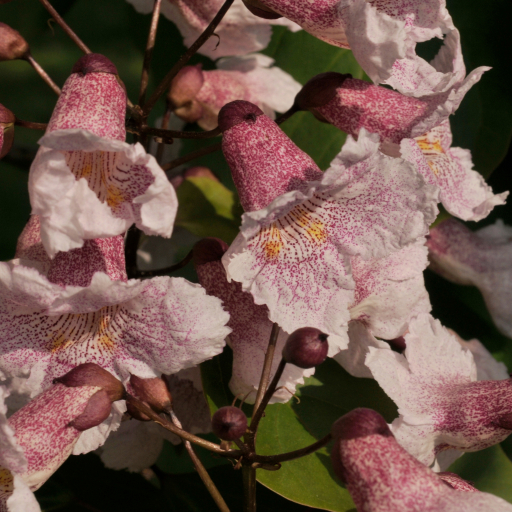
- 🌸 Trumpet Blooms: In early summer, it produces clusters of stunning trumpet-shaped flowers. They are typically white or pale pink, intricately decorated with purple spots and yellow streaks inside the throat.
- 🫛 "Cigar" Pods: After the flowers fade, the tree produces very long, thin, bean-like seed pods that can grow up to 12 inches long and often hang on the branches through the winter.
🏡 In Your Garden
- 🏙️ Urban Resilience: This species is exceptionally tolerant of city pollution and compacted soils, making it a perfect candidate for "street trees" or suburban front yards where space might be limited.
- ✂️ Low Maintenance Shape: Many cultivars are grafted to stay in a tight, globose (ball-like) shape. This is ideal for gardeners who want a structural, architectural look without the need for constant pruning.
- 🌞 Sun Seeker: It thrives in full sun. While it can handle various soil types, it dislikes being moved once established because of its deep root system, so choose its "forever home" carefully.
⚠️ Safety & Toxicity
- 🐾 Low Toxicity: The Manchurian Catalpa is generally considered non-toxic to humans and pets when touched.
- 👅 Digestive Warning: While not deadly, the roots and bark contain bitter compounds. If a pet or child ingests a significant amount of the bark or seed pods, it may cause mild stomach irritation or nausea.
- 🐝 Pollinator Friend: It is completely safe and highly attractive to bees and hummingbirds, making it a "friendly" addition to a biodiversity-focused garden.
✨ Fun Fact
In its native China, the wood of the Catalpa bungei is historically famous for its resonance. It was the preferred material for crafting the "Guqin," a traditional seven-stringed musical instrument associated with scholars and royalty for over 3,000 years.

Detailed Care Instructions
To grow a Catalpa Bungei plant, follow these steps:
- Choose a suitable location: Catalpa Bungei plants grow best in full sun but can also tolerate partial shade. Make sure the planting area has well-draining soil.
- Prepare the soil: Prior to planting, loosen the soil and remove any weeds or debris. Add organic matter, such as compost, to improve soil fertility and drainage.
- Planting: Dig a hole twice the diameter and depth of the plant's root ball. Place the plant in the hole, ensuring it is centered and level with the soil surface. Backfill the hole with soil, gently firming it around the roots.
- Watering: Proper watering is crucial for the plant's establishment. Water deeply immediately after planting and continue to keep the soil moist, but not waterlogged, during the first few months. Once established, Catalpa Bungei plants are moderately drought-tolerant.
- Mulching: Apply a layer of organic mulch, such as wood chips or bark, around the base of the plant. This will help retain moisture, suppress weed growth, and regulate soil temperature.
- Pruning: Catalpa Bungei plants have a naturally rounded shape and require minimal pruning. However, you can prune them in early spring if needed to maintain shape or remove any dead or damaged branches.
- Fertilizing: Fertilize the plant with a balanced, slow-release fertilizer in early spring. Follow the package instructions for the correct dosage.
- Pests and diseases: Catalpa Bungei plants are relatively resistant to pests and diseases. However, they may occasionally be affected by common issues like aphids, caterpillars, or leaf spots. Monitor the plant regularly and take appropriate measures if any problems arise.
- Winter protection: Catalpa Bungei plants are hardy in USDA zones 6-9. If you live in a colder region, consider protecting the plant during the winter by applying mulch around the base and covering it with burlap or a frost cloth.
By following these steps, you can successfully grow a Catalpa Bungei plant in your garden or landscape. Remember to provide it with proper care and maintenance for healthy growth and development.
To water the plant known as Catalpa Bungei, it is important to note its specific watering needs. This plant prefers a consistently moist soil, but not one that is waterlogged. It is best to check the soil moisture level before watering, as overwatering can lead to root rot.
One way to check soil moisture is to stick a finger an inch or two into the soil. If it feels dry, it is time to water. When watering, it is best to give the plant a deep soak, rather than surface watering. This ensures that the water reaches the roots.
If the plant is in a container, it is important to make sure there are drainage holes at the bottom to allow excess water to escape. Watering should be reduced in winter, as the plant goes into a dormant period.
It is also important to note that the amount and frequency of watering will depend on the climate, humidity levels, and amount of sunlight the plant receives. Regular monitoring of soil moisture levels is key to keeping Catalpa Bungei healthy and thriving.
To fertilize this plant, use a slow-release fertilizer in the early spring before new growth appears. Apply the fertilizer evenly around the root zone, approximately 6-8 inches away from the trunk, and then water thoroughly. Avoid fertilizing during hot and dry periods, and follow the instructions on the fertilizer package for the correct application rate. Additionally, using organic mulch can provide nutrients to the soil over time and improve soil moisture retention.
The soil suitable for Catalpa Bungei should be well-draining and rich in organic matter with a pH level between 5.5 to 7.5. It should retain enough moisture to keep the plant hydrated but not too much that it becomes waterlogged. The soil's texture should be light and loose to allow for proper root growth and aeration. It is recommended to use a mix of loamy soil, sand, and compost for planting Catalpa Bungei, as it prefers soil that is slightly acidic to neutral. The plant also prefers soils that are not too compacted or heavy, as this can hinder its growth and root development. Overall, the ideal soil for Catalpa Bungei should be well-draining, rich in organic matter, loose, and with a slightly acidic to neutral pH.
Catalpa Bungei can be propagated using various methods such as division, cuttings, and layering. One way to propagate it is through stem cuttings taken from a healthy parent plant during the summer months when the plant is actively growing.
To do this, select a healthy stem that is about 6-8 inches long and with no flowers or buds. Cut it using a sharp, sterilized knife or scissors just below a node (the point where the leaf attaches to the stem), making sure to get a clean cut.
Remove all leaves except for the top two or three, and dip the cut end in rooting hormone powder to encourage root growth. Plant the cutting in well-draining soil, water it thoroughly, and cover it with plastic or a cloche to maintain high humidity levels.
Keep the cutting in a warm, bright location but protect it from direct sunlight. Water it regularly to keep the soil moist but not waterlogged. After a few weeks, check for root growth by gently tugging on the stem. If it resists, it means roots have formed and the cutting can be transplanted into a larger pot or directly into the garden.
With proper care, the propagated Catalpa Bungei plant will grow into a beautiful tree and can be enjoyed for years to come.








