Plant Overview
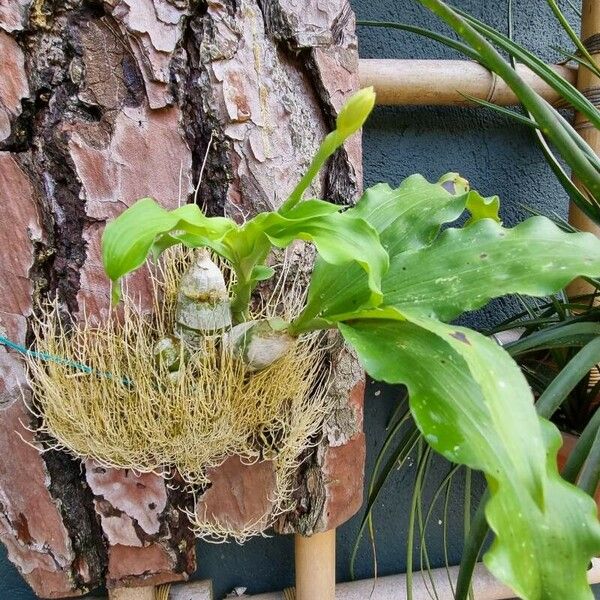
Known as the "Nodding Catasetum," this fascinating orchid is a true shapeshifter of the South American rainforests. Unlike the typical orchids found in grocery stores, Catasetum cernuum is famous for its dramatic lifecycle—swinging between a lush, leafy explosion in the summer and a completely bare, "dead-looking" bulb in the winter. It is a favorite among collectors who enjoy watching its "trigger-sensitive" flowers in action.
🔍 How to Identify
- 🌿 The Pseudobulbs: Look for large, spindle-shaped, and fleshy green "canes" that resemble thick cigars. These store water and nutrients for the plant's long naps.
- 🔔 The Flowers: The plant produces long, pendulous (drooping) stems that hold several hooded, waxy flowers. They are typically a pale lime green or yellowish-brown, often decorated with fine reddish-brown spots.
- 🍃 The Leaves: The leaves are large, pleated, and thin, fanning out from the top of the pseudobulbs. Don't panic if they turn yellow and fall off in autumn—this is a natural part of their cycle!
🏡 In Your Garden
- 💤 The Sleep Cycle: This plant follows a strict "monsoon" lifestyle. During the winter, it enters a deep dormancy where it sheds all its leaves. You must stop watering it entirely during this time; watering a sleeping Catasetum is the fastest way to rot its roots.
- 🍽️ Hungry Growers: Once new green shoots appear in the spring and roots are a few inches long, this orchid becomes a "heavy feeder." It requires significantly more fertilizer and water than a Phalaenopsis to build up the energy needed for its spectacular blooms.
⚠️ Safety & Toxicity
- ✅ Status: Non-toxic and safe.
- 🐾 Details: Catasetum cernuum is generally considered safe for cats, dogs, and children. However, the sap from a broken pseudobulb can be sticky and may cause very mild skin irritation for those with sensitive skin. It is best kept out of reach to protect the plant's delicate growth points.
✨ Fun Fact
This orchid is a "sharpshooter." To ensure pollination, the male flowers have two sensitive "antennae." When a bee lands and touches them, the orchid physically launches its pollen packets (pollinia) at the bee with surprising force, sticking them to the insect's back for transport to the next flower!

Detailed Care Instructions







