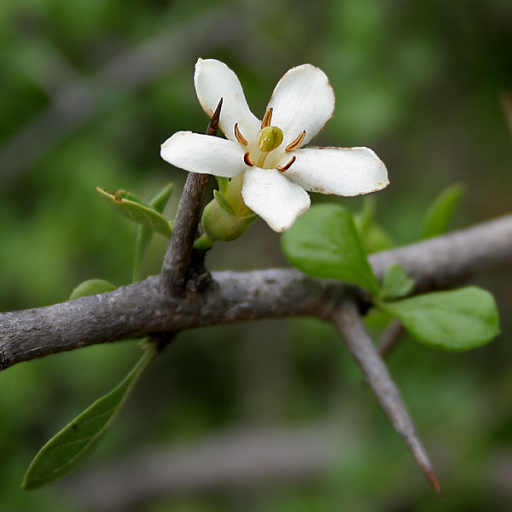
Plant Overview
Often referred to as the Mountain Pomegranate or Mainphal, Catunaregam spinosa is a rugged, thorny shrub that has been a staple in Ayurvedic medicine for centuries. Despite its name, it isn't a true pomegranate, but its round, yellowish fruits look strikingly similar to the garden favorite. In the wild, it acts as a tough guardian of the forest, often forming dense, impenetrable thickets that provide shelter for small wildlife.
🔍 How to Identify
- ⚔️ The Thorns: It features sharp, woody spines that emerge in pairs or threes from the base of the leaf stalks, making the plant very easy to recognize by touch (carefully!).
- 🌼 Color-Changing Blooms: The flowers are highly fragrant and perform a lovely magic trick, opening as a pure, waxy white and slowly maturing into a deep, creamy yellow.
- 🍈 The Fruit: It produces small, globose fruits with a thick, leathery rind and a persistent "crown" at the top, closely mimicking the appearance of a miniature pomegranate.
🏡 In Your Garden
- 🛡️ Natural Security: Because of its formidable spines and dense branching habit, this plant is traditionally used as a "living fence" to keep livestock or intruders out of specific areas.
- ☀️ Drought Survivor: It is incredibly hardy and thrives in poor, rocky soils where other plants might wither. It prefers a sunny spot and actually benefits from a period of dryness, which mimics its native deciduous forest habitat.
⚠️ Safety & Toxicity
- 🤢 Internal Irritant: The fruit is rich in saponins. While used medicinally by professionals, raw ingestion can cause severe vomiting and gastrointestinal distress in humans and pets.
- 🐟 Aquatic Warning: Historically, the crushed fruit was used as a natural "fish poison" to stun fish in ponds; therefore, it should never be planted near decorative koi ponds or sensitive waterways.
- 🧤 Physical Injury: The spines are very stiff and sharp. Always wear heavy-duty gardening gloves when pruning or moving this plant to avoid painful punctures.
✨ Fun Fact
In many parts of India and Southeast Asia, the fruit of the Mountain Pomegranate was traditionally used as a natural substitute for soap. Because of its high saponin content, the pulp produces a foamy lather when rubbed with water, which was once used to wash delicate fabrics.

Detailed Care Instructions
To grow Catunaregam spinosa, also known as the Indian blackthorn or porcupine flower, follow these steps:
- Climate: Catunaregam spinosa prefers a warm tropical or subtropical climate, so it is best grown in zones 10 to 12. It adapts well to a variety of soil types.
- Propagation: You can propagate Catunaregam spinosa through seeds or stem cuttings.
- Seeds: Soak the seeds in water for 24 hours before planting. Sow the seeds in well-draining soil and cover them lightly. Place the pot in a warm and bright location. Keep the soil moist, and germination should occur within 2 to 3 weeks.
- Stem cuttings: Take a 6-8 inch long stem cutting from a healthy plant. Remove the lower leaves, leaving only a few at the top. Dip the cut end in a rooting hormone powder and plant it in a pot filled with well-draining soil. Keep the soil moist and provide warmth and indirect sunlight. Roots should develop within 4 to 6 weeks.
- Soil: Catunaregam spinosa prefers well-draining soil that is rich in organic matter. Ensure the soil pH is slightly acidic to neutral (around 6.0 to 7.0).
- Light: Place the plant in a location with bright, indirect sunlight. It can tolerate partial shade, but too much shade may affect flowering.
- Watering: Water the plant regularly, keeping the soil consistently moist. Avoid excessive watering that leads to waterlogging, as this can cause root rot. During periods of active growth, increase watering frequency.
- Fertilizer: Feed the plant with a balanced, slow-release fertilizer during the growing season. Follow the instructions on the fertilizer packaging for the appropriate dosage.
- Pruning: Prune the plant to maintain its shape and remove any dead or diseased branches. Pruning also stimulates new growth and helps improve flowering.
- Pests and diseases: Monitor the plant regularly for pests like aphids, scale insects, or mealybugs. Treat any infestation promptly with appropriate insecticides or organic solutions. Prevent fungal diseases by providing good air circulation and avoiding overwatering.
- Support: Catunaregam spinosa can grow as a shrub or trained as a small tree. Provide support with stakes or pruning to maintain the desired form.
By following these guidelines, you should be able to successfully grow Catunaregam spinosa and enjoy its beautiful flowers.

Place in a bright room that is sun drenched almost all day. Or directly in a south-facing window.

To water this plant, it is important to check the soil moisture level regularly before watering. This can be done by inserting a finger into the soil up to the second knuckle and feeling for dampness. If the soil feels dry, it is time to water the plant.
When watering, avoid getting the leaves wet, as this can increase the risk of fungal diseases. Instead, water at the base of the plant, taking care not to overwater as this can lead to root rot. Allow the soil to drain completely before replacing the pot in its saucer.
It is important to provide adequate watering during the plant's growing season, typically in spring and summer, but reduce watering in fall and winter, allowing the soil to dry out slightly between waterings. Finally, avoid using cold water as this can shock the roots, and use room-temperature water instead.
To fertilize this plant, you can use a general-purpose fertilizer with a balanced N-P-K ratio. Apply the fertilizer during the growing season, which is typically in spring and summer. Mix the fertilizer with water according to the package instructions, and apply it to the soil around the base of the plant. Water the plant thoroughly after fertilizing to help the nutrients reach the roots. Avoid over-fertilizing, as this can lead to nutrient burn and other issues.
Catunaregam Spinosa plant requires a well-draining soil that is rich in nutrients. It is best to use a soil mix that contains a combination of sand, loam, and organic matter. The soil pH should be slightly acidic, between 5.5 and 6.5. It is important to avoid using heavy clay soil or soil that is prone to waterlogging, as this can lead to root rot and other issues. A good way to ensure the soil is suitable is to mix it with a good quality potting mix. The plant also requires regular watering, particularly during the growing season, so it is important to keep the soil moist but not waterlogged.
There are several methods to propagate this plant, including using seeds, stem cuttings, and root cuttings.
Seed propagation:
- Collect mature seeds from the plant.
- Clean and dry the seeds.
- Fill a seed tray with well-draining soil.
- Sow the seeds on the soil surface.
- Cover the tray with plastic wrap or a clear dome.
- Place the tray in a warm, bright, and humid location.
- Keep the soil moist but not waterlogged.
- Wait for the seeds to germinate, which may take several weeks to a few months.
- Once the seedlings have developed their first set of true leaves, transplant them into individual pots.
Stem cutting propagation: - Choose a healthy stem with several leaves from the plant.
- Cut the stem at a 45-degree angle just below a leaf node.
- Remove the lower leaves from the stem.
- Dip the cut end of the stem in rooting hormone.
- Insert the stem cutting into well-draining soil.
- Water the soil and cover the plant with plastic wrap to increase humidity.
- Place the plant in a bright, warm location.
- Keep the soil moist but not waterlogged.
- After a few weeks, the plant should start growing new leaves, which means it has rooted successfully.
Root cutting propagation: - Choose a healthy root from the plant.
- Cut a few inches of the root, making sure it has a few small branches.
- Prepare a pot with well-draining soil.
- Dig a small hole in the soil.
- Place the root cutting into the hole.
- Cover the root with soil.
- Water the soil and cover the pot with plastic wrap to increase humidity.
- Place the pot in a bright and warm location.
- Keep the soil moist but not waterlogged.
- After a few weeks, the plant should start growing new leaves, which means it has rooted successfully.








