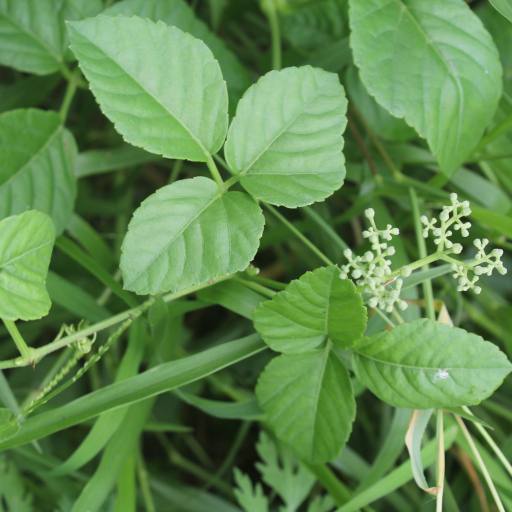
Plant Overview
Often called the Bush Grape or Three-leaf Cayratia, this vigorous perennial climber is nature’s own living tapestry. Found draping over fences and forest edges across Asia and Australia, it is a resilient survivor known for its rapid growth and "rule of three" foliage. While it looks like a miniature vineyard inhabitant, it is more of a wild wanderer than a garden fruit.
🔍 How to Identify
- 🍃 Trifoliate Leaves: Its most distinct feature is the foliage; leaves are always grouped in sets of three leaflets with slightly "toothed" or serrated edges.
- 🧶 Opposing Tendrils: To climb, the plant sends out wiry, branched tendrils that uniquely grow on the stem directly opposite from where the leaf joins.
- 🍇 Dark Berries: It produces small, flat-topped clusters of greenish-white flowers that eventually turn into glossy, round berries which ripen from green to a deep, ink-black.
🏡 In Your Garden
- 🧗 The Climbing Habit: If you have this in your yard, give it a sturdy trellis. Because it climbs via tendrils rather than twining stems, it needs thin supports (like wire or mesh) to grip effectively.
- ✂️ Vigorous Management: It is a fast-moving vine that can quickly smother smaller ornamental plants if left unchecked. Regular pruning is necessary to keep it from becoming the "green ghost" of your garden.
- 🌦️ Hardiness Context: It loves humidity and damp "feet." While it can tolerate some dry spells, it reaches its lush, curtain-like potential in areas where the soil remains consistently moist but well-drained.
⚠️ Safety & Toxicity
- 🚫 Harmful if Ingested: Despite being in the same family as grapes, the fruit of the Cayratia trifolia is not edible for humans.
- 🌵 Irritant Crystals: The plant contains microscopic, needle-like crystals called calcium oxalates. If bitten, these can cause intense stinging and swelling of the mouth and throat.
- 🐾 Pet Safety: Keep this vine away from curious cats and dogs, as ingestion can lead to severe drooling, vomiting, and oral discomfort.
✨ Fun Fact
Cayratia trifolia is a primary host plant for the Slant-lined Hawkmoth. While gardeners might find the vine aggressive, it serves as a vital "nursery" for these large, spectacular moths to lay their eggs!

Detailed Care Instructions
To successfully grow a Cayratia Trifolia plant, also known as three-leaf woodbine or bai nui, you can follow these steps:
- Choose the right location: Cayratia Trifolia plants prefer bright but indirect sunlight. Find a spot that receives partial shade or filtered light for a few hours each day.
- Prepare the soil: These plants prefer well-draining soil that is rich in organic matter. Prepare the planting area by adding compost or well-rotted manure to improve the soil's fertility and drainage.
- Planting: Dig a hole slightly larger than the rootball of the plant. Place the plant in the hole and backfill with the amended soil. Gently firm the soil around the base of the plant to provide stability.
- Watering: Ensure that the soil remains consistently moist but not waterlogged. Avoid overwatering as it can cause root rot. Water deeply once or twice a week, depending on the weather conditions. Adjust watering frequency during rainy or dry spells accordingly.
- Mulching: Apply a layer of organic mulch around the base of the plant to conserve soil moisture, suppress weed growth, and improve soil fertility. Keep the mulch a few inches away from the plant's stem to prevent rotting.
- Pruning: Regular pruning helps promote compact growth and keeps the plant in shape. Prune any dead or diseased branches, and trim back excessive growth to maintain a neat appearance.
- Fertilizing: Feed the plant with a balanced fertilizer formulated for flowering plants. Follow the manufacturer's instructions for application rates and frequency. Fertilize during the growing season, typically in spring and summer.
- Trellis or support: Cayratia Trifolia is a climbing vine and requires support to grow properly. Provide a trellis, fence, or other support structure for the plant to cling onto. Ensure the support is sturdy enough to accommodate the plant's growth.
- Pests and diseases: Keep an eye out for common pests such as aphids, caterpillars, or snails, which can damage the foliage. Treat infestations promptly using organic or chemical pest control methods. Regularly inspect the leaves for signs of diseases like powdery mildew or leaf spot and take appropriate measures if detected.
- Propagation: Cayratia Trifolia can be propagated through stem cuttings. Take cuttings from healthy, mature plants, and root them in a well-draining potting mix. Place the cuttings in a warm, humid environment and keep the soil evenly moist. Once roots develop, transplant them into individual pots or the garden.
Remember to research and understand the specific care requirements of Cayratia Trifolia to ensure optimal growth and health.

Place in a window with dappled sun or a spot in the middle of a room. Or directly in a window facing west or east.

To properly hydrate this particular type of plant, you should use a watering can or hose with a gentle flow to avoid damaging the delicate foliage. Carefully pour water over the soil surrounding the plant until the water begins to seep out of the drainage holes at the bottom of the container. Allow the soil to dry out slightly before watering again, as over-saturating the roots can lead to root rot and damage to the plant. It is also important to avoid getting water on the leaves or flowers, as this can cause fungal diseases. During hot and dry weather, you may need to water this plant more frequently to prevent dehydration and wilting.
To fertilize this plant, you should first ensure that the soil pH is between 5.5 and 6.5. Apply a balanced slow-release fertilizer once every three months during the growing season. Use a fertilizer with equal parts nitrogen, phosphorus, and potassium. Apply the fertilizer around the base of the plant and water thoroughly after application. Avoid over-fertilizing as it can cause nutrient burn and damage the plant.
The preferred soil type for this particular plant is a well-drained soil with good fertility. It is recommended to use a soil that is rich in organic matter and contains a mix of sand, loam, and clay. The pH level of the soil should fall between 5.5 and 6.5 to ensure optimal growth and development. It is important to avoid using heavy soils or those that are compacted, as they can restrict root growth and cause drainage problems. Additionally, the soil should be kept consistently moist, but not waterlogged, to ensure that the plant receives the necessary nutrients and moisture to thrive.
One method of propagating this plant is by taking stem cuttings. The stem should be about 4-6 inches long and have at least two to three nodes. Remove the lower leaves and dip the cut end in rooting hormone. Plant the cutting in a pot filled with a well-draining soil mix and keep it moist. Place the pot in a bright, warm location, but out of direct sunlight to prevent damage. After several weeks, roots should appear, and new growth will emerge from the stem. Transplant the new plant into a larger pot or in the ground once it has established a strong root system.








