Plant Overview
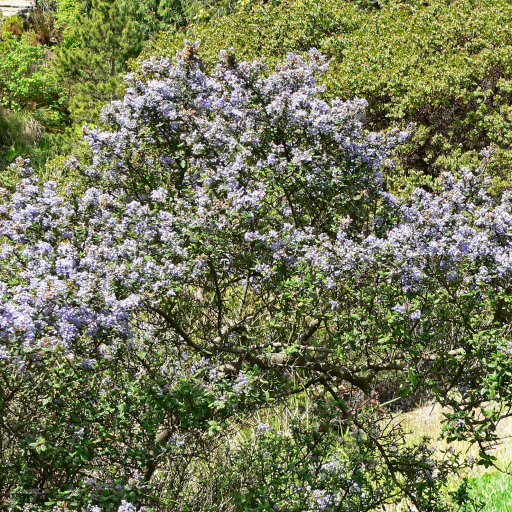
Known as the Santa Barbara Ceanothus, this shrub is a crown jewel of the California coastline. It earns its botanical name from its deeply "impressed" (veined) leaves that look like tiny, dark green crinkled quilts. In early spring, it transforms into a vibrant cloud of cobalt blue, earning it the beloved nickname "California Lilac."
🔍 How to Identify
- 🌿 The Foliage: Tiny, oval leaves that are highly textured with deep, parallel ridges. They are a rich, dark green and feel leathery—a specialized trait for surviving dry climates.
- 💙 The Blooms: Densely packed, spherical clusters of tiny flowers. Depending on the variety, these range from a soft sky blue to a piercing, deep indigo.
- 🪵 The Habit: A sprawling or arching evergreen shrub. It has a rugged, woody structure that can grow into a dense, wild screen or a neat, rounded mound.
🏡 In Your Garden
- ☀️ Drought Warrior: This plant is a champion of water conservation. Once its root system is established, it requires almost no supplemental water. In fact, watering it during a hot summer can actually harm it by encouraging soil pathogens.
- 🌱 Soil & Nutrition: It prefers well-draining, lean soil. Because Ceanothus species work with soil bacteria to "fix" their own nitrogen, they don't need—and often dislike—heavy fertilizers.
- 🦋 Pollinator Magnet: It is a vital early-season food source. When in bloom, expect a parade of honeybees, bumblebees, and butterflies to visit your garden.
⚠️ Safety & Toxicity
- ✅ Safe Status: Ceanothus impressus is generally considered non-toxic to humans, cats, and dogs.
- 👅 Texture Note: While not poisonous, the leaves are quite stiff and "toothy." If a curious pet decides to chew on the foliage, the rough texture may cause minor mechanical irritation to the mouth or throat.
✨ Fun Fact
Ceanothus seeds are "pyriscent," meaning they have a stubborn, hard coating that often requires the intense heat of a wildfire to crack open. These seeds can sit dormant in the soil for over 30 years, waiting for a fire to clear the land and trigger their birth!

Detailed Care Instructions
| Lighting | Full Sun |
| Hardiness Zones | 8A - 11 |
Here are some steps to help you grow a Ceanothus Impressus plant:
- Choose a sunny location: Ceanothus Impressus plants require full sun for at least six hours a day. Select a spot in your garden that receives ample sunlight.
- Prepare the soil: Ceanothus plants prefer well-draining soil. Amend the soil with organic matter, such as compost, to improve drainage and nutrient content. Ensure the soil pH is slightly acidic to neutral (around 6.0-7.5).
- Dig a planting hole: Dig a hole that is twice the width of the root ball and just as deep. This will encourage proper root growth and establishment.
- Plant the Ceanothus Impressus: Gently remove the plant from its container and place it in the prepared hole. Ensure that the top of the root ball is level with or slightly above the soil surface. Backfill the hole with soil, firming it gently around the plant.
- Water the plant: After planting, thoroughly water the Ceanothus Impressus to help settle the soil and remove any air pockets. Water regularly during the plant's establishment period, ensuring the soil remains evenly moist but not waterlogged.
- Mulch the area: Mulching around the base of the plant will help conserve moisture, suppress weed growth, and insulate the roots. Apply a layer of organic mulch, such as wood chips or straw, while keeping it away from directly touching the stem.
- Prune if necessary: Pruning is generally not required for Ceanothus Impressus plants unless you want to shape or control their growth. If pruning is needed, do so in late spring or early summer after flowering.
- Provide regular care: Ceanothus Impressus plants are generally low maintenance but may benefit from seasonal fertilization with a balanced, slow-release fertilizer. Follow the instructions on the fertilizer packaging for application rates and timings.
- Monitor and protect against pests: Keep an eye out for common pests like aphids or whiteflies. If pest infestations occur, treat them with appropriate organic or chemical controls.
- Enjoy the blooms: Ceanothus Impressus plants produce beautiful blue flowers in spring. Sit back and appreciate the visual appeal and fragrance of your plant.
Remember, while Ceanothus Impressus is generally resilient, it is essential to consider the specific growing conditions and care requirements for your region.

Place in a bright room that is sun drenched almost all day. Or directly in a south-facing window.

1. The watering needs of this plant will vary depending on the season and environmental conditions, such as temperature, humidity, and sunlight exposure.
2. It is important to check the moisture level of the soil before watering to ensure that the plant is not over or under-watered. Soil moisture can be checked by poking a finger or a wooden dowel into the soil to a depth of a few inches.
3. Watering should be done deeply and infrequently, allowing the soil to dry out between watering sessions. Over-watering can lead to root rot and other diseases that may harm the plant.
4. Watering should be done at the base of the plant rather than on the foliage to avoid trapping moisture, which could also lead to diseases.
5. During the summer months or hot weather conditions, it may be necessary to water the plant more frequently to prevent dehydration.
6. During the winter months or cooler weather conditions, the plant may require less water as it goes into a dormant state.
7. The use of a drip irrigation or soaker hose system may be beneficial for consistent and efficient watering.
8. Mulching around the plant can also help retain soil moisture and reduce the need for frequent watering.
9. Avoid watering during the hottest part of the day to prevent water evaporation and scorching of the foliage. Watering early in the morning or late in the afternoon are ideal times.
10. Regularly monitoring the plant and adjusting the watering schedule as needed will help promote healthy growth and longevity of the plant.
To fertilize this plant, use a balanced fertilizer with equal amounts of nitrogen, phosphorus, and potassium. Apply the fertilizer in the spring, just before new growth appears. Be sure to follow the manufacturer's instructions for the specific product you are using. Over-fertilization can harm the plant, so be careful not to apply too much. Water the plant deeply after fertilizing to help the nutrients soak into the soil.
Ceanothus Impressus plant prefers well-drained soil that is slightly acidic with a pH range of 5.5-6.5. The ideal soil type for this plant is sandy loam or loamy sand, which allows adequate air circulation and water drainage. The soil should be fertile, rich in organic matter, and moist, but not waterlogged. Avoid using heavy clay soils as they can lead to root rot and other problems. Additionally, it is recommended to amend the soil with compost or well-rotted manure to improve soil quality and nutrient content.
To propagate this plant, start by taking semi-hardwood cuttings from healthy parent plants in late summer or early fall. Cuttings should be taken from the current season's growth and should be about 4-6 inches long. Remove the leaves from the lower half of the cutting, dip the cut end in rooting hormone powder, and insert the cutting into a pot filled with a well-draining potting mix. Keep the cutting moist and out of direct sunlight until roots form, which could take several weeks. After roots have formed, transplant the cutting into a larger pot or directly into the ground. Water regularly and provide protection from extreme temperatures until the plant is established.
Common pests of the santa barbara ceanothus include Scale insect, aphids. Make a habit of checking your santa barbara ceanothus frequently for pests so that any infestations can be caught and managed early.








