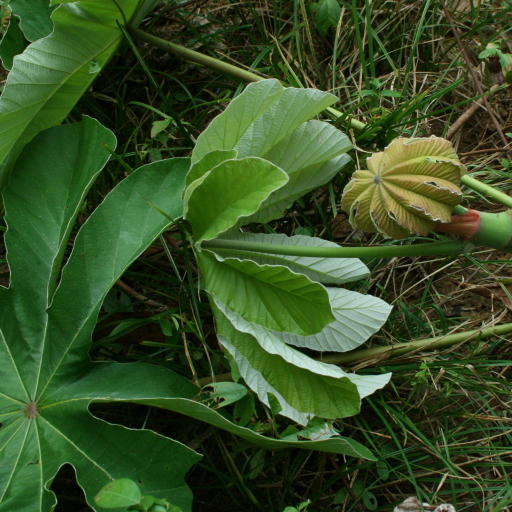
Plant Overview
The Cecropia Peltata, widely known as the Trumpet Tree or Guarumo, is a rapid-growing pioneer of the Neotropical rainforests. Often called the "Snake Wood" due to its unique bark, this tree is famous for its symbiotic relationships and its ability to "heal" damaged forests by being the first to sprout after a clearing. In many cultures, its hollow stems have been used for centuries to create musical instruments and tools.
🔍 How to Identify
- 🍃 The Leaves: Massive, umbrella-like leaves that can reach over a foot in diameter. They are deeply lobed (usually 7 to 11 lobes) and have a distinctive shield shape where the stem attaches to the middle of the leaf.
- 🥈 Silver Lining: While the tops of the leaves are a rough, sandpapery green, the undersides are covered in dense white hairs, giving the tree a striking silver shimmer when the wind blows.
- 🎋 Hollow Stems: The trunk and branches are light grey, smooth, and internally divided into hollow chambers, looking somewhat like a thick, woody bamboo.
🏡 In Your Garden
- ☀️ The Sun Chaser: This tree is a "pioneer species," meaning it is biologically programmed to race toward the light. It requires full sun and will grow incredibly fast—sometimes up to 10 feet in a single year—making it difficult to manage in small residential spaces.
- 🐜 An Ancient Partnership: In its native habitat, the tree provides hollow "apartments" and sugary food for Azteca ants. In exchange, the ants act as a private security force, attacking any herbivores or vines that try to climb the tree. If you find one in the wild, be careful before leaning against the trunk!
- 🌏 Invasive Alert: Because it produces thousands of tiny seeds dispersed by bats and birds, it is considered a highly invasive weed in regions like Hawaii, Africa, and parts of Asia. Always check local regulations before planting.
⚠️ Safety & Toxicity
- 🟢 General Safety: The plant is generally considered non-toxic to touch, and various parts are used in traditional herbal medicine for respiratory issues.
- 🤚 Skin Irritation: The leaves have a very rough, scabrous texture (like high-grit sandpaper) which can cause mild skin abrasion or irritation if handled roughly.
- 🐾 Pet Note: While not listed as highly toxic to pets, the consumption of any wild tropical foliage can lead to digestive upset in dogs or cats.
✨ Fun Fact
The hollow branches of Cecropia peltata were traditionally dried and used by indigenous South American tribes to create "trumpets" and wind instruments, which is exactly how it earned its most famous common name!

Detailed Care Instructions
| Humidity | Dry |
| Lighting | Full Sun |
| Toxicity | Poisonous |
| Difficulty | Medium |
| Hibernation | Cold Period |
| Temperature | 18°C - 32°C |
| Hardiness Zones | 9 - 12 |
To grow a Cecropia peltata plant, follow these steps:
- Obtain seeds or a young plant from a reputable nursery or botanical garden. You can also try growing the plant from cuttings, but it may be more challenging.
- Choose a suitable location for planting. Cecropia peltata prefers a tropical or subtropical climate, so ensure that the temperature stays above 50°F (10°C) year-round. Additionally, it prefers partial shade but can tolerate full sun.
- Prepare the soil by ensuring it is well-drained and rich in organic matter. Add compost or well-rotted manure to improve soil fertility.
- Dig a hole that is slightly larger than the root ball of the plant or seeds. If planting seeds, sow them about 1 inch deep in the soil.
- Place the plant or seeds in the hole and fill it with soil, ensuring that the top of the root ball is level with the soil surface. Gently firm the soil around the base of the plant.
- Water the plant thoroughly after planting and keep the soil consistently moist but not waterlogged. Do not let the soil dry out completely.
- Mulch around the base of the plant to retain moisture and prevent weed growth.
- If you are growing the plant in a container, choose a pot with good drainage and use a well-draining potting mix. Place the plant in a location with bright, indirect sunlight.
- Fertilize the plant regularly during the growing season with a balanced, slow-release fertilizer following the instructions on the packaging.
- Prune the plant to maintain its size and shape, if desired. Remove any dead, damaged, or diseased branches.
- Monitor the plant for pests or diseases such as aphids, scale insects, or leaf spots. If necessary, treat them with appropriate organic or chemical methods.
- As the plant grows, provide support by staking it to prevent it from toppling over due to wind or its own weight.
- Continue to water and care for the plant regularly, and enjoy watching it grow and thrive in its suitable conditions.
Remember that Cecropia peltata can grow quite large, reaching up to 75 feet (23 meters) in height, so ensure that you have enough space for it to grow before planting.

Place in a bright room that is sun drenched almost all day. Or directly in a south-facing window.

Cecropia Peltata is a tropical plant that requires consistent and adequate moisture to thrive. It is recommended to water the plant regularly and deeply, ensuring the soil is moist but not waterlogged. When watering, it is important to avoid wetting the foliage as this can lead to fungal diseases. Watering should be adjusted based on environmental conditions such as temperature and humidity, as well as the size and age of the plant. It is also important to note that the plant may require less water during the dormant season.
To fertilize this plant, you should use a balanced, slow-release fertilizer that has equal parts nitrogen, phosphorus, and potassium. Apply the fertilizer to the soil around the base of the plant once every three months during the growing season. Be sure to follow the manufacturer's instructions for the dosage and application method. Additionally, it's important to water the plant thoroughly after applying the fertilizer to promote proper absorption.
The soil that is recommended to be used for the plant with the scientific name Cecropia Peltata is a well-draining, fertile soil that has a pH level of 6.0-7.0. It is important to avoid using soil that is too heavy or compacted, as this can lead to poor drainage and root rot. Adding organic matter to the soil can help improve its structure and nutrient content. Additionally, the plant prefers a soil that is moist but not waterlogged, so it is important to strike a balance between keeping the soil moist and avoiding overwatering. Finally, the plant may benefit from occasional applications of fertilizer to support healthy growth and development.
To propagate this plant, take a stem cutting that is around 6-8 inches long. Remove any leaves from the bottom half of the cutting. Dip the cut end in rooting hormone powder and plant it in a pot filled with a well-draining soil mixture. Keep the soil moist but not waterlogged and place the pot in a bright, indirect light location. The cutting should develop roots within 4-6 weeks and can be transplanted into a larger pot or planted outdoors once it has grown stronger.








