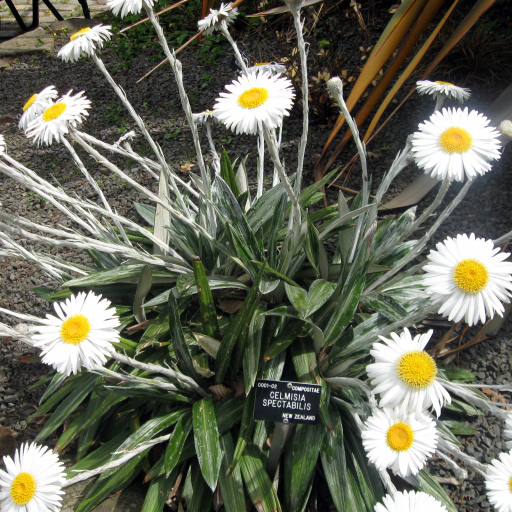
Plant Overview
Known as the Mountain Daisy or Cotton Daisy, Celmisia spectabilis is a rugged beauty from the high altitudes of New Zealand. Often found clinging to rocky slopes or alpine meadows, this plant is a master of survival, sporting a shimmering coat of silver that helps it endure the harsh mountain sun and freezing winds. To many hikers in the Southern Alps, these white blooms are the definitive symbol of the high country.
🔍 How to Identify
- 🌿 Leathery Leaves: The leaves are thick, stiff, and lance-shaped, arranged in dense, spreading rosettes that stay close to the ground to avoid wind damage.
- ☁️ Velvety Undersides: If you flip a leaf over, you’ll find a thick, felt-like coating of white or buff-colored "tomentum" (hairs) that feels like soft suede.
- 🌼 Radiant Blooms: In summer, it sends up sturdy, hairy stalks topped with large, daisy-like flowers featuring brilliant white petals and a sunny yellow center.
🏡 In Your Garden
- 🏔️ The Alpine Specialist: Because it originates from rocky scree slopes, this plant demands exceptional drainage. It thrives in rock gardens or alpine troughs where water can move freely past its roots.
- 🌬️ Hardy but Sensitive: While it can handle extreme frost and high winds, it dislikes "wet feet" and high humidity. It is best suited for cooler climates rather than tropical or humid regions.
- 🌱 Taproot Caution: Like many alpine species, it develops a deep taproot to anchor itself against the elements. This means it is very difficult to transplant once established, so choose its forever-home carefully!
⚠️ Safety & Toxicity
- ✅ Safe for All: Celmisia spectabilis is generally considered non-toxic to humans, dogs, and cats.
- 🧤 Skin Irritation: While not poisonous, the stiff, pointed leaves can be a bit prickly, and the fine hairs on the underside might cause mild skin irritation for those with very sensitive skin.
✨ Fun Fact
Early New Zealand settlers and Māori travelers used the thick, woolly "felt" from the underside of the leaves as a natural padding in their boots or even as a fire-starter, earning it the nickname "Shepherd’s Daisy."

Detailed Care Instructions
To grow Celmisia spectabilis (formerly Raoulia australis), you can follow these steps:
- Climate and location: Celmisia spectabilis primarily grows in alpine and subalpine regions with cool temperatures and high levels of humidity. Make sure you choose a location that replicates these conditions. If you live in a warmer climate, consider growing the plant in a greenhouse or a cold frame.
- Soil: The plant prefers well-drained, sandy or loamy soil that is rich in organic matter. Ensure that the soil pH is slightly acidic to neutral.
- Propagation: Celmisia spectabilis can be propagated by seeds or by division. Seeds can be sown in pots or trays in early spring. Keep the seeds moist and in a partially shaded location. If propagating by division, carefully separate the plant clump into smaller sections and replant them.
- Watering: This plant requires regular watering, especially during dry periods. However, it is crucial not to overwater, as the plant dislikes wet feet.
- Fertilizer: Celmisia spectabilis doesn't require heavy fertilization. An organic, slow-release fertilizer applied in early spring should be sufficient.
- Pruning: Pruning is generally not necessary for this plant. However, you can remove any dead or damaged foliage to keep the plant tidy and healthy.
- Protection: If you live in an area with harsh winters, it's advisable to provide some protection during the colder months. Mulching around the base of the plant can help retain moisture and insulate the roots.
- Pest and disease control: Celmisia spectabilis is generally resistant to pests and diseases. However, keep an eye out for slugs, snails, and aphids. Promptly remove any infested parts or use appropriate organic pest control methods.
- Monitoring and care: Regularly monitor the plant for signs of stress, such as wilting or discoloration. Provide adequate ventilation, as stagnant air can lead to fungal diseases.
- Enjoy: Once established, Celmisia spectabilis should reward you with its attractive silvery foliage and daisy-like yellow flowers. Enjoy the beauty of this unique alpine plant!

Place in a bright room that is sun drenched almost all day. Or directly in a south-facing window.

To properly water this plant, it is important to consider the soil moisture level and the surrounding climate. The plant prefers a moist, but well-drained soil, so it is recommended to water when the soil feels dry to the touch. However, overwatering should be avoided as it can lead to root rot and other issues. During hot and dry weather, the plant may require more frequent watering to avoid dehydration. It is best to water at the base of the plant and avoid getting water on the leaves, as this can lead to fungal diseases. Additionally, using a watering can or hose with a gentle stream is recommended to avoid disrupting the plant and causing damage.
For optimal growth, provide the plant with a well-balanced fertilizer every two weeks during the growing season. Dilute the fertilizer according to the manufacturer's instructions and apply it to the soil around the base of the plant. Avoid getting the fertilizer on the plant's foliage as this can cause burning. During the plant's dormant period, refrain from fertilizing.
For Celmisia Spectabilis, it is recommended to use well-draining soil with a slightly acidic to neutral pH level. Soil that is rich in organic matter can also be beneficial for this plant, but it is important to avoid soil that is too heavy or compacted, as this can lead to root rot. It is important to ensure that the soil is well-aerated to promote healthy root growth. Additionally, it is recommended to add a layer of mulch around the base of the plant to help retain moisture and regulate soil temperature.
To propagate this plant, you can take stem cuttings in the spring or fall. Cut a small section of the stem with a few leaves and dip the end in rooting hormone. Plant the cutting in a well-draining soil mix and keep it moist while it roots. Another method is to divide mature plants in the spring or fall. Gently dig up the plant and separate the clumps, making sure each division has some roots attached. Plant the divisions in a well-draining soil mix and water thoroughly. The plant prefers a cool, moist environment and can be grown in full sun to partial shade.








