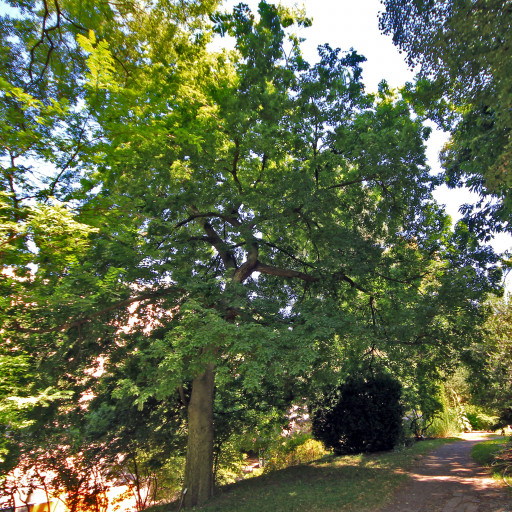
Plant Overview
Often called the "Nettle Tree" or the "Sugarberry," the Common Hackberry is the rugged, resilient cousin of the Elm. While it lacks the delicate grace of some ornamental trees, it more than makes up for it with a "tough-as-nails" personality and bark that looks like a topographic map. It is a legendary survivor, frequently found standing tall in wind-swept prairies and bustling city streets alike.
🔍 How to Identify
- 🪵 Warty Bark: The most iconic feature is the grey bark covered in corky, ridge-like protrusions that look like tiny mountain ranges or "warts."
- 🍃 Asymmetrical Leaves: Look for pointed, oval leaves with a distinctive "lopsided" base where one side is lower than the other. They feel slightly rough, like fine sandpaper.
- 🍇 The "Berries": In late summer, the tree produces small, round drupes. They start green, turn orange-red, and finally settle into a deep, raisin-like purple.
- 🕸️ Witches' Brooms: You might notice dense clusters of twiggy growth in the branches; these are harmless "witches' brooms" caused by tiny mites, giving the tree a mystical, tangled silhouette in winter.
🏡 In Your Garden
- 🦅 Wildlife Magnet: If you want a backyard full of life, this is your tree. It is the primary host for the Hackberry Emperor butterfly and provides a critical winter food source for cedar waxwings and robins.
- 💪 Urban Warrior: This plant is perfect for difficult spots. It has a deep taproot system that makes it incredibly wind-resistant and tolerant of both flooding and drought once established.
- 🌳 Deep Shade: Because of its broad, spreading canopy, it serves as an excellent shade tree. However, give it plenty of room—it can reach heights of 60 feet or more, so keep it away from power lines and tight foundations.
⚠️ Safety & Toxicity
- ✅ Safe & Non-Toxic: The Common Hackberry is non-toxic to humans, dogs, cats, and horses.
- 🍴 Edible Fruits: The tiny berries are technically edible and have a dry, sweet taste similar to a date. While humans rarely harvest them due to the large seed inside, they are a safe, natural snack for children and pets who might get curious.
✨ Fun Fact
The Hackberry is often called the "Philosopher’s Tree." Because it can grow in almost any soil condition—from rocky limestone to swampy clay—it has become a symbol of adaptability and resilience in North American folklore.

Detailed Care Instructions
| Color | Purple Fruits |
| Soil Ph | 6-8 |
| Soil Type | Organic, Slightly Moist |
| Bloom Time | Summer/Fall |
| Plant Type | Deciduous Tree |
| Mature Size | 40-60 Feet High, 25-45 Feet Wide |
| Native Area | North Dakota |
| Sun Exposure | Full Sun, Partial Shade |
| Hardiness Zones | 2-9 |
Celtis occidentalis, commonly known as the hackberry tree, is a resilient deciduous plant that can be grown through various methods. Here are some steps to grow Celtis occidentalis:
- Obtain seeds: Celtis occidentalis can be grown from seeds collected from mature trees or purchased from a reputable nursery. Gather fresh seeds from the tree in the fall or purchase certified seeds.
- Prepare the seeds: Scarify the seeds by lightly scratching or rubbing the seed coat using sandpaper, a file, or a small knife to help speed up germination. Alternatively, soak the seeds in warm water overnight to soften the seed coat.
- Stratify the seeds: Place the scarified or soaked seeds in a plastic bag filled with moist soil or sand. Seal the bag and refrigerate it for about 60 to 90 days. This process mimics winter conditions necessary for germination.
- Start seeds indoors: After stratification, plant the seeds in peat pots or seed trays filled with well-draining potting soil. Sow the seeds about ¼ to ½ inch deep. Keep the soil moist but not waterlogged.
- Provide ideal conditions: Place the containers in a warm area with indirect sunlight or use a seedling heat mat to promote germination. Maintain a temperature of around 70-75°F (21-24°C). Ensure proper ventilation and keep the soil consistently damp.
- Transplant outdoors: Once the seedlings have developed a few sets of true leaves and the risk of frost has passed, transplant them into larger pots or directly into well-prepared soil outdoors. Choose a location with full sun to partial shade.
- Soil and watering: Celtis occidentalis prefers well-drained soil but can tolerate various soil types, including sandy or clay soil. Water the plants regularly, especially during dry periods. Avoid overwatering, as this can lead to root rot.
- Pruning: Regular pruning can help shape the plant and remove any dead or damaged branches. Prune during the dormant season to promote healthy growth.
- Mulching and fertilizing: Apply a layer of organic mulch around the base of the plant to retain moisture and suppress weeds. Fertilize sparingly, using a balanced slow-release fertilizer in early spring.
- Pest and disease control: Celtis occidentalis is generally resistant to pests and diseases. However, keep an eye out for common issues like powdery mildew or aphids. Treat any problems with appropriate organic or chemical controls if necessary.
Remember that Celtis occidentalis is a relatively slow-growing tree, so patience is required. With proper care and the right growing conditions, your Celtis occidentalis plant should thrive and develop into a beautiful tree.

Place in a bright room that is sun drenched almost all day. Or directly in a south-facing window.

To properly water this plant, start by checking the soil moisture level before watering. Insert your finger about an inch deep into the soil to determine if it is dry or still moist. If the soil feels dry to the touch, it's time to water.
When watering, use a watering can or hose to slowly pour water onto the soil around the plant's base. Do not water the foliage or leaves, as this can lead to disease and insect problems.
It is important to water deeply, allowing the water to penetrate the soil to the plant's roots. Ensure that the water reaches a depth of at least six inches to encourage deep root growth.
Avoid overwatering, as this can lead to root rot and other issues. Allow the soil to dry out slightly between watering sessions. The frequency of watering will depend on factors such as temperature, humidity, and rainfall, so it's important to monitor the plant's moisture level regularly.
In summary, water this plant deeply and infrequently, taking care to avoid overwatering and wetting the foliage. Monitor soil moisture regularly to determine the appropriate watering frequency.
To fertilize this plant, use a slow-release balanced fertilizer with a ratio of 10-10-10 or 20-20-20. Apply the fertilizer to the soil around the base of the plant, being careful not to get any on the leaves. Water the plant thoroughly after fertilizing. Repeat this process every six to eight weeks during the growing season.
The ideal soil type for this particular plant is loamy or sandy loam soil that is well-drained with a pH level between 6.0-7.5. It prefers slightly acidic to neutral soil conditions and does not thrive well in overly alkaline soils. The soil should also be rich in organic matter and should contain a good amount of nutrients. Additionally, the soil should not be too compact, as Celtis occidentalis requires good airflow to its roots. Adequate drainage is very important, as excessive moisture can lead to root rot and other fungal diseases. Finally, this plant does best when planted in an area with full to partial sunlight.
Propagation of this plant can be achieved through several methods, including seed propagation, stem cuttings, and layering. Seed propagation is the easiest and most common method, and involves collecting ripe seeds in the fall and planting them in a well-draining soil mix.
Stem cuttings can also be taken in the late spring or early summer, and should be taken from semi-hardwood growth. It is important to remove any leaves from the lower part of the stem, and to dip the cut end in rooting hormone before planting in a well-draining soil mix.
Layering is another method of propagation, which involves bending a low branch to the ground and covering it with soil, leaving the tip exposed. After roots have developed and new growth appears, the branch can be severed from the original plant and planted in a new location.
Regardless of the method chosen, it is important to provide the plant with proper care, including regular watering and fertilization, in order to ensure successful propagation.
Common pests of the hackberry include Scale insect, larvae. Make a habit of checking your hackberry frequently for pests so that any infestations can be caught and managed early.








