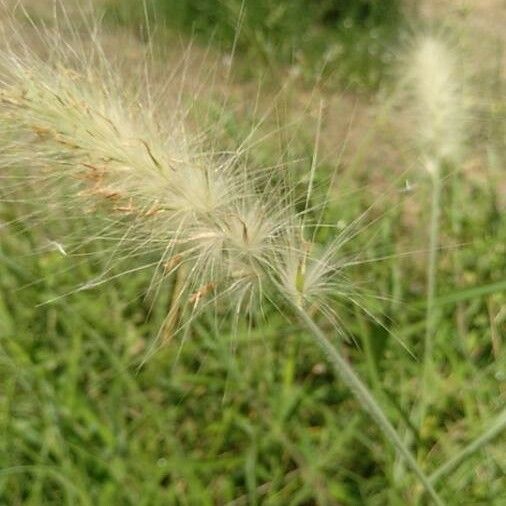
Plant Overview
Known affectionately as Feathertop Grass, this ethereal ornamental is famous for its cloud-like, silvery-white plumes that seem to glow at sunset. Originally hailing from the highlands of Northeast Africa, it has traveled the world as a garden favorite, valued for adding a "soft" texture to rugged landscapes. While it looks like a delicate dream, it is a hardy survivor that can occasionally be a bit too successful in the wild.
🔍 How to Identify
- ☁️ The Plumes: The most striking feature is the flower spikes—fluffy, feathery, and creamy-white, often appearing from mid-summer until the first frost.
- 🌿 The Foliage: It forms a dense, mounding clump of narrow, arching green leaf blades that sway gracefully in the slightest breeze.
- 📏 Growth Habit: It typically stays low to the ground, reaching about 18 to 24 inches in height, but it spreads outward to create a soft, fountain-like shape.
🏡 In Your Garden
- ☀️ Sun Seeker: This grass thrives in full sun and well-drained soil. It is exceptionally drought-tolerant once its roots are established, making it a "star player" for xeriscaping or rock gardens.
- 🌬️ The Wanderer: Be mindful that Cenchrus longisetus is a prolific self-seeder. Because those fluffy seeds are designed to catch the wind, it can easily hop over your fence and into neighboring natural areas, where it is sometimes classified as an invasive weed.
- ✂️ Winter Care: In colder climates, the foliage will turn golden-brown in winter. It’s best to leave the stalks standing until early spring to protect the crown of the plant from frost before cutting it back.
⚠️ Safety & Toxicity
- 🟢 Non-Toxic: This grass is generally considered safe and non-toxic to humans, cats, and dogs if accidentally nibbled.
- 🐾 Physical Irritant: While not poisonous, the feathery seed heads have tiny bristles that can get stuck in a pet's fur, ears, or between their paw pads. If you have long-haired dogs, you may find yourself "grooming" the garden out of their coat after a walk!
✨ Fun Fact
In the Victorian era, Feathertop was a staple in "everlasting" floral arrangements. Because the plumes retain their soft, fuzzy appearance even after being cut and dried, they were a Victorian favorite for decorating parlor mantels throughout the long winter months.

Detailed Care Instructions
To grow Cenchrus longisetus, also known as the sandbur or southern sandbur, you can follow these steps:
- Climate and Location: Check if your climate is suitable for Cenchrus longisetus growth. It thrives in warm and arid regions, typically found in the southern United States, parts of Mexico, and other similar climates.
- Soil Preparation: Prepare the soil by removing any weeds or grasses. Sandburs prefer well-drained sandy soil, so add sand or amend the soil with compost or organic matter to improve drainage if needed.
- Seed Collection: Collect the sandbur seeds, usually found in the bur-like clusters attached to the plant. Wait until they turn light brown and start to detach from the stem. Harvest the burs and remove the seeds by hand or by rubbing them between your hands.
- Germination: Scarify or stratify the seeds to enhance germination. Scarification involves scratching or nicking the seed coat, while stratification involves subjecting them to cold and damp conditions. Since sandburs naturally drop their seeds in late summer or fall, you can mimic this process by storing the seeds in a plastic bag with some damp sand in the refrigerator for a month or two.
- Planting: Choose a sunny location for planting. Scatter or shallowly plant the scarified or stratified seeds on the soil surface, then lightly cover them with a thin layer of soil or sand. Maintain a spacing of about 3 to 6 inches between the seeds.
- Watering: Keep the soil consistently moist but not waterlogged during germination. Once the plants are established, they are drought-tolerant and should only need occasional watering during dry periods.
- Weed Control: Maintain weed-free conditions during the early stages of growth. Hand-pull any unwanted plants or use mulch to suppress weeds.
- Maintenance: Allow the sandbur plants to grow without disturbance until they produce their seed heads. Once the seed heads dry and turn brown, you can collect and save them for future propagation or allow them to self-seed.
Note: Before planting Cenchrus longisetus, check with your local agricultural department or extension office to ensure it is not invasive or prohibited in your area, as it can be a weedy species in some regions.

Place in a bright room that is sun drenched almost all day. Or directly in a south-facing window.

To properly water this plant, first assess the soil moisture level by touching the soil with your fingers. If it feels dry to the touch, it's time to water. Use a watering can or hose to gently water the soil around the base of the plant until the water starts to run off. Allow the excess water to drain away, so the roots don't become waterlogged. Water deeply but infrequently, rather than giving small amounts of water frequently. This will encourage the plant to develop deep roots, making it more drought-resistant. Avoid getting water on the foliage as it can lead to fungal diseases. Water the plant early in the morning or late in the day to minimize water loss due to evaporation. If growing in a container, make sure it has drainage holes to prevent waterlogging.
To fertilize this plant, apply a balanced fertilizer with equal amounts of nitrogen, phosphorus, and potassium. Apply the fertilizer in late winter or early spring, just before new growth appears. Spread the fertilizer evenly over the soil around the plant, avoiding the stems and foliage. Water the plant immediately after fertilizing. Repeat this process once or twice a year, depending on the soil quality and plant growth rate. Be careful not to over-fertilize, as this can lead to excessive growth and weak stems.
It is recommended to use a well-draining soil with good fertility for optimal growth of this plant. The soil should have a slightly acidic to neutral pH level, typically between 6.0 to 7.0. Additionally, the soil should be rich in organic matter to support healthy root growth and retain moisture. It is important to avoid using heavy clay soils or soils with high salinity, as they can negatively impact the growth and survival of the plant.
To propagate this plant, take stem cuttings that are about 4-6 inches long. Remove any leaves from the lower half of the cutting and dip the cut end into rooting hormone powder. Plant the cutting into a pot of well-draining soil, and water it thoroughly. Keep the pot in a warm and bright location, but out of direct sunlight. Mist the cutting regularly to keep the humidity level high. After a few weeks, the cutting should form roots, and you can transplant it into a larger pot or directly into the ground.








