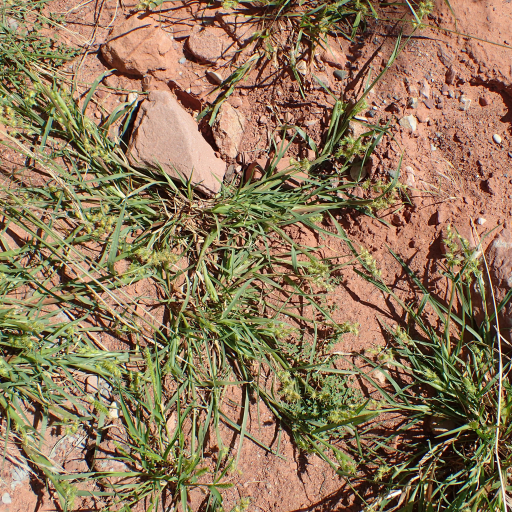
Plant Overview
Often called the "Hedgehog Grass" or "Sandbur," Cenchrus longispinus is a plant that most people recognize not by sight, but by the sharp, stinging sensation in their ankles. This resilient grass is a master of hitchhiking, using its specialized seed pods to travel across continents. While it looks like a typical lawn grass at first glance, its unique "defense-first" strategy makes it a formidable opponent for gardeners and hikers alike.
🔍 How to Identify
- 🌵 The Burs: The most distinct feature is the cluster of yellow-green to straw-colored seed pods covered in 40–70 sharp, stiff spines that point in every direction.
- 🍃 The Leaves: Flat, slightly rough blades that are typically light green or yellowish, often folded when young.
- 🌱 Growth Habit: It can grow upright up to 2 feet tall, but in lawns, it often spreads horizontally in thick mats, lying low to avoid mower blades.
🏡 In Your Garden
- 🏜️ Sandy Soil Specialist: If this plant appears, it’s a sign of dry, sandy, or nutrient-poor soil. It thrives where traditional turfgrass struggles, capitalizing on "bald spots" in your lawn.
- 🚜 Management: Because it has a shallow fibrous root system, it is easy to pull by hand, but you must do so before the burs drop. Once the burs fall, they can remain dormant in the soil for years, waiting for the right moment to sprout.
⚠️ Safety & Toxicity
- 🚫 Physical Hazard: While not chemically poisonous, the burs are a significant mechanical danger. They are sharp enough to puncture bicycle tires, thin shoe soles, and skin.
- 🐾 Pet Warning: These burs are notorious for getting stuck between the paw pads of dogs or in the fur of long-haired cats, often leading to painful sores or infections if not removed promptly with tweezers.
- 🦶 Barefoot Alert: Walking barefoot in areas where this grass grows is highly discouraged, as the spines are designed to break off and "burrow" into the skin.
✨ Fun Fact
The "spines" on the sandbur aren't actually thorns; they are modified leaves (bracts) that have fused together and hardened into a protective cage for the seeds. This is an evolutionary trick called "epizoochory"—using animals (or humans) as free transportation for their offspring!

Detailed Care Instructions
To grow Cenchrus Longispinus plant, also known as Longspine sandbur, you can follow these steps:
- Seed collection: Collect seeds from an existing Cenchrus Longispinus plant. You can do this by shaking the seed heads into a bag or container to remove the seeds.
- Seed preparation: Remove any debris or non-seed material from the collected seeds by hand or using a sieve. Ensure that you have a clean batch of seeds.
- Germination requirements: Cenchrus Longispinus seeds typically require scarification, which involves scratching or nicking the seed coat to break its protective layer and enhance germination. You can perform this by rubbing the seeds gently with sandpaper or nicking them with a knife. Another method is to soak the seeds in hot water overnight before planting.
- Planting: Choose a suitable location with well-draining soil and full sun exposure. Clear the area of any weeds or other plants. Create furrows or holes in the soil spaced about one foot apart. Plant the seeds at a depth of approximately 1/4 to 1/2 inch and cover them with soil.
- Watering: Water the planted seeds gently, ensuring that the soil remains moist but not saturated. Avoid overwatering as it may cause rotting of the seeds. Water regularly to keep the soil consistently moist until germination occurs.
- Care and maintenance: Once the seeds germinate and plants start to grow, it is important to provide proper care. Water the plants regularly, especially during dry periods. Be careful when weeding around the plants to avoid damaging the root system. Consider adding mulch around the plants to retain moisture and prevent weed growth.
- Growth and harvest: Cenchrus Longispinus plants usually grow rapidly. Depending on the conditions, they can reach full maturity within a few months. As the plants mature, they produce seed heads that can be collected for future propagation. If you wish to control or prevent the spread of the sandbur, it is recommended to remove the seed heads before they mature and disperse.
Remember to check for specific germination requirements and growing conditions for Cenchrus Longispinus plants in your region, as they may vary depending on climate and soil conditions.

Place in a bright room that is sun drenched almost all day. Or directly in a south-facing window.

To water this plant, first ensure that the soil is completely dry before watering. Then, thoroughly water the soil until water drains out of the bottom of the pot or container. Avoid letting the soil become too waterlogged, as this can lead to root rot. Additionally, be mindful of the environmental conditions of the plant's location, such as temperature and humidity, as this can affect the plant's water needs. Finally, monitor the plant regularly and adjust watering frequency as needed.
To fertilize this plant, you should first test the soil's pH level to ensure it is within the appropriate range. Then, apply a balanced fertilizer with equal parts nitrogen, phosphorus, and potassium at a rate of one pound per 100 square feet. Make sure to apply the fertilizer evenly around the plant's base, and water thoroughly after application. Fertilize this plant during its growing season, typically in the spring and summer months. Be careful not to over-fertilize as this can cause excessive growth and harm to the plant.
The ideal soil for the plant should be well-draining, nutrient-rich, and have a pH between 6.5 and 7.5. It should have a good balance of sand, silt, and clay to allow for proper water retention and aeration. Adding organic matter, such as compost or aged manure, to the soil can improve its structure and fertility. The plant prefers a soil that is moderately moist but not waterlogged, as it is susceptible to root rot in overly wet conditions. Additionally, the soil should be free of any contaminants or pollutants that may harm the plant.
To propagate this plant, first you will need to gather some of its seeds. The seeds can be found within the plant's seed heads, which typically form in late summer or early fall. Once you have collected the seed heads, you can open them up and gather the seeds inside.
Next, you will need to prepare a seedbed for the seeds. This can be done by tilling or loosening the soil in a sunny location, then raking it smooth. Spread the seeds evenly over the soil surface, then lightly cover them with a layer of soil or compost.
Keep the seedbed moist but not waterlogged, and make sure it receives full sun. Within a few weeks, you should begin to see the seeds sprouting. As the plants grow, thin them out so that they have enough room to grow to their full size without overcrowding.
Once the plants have reached a suitable size, they can be transplanted into their final growing location. This should also be a sunny location with well-drained soil. Dig a hole for each plant, then gently remove it from the seedbed and place it in the hole. Backfill the hole with soil, then water the plant thoroughly.
With proper care and maintenance, your newly propagated Cenchrus Longispinus plants should grow into healthy, mature specimens over time.








