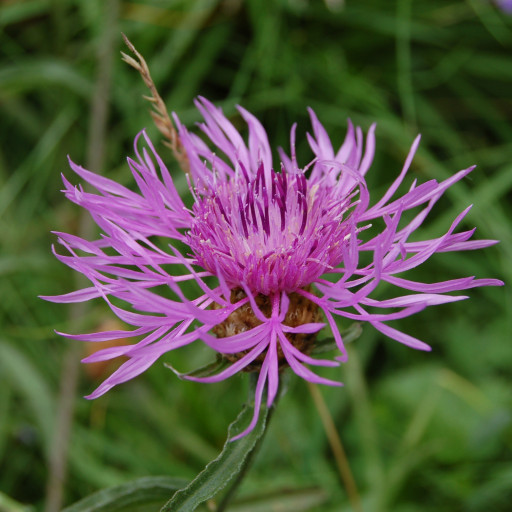
Plant Overview
Often called the Rough Star-thistle, this Mediterranean native is the ultimate survivor of the plant world. It thrives in the sandy, sun-scorched soils where other plants would wither, offering a burst of purple-pink color amidst the dust. While it shares the "thistle" name, it carries a delicate, geometric elegance that has made it a favorite for rugged coastal gardens and wildflower meadows.
🔍 How to Identify
- 🌵 The Starry Bracts: The base of the flower head is covered in small, overlapping scales (bracts) that end in 3 to 5 tiny, radiating spines. This creates a distinct "star-burst" look beneath the petals.
- 🌿 Rough Foliage: True to its Latin name (aspera means rough), the stems and leaves are covered in stiff, tiny hairs that feel like fine sandpaper to the touch.
- 🎨 Two-Tone Blooms: The central disc florets are often a pale pink or creamy white, while the outer ray petals are a deep, vibrant magenta or purple.
🏡 In Your Garden
- 🏜️ The Ultimate Xeriscape Plant: This species is incredibly drought-tolerant. It actually prefers "lean" soil—if you give it too much fertilizer or rich compost, it may grow leggy and lose its compact, wild charm. It is a perfect choice for those "difficult" sandy spots in the yard.
- 🦋 A Pollinator Party: Despite its prickly appearance, it is a nectar powerhouse. You’ll often see Painted Lady butterflies and various solitary bees swarming the blooms throughout the mid-summer heat when other flowers have faded.
⚠️ Safety & Toxicity
- ✋ Low Risk, High Prick: Centaurea aspera is not known to be toxic to humans, dogs, or cats if accidentally nibbled. However, the physical structure of the plant is its primary defense.
- 🧤 Wear Gloves: Those tiny star-shaped spines are sharp and can easily irritate the skin or lodge in a curious pet's paw. It is best handled with gardening gloves to avoid "mechanical" skin irritation or minor scratches.
✨ Fun Fact
🏹 The Centaur’s Cure: The genus name Centaurea is rooted in Greek mythology. It is named after Chiron, the wise Centaur, who was said to have used the medicinal properties of these plants to heal a wound in his foot caused by an arrow dipped in Hydra's venom.

Detailed Care Instructions
To grow Centaurea aspera, also known as the rough star-thistle, follow these steps:
- Climate and soil requirements: Centaurea aspera thrives in regions with a Mediterranean climate, characterized by hot, dry summers and mild, wet winters. It prefers well-drained sandy or loamy soil.
- Planting time: Sow seeds directly into the ground in late winter or early spring, after the last frost has passed.
- Seed preparation: Soak the seeds in water for 24 hours before planting. This will help improve germination rates.
- Site preparation: Choose a sunny location for planting, as Centaurea aspera requires at least 6-8 hours of direct sunlight daily. Clear the area of weeds and debris, and loosen the soil with a garden fork or rake.
- Sowing the seeds: Scatter the soaked seeds over the prepared area, aiming for a seed spacing of about 12-18 inches apart. Lightly press the seeds into the soil, ensuring good seed-to-soil contact.
- Watering: Immediately after sowing, water thoroughly to help settle the soil around the seeds. Afterward, water deeply but infrequently, allowing the top few inches of soil to dry out between waterings. This encourages the development of deep roots.
- Maintenance: As the plants grow, keep the area around them free from weeds, which can compete for nutrients and water. Mulching can help suppress weed growth and retain moisture.
- Pruning: To promote bushier growth and prevent the development of leggy, floppy stems, pinch back the main stem tips when the plants reach about 8-10 inches in height.
- Fertilizing: Centaurea aspera typically does not require regular fertilization. However, incorporating compost or a balanced, slow-release fertilizer into the soil before planting can provide essential nutrients.
- Pest and disease control: While Centaurea aspera is generally resistant to pests and diseases, occasional issues like aphids or powdery mildew may arise. Monitor the plants regularly and take necessary action, such as using organic insecticides or fungicides if needed.
- Harvesting and reseeding: Allow a few flowers to remain on the plant to mature and produce seeds. These seeds can be collected and stored for future planting. However, be cautious as Centaurea aspera can be invasive in some areas.
Following these steps should help you successfully grow Centaurea aspera plants in your garden or landscape.

Place in a bright room that is sun drenched almost all day. Or directly in a south-facing window.

To water this plant, it is important to observe the soil moisture level. The soil should be moist but not waterlogged. Water the plant deeply once a week during the growing season, and reduce watering during the dormant period. Use a watering can with a spout or a drip emitter to water directly at the base of the plant, rather than getting the foliage wet. Avoid watering during the hottest part of the day as this can cause evaporation and may scorch the leaves.
To fertilize Centaurea Aspera, follow these instructions:
- Choose a balanced, all-purpose fertilizer with equal ratios of nitrogen, phosphorous, and potassium (N-P-K). A ratio of 10-10-10 or 20-20-20 is suitable.
- Dilute the fertilizer according to the instructions on the package. Typically, a rate of 1 tablespoon of fertilizer per gallon of water is recommended.
- Water the Centaurea Aspera plant thoroughly before fertilizing. This ensures that the roots are hydrated and prevents fertilizer burn.
- Apply the diluted fertilizer to the base of the plant, avoiding direct contact with the leaves or flowers. Slowly pour the solution around the root zone, distributing it evenly.
- If the plant is potted, make sure the drainage holes are unobstructed, allowing excess water to escape.
- Fertilize Centaurea Aspera once every 4-6 weeks during the growing season, which typically occurs in spring and summer. Avoid fertilizing during the dormant period.
- Monitor the plant's response to the fertilizer. If the leaves turn yellow or the plant shows signs of nutrient deficiency or excess (such as stunted growth or wilting), adjust the fertilizer application accordingly.
When growing Centaurea Aspera, it is important to use a well-draining soil with a slightly acidic pH level. The soil should also be nutrient-rich, so incorporating organic matter such as compost or aged manure is recommended. Avoid using heavy clay soils or those with a high sand content. Additionally, it is important to ensure that the soil is kept moist but not waterlogged, as this can lead to root rot and other fungal issues.
Centaurea aspera is a plant of the Asteraceae family that can be propagated through several methods, allowing you to create new plants without the need for seeds. Here are some ways to propagate Centaurea aspera:
- Division: Divide the mature plant by gently separating the root clumps into smaller sections, ensuring that each division contains a good amount of roots and shoots. Transplant these divisions into individual pots or directly into the ground, providing them with suitable growing conditions.
- Stem cuttings: Take 3-6 inch (7-15 cm) long stem cuttings from the parent plant. Remove the lower leaves and dip the cut end in a rooting hormone powder to promote root growth. Plant the cuttings in a well-draining potting mix or a propagating tray filled with a mix of perlite and peat moss. Keep the cuttings in a warm and humid environment, misting them regularly. Over time, they will develop roots and can be potted up or planted outside.
- Layering: Select a low-growing branch of the parent plant and gently bend it towards the soil. Slightly damage the portion of the stem where it contacts the soil, ensuring that it remains in place. Cover this section with soil, leaving the tip of the stem exposed. Water the area regularly until roots start to form. Once roots have developed, sever the stem from the parent plant and transplant the new rooted plant to its desired location.
- Root cuttings: In early spring or fall, when the plant is dormant, carefully dig up the mature plant. Select thick and healthy roots, typically around pencil thickness. Cut these roots into 2-3 inch (5-7 cm) long sections. Plant these root cuttings horizontally in pots filled with a well-draining soil mix, burying them about an inch deep. Keep the soil moist and provide bottom heat to promote root growth. Once the root cuttings have established, pot them up individually or plant them in the ground.
Remember to provide the new Centaurea aspera plants with the appropriate care, including adequate sunlight, well-draining soil, and regular watering. Additionally, it's worth noting that propagating plants may have variations in their traits or characteristics compared to the parent plant.








