Plant Overview
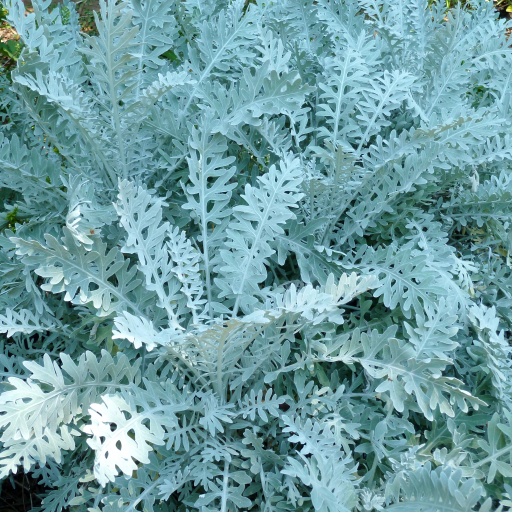
Known as "Dusty Miller" or "Silver Dust," Centaurea cineraria looks like a plant caught in a permanent, shimmering frost. Originally hailing from the rocky Mediterranean cliffs of Italy, this perennial is a favorite for designers who want to create high-contrast landscapes. Its "moonlight" glow makes it a poetic addition to "white gardens" or nighttime stroll paths.
🔍 How to Identify
- ❄️ Foliage Color: The most striking feature is the silvery-white to woolly gray leaves that appear almost white from a distance.
- 🧤 Velvety Texture: The leaves are covered in a dense layer of fine, felt-like hairs (trichomes) that feel soft to the touch.
- ✂️ Leaf Shape: The leaves are deeply lobed and "pinnatifid," meaning they have a complex, almost snowflake-like or coral-like silhouette.
- 🌼 Yellow Blooms: In mid-summer, it produces small, thistle-like yellow flowers, though many gardeners prune them away to keep the focus on the dramatic foliage.
🏡 In Your Garden
- ☀️ Sunscreen Leaves: The silver "dust" is actually a survival mechanism. These white hairs reflect intense sunlight and trap moisture, making the plant incredibly heat-tolerant and drought-resistant once established.
- 💧 The "Dry Feet" Rule: Because of its Mediterranean heritage, this plant is highly susceptible to root rot. It thrives in gritty, poor soil and will suffer if left in standing water or heavy clay.
- ✂️ Maintenance: To keep it from looking "leggy" or woody, it benefits from a firm pruning in early spring to encourage fresh, compact silver growth.
⚠️ Safety & Toxicity
- ☁️ Low Toxicity: Centaurea cineraria is generally considered non-toxic to humans and common household pets like cats and dogs.
- 🧴 Skin Sensitivity: While not poisonous, the fine hairs and sap can cause mild skin irritation or "contact dermatitis" in people with sensitive skin. It is best to wear gloves when pruning large quantities.
✨ Fun Fact
The white "dust" on the leaves acts exactly like a mirror. By reflecting UV rays away from the leaf surface, the plant can stay cool and photosynthesize in scorching temperatures that would wither most other garden greens!

Detailed Care Instructions
To grow Centaurea cineraria (also known as dusty miller), you can follow these steps:
- Choose a suitable location: Centaurea cineraria prefers full sun but can tolerate partial shade. Select a well-draining spot in your garden with nutrient-rich soil.
- Prepare the soil: Loosen the soil and remove any weeds or debris. Incorporate organic matter, such as compost, to improve the soil's fertility and drainage.
- Start from seeds: Sow the seeds directly into the prepared soil in early spring, after the threat of frost has passed. Lightly cover the seeds with soil. Maintain a consistent moisture level until germination occurs, which usually takes about 1-2 weeks.
- Transplant seedlings: Once the seedlings have grown to a height of around 2-3 inches, thin them out, leaving the strongest ones with a spacing of about 12-18 inches apart. Alternatively, you can start seeds indoors in late winter and transplant the seedlings outdoors after the frost has passed.
- Watering: Centaurea cineraria prefers moderate watering. Water deeply and regularly, allowing the top inch of soil to dry between watering sessions to avoid overwatering.
- Fertilize: Feed the plants with a balanced, water-soluble fertilizer every 4-6 weeks during the growing season to promote healthy growth and flowering. Follow the package instructions for proper dilution and application.
- Mulching: Apply a layer of organic mulch around the plants to retain moisture and suppress weed growth. Mulching also helps to keep the soil temperature regulated.
- Pruning: Regularly remove spent blooms and trim back leggy or overgrown branches to maintain a compact and tidy appearance. Pruning also encourages new growth and ensures continued flowering.
- Pest and disease control: Centaurea cineraria is generally resistant to pests and diseases. However, you may occasionally encounter issues like aphids or powdery mildew. Monitor the plants regularly, and treat any problems with appropriate organic insecticides or fungicides if necessary.
- Winter care: In colder climates, Centaurea cineraria is often treated as an annual plant. However, it can be grown as a perennial in warmer climates. If you want to overwinter the plants, consider providing them some protection during cold weather, such as covering them with a frost blanket or bringing them indoors if potted.
With proper care, Centaurea cineraria should grow well and reward you with its attractive silver-gray foliage and dainty yellow blooms.

Place in a bright room that is sun drenched almost all day. Or directly in a south-facing window.

Centaurea Cineraria is a plant that requires regular watering to ensure healthy growth. It is important to water it deeply, at the base of the plant, to encourage deep root growth. To do this, you can use a watering can or hose with a nozzle that allows for gentle and even distribution of water.
When watering, it is important to avoid getting water on the leaves as this can lead to fungal growth and other diseases. Instead, aim for the soil around the base of the plant.
The frequency of watering will depend on the climate and the soil conditions. In general, Centaurea Cineraria prefers well-draining soil that is evenly moist but not waterlogged. In hot and dry conditions, it may need to be watered more frequently, while in cooler and more humid conditions, less frequent watering may be necessary.
It is also important to monitor the plant for signs of under or over-watering. If the leaves start to wilt or turn yellow, it may be a sign of under-watering, while leaves that are brown or black may indicate over-watering.
In summary, watering Centaurea Cineraria involves deep watering at the base of the plant, avoiding getting water on the leaves, and adjusting the frequency of watering based on the climate and soil conditions.
To properly fertilize this plant, you should first choose a balanced fertilizer, with equal parts nitrogen, phosphorus, and potassium. Apply the fertilizer evenly around the base of the plant, taking care not to let it touch the foliage, and water in well. Fertilize every 3-4 weeks during the growing season, reducing frequency in the fall and ceasing entirely during the winter dormant period. It is important not to over-fertilize, as this can lead to excessive growth and reduced flower production.
The ideal soil for Centaurea Cineraria plants is a well-draining, fertile soil that is rich in organic matter. This plant prefers soil with a pH between 5.5 and 7.5. It is important to avoid using heavy clay soils as they can lead to waterlogging and poor drainage, which can be detrimental to the plant. Additionally, the soil should be kept consistently moist, but not waterlogged, and should never be allowed to dry out completely. Regular fertilization with a balanced fertilizer can also help promote healthy growth.
To propagate this particular plant, start by obtaining fresh seeds. The seeds can be obtained either by collecting them from a mature plant or by purchasing them from a nursery or online store. Once you have obtained the seeds, start by preparing a seedling tray for planting. The tray should be filled with a well-draining soil mix and moistened before sowing the seeds.
Sow the seeds on the top of the soil, and then cover them with a thin layer of soil mix. Water the soil gently, making sure not to wash away the seeds. Place the seedling tray in a warm and brightly lit location, preferably in a greenhouse or under grow lights.
The seeds should start to germinate within a week to two weeks. Keep the soil moist by watering the seedlings regularly, but be careful not to overwater them as this can cause fungal diseases.
Once the seedlings have grown to a size that they can be easily handled, gently separate them from the seedling tray and transplant them into separate pots. The pots should be filled with a well-draining soil mix that is rich in nutrients and moistened before planting. Water the newly transplanted seedlings gently, and then place them in a warm and brightly lit location once again.
As the seedlings continue to grow, make sure to monitor them for signs of pests or diseases. Treat any problems promptly to prevent them from spreading to other plants.
Once the seedlings have become established, they can be transplanted outside in the garden. Choose a location that is well-draining and receives plenty of sunlight. The Centaurea Cineraria plant prefers slightly acidic soil with a pH of between 6.0 and 7.0. Water the plants regularly, but be careful not to overwater them as this can lead to root rot. With proper care, the Centaurea Cineraria plant can grow into a beautiful and healthy landscape plant that provides year-round interest.








