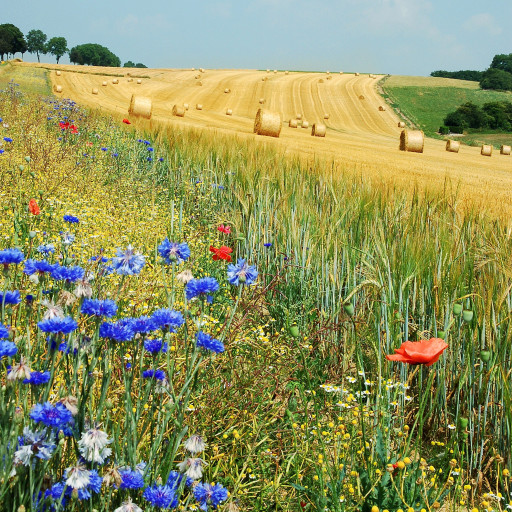
Plant Overview
Often called the "Cornflower" or "Bachelor’s Button," this wildflower is legendary for its intense, sapphire-blue petals that are rarely matched in the natural world. Once a common sight in European grain fields, it has transitioned from a "weed" to a beloved cottage garden staple. Its name, Cyanus, originates from a Greek myth about a youth so obsessed with the beauty of these flowers that he spent his entire life wandering through fields of grain.
🔍 How to Identify
- 🌸 The Bloom: Distinctive flower heads made of ragged, fringe-like outer florets that surround a more compact, darker center. While famous for "Cornflower Blue," they also come in pink, white, and deep maroon.
- 🌿 Foliage Texture: The leaves are slender and lance-shaped, often covered in tiny, soft hairs that give the plant a slightly grayish or "silvery" appearance.
- 📏 Stem Structure: Wiry, branched stems that are surprisingly tough, allowing the plant to sway in the wind without snapping easily.
🏡 In Your Garden
- 🐝 Pollinator Paradise: These flowers are high-nectar producers, making them a top-tier choice for attracting honeybees, solitary bees, and butterflies to your yard.
- 🌱 The Taproot Rule: Centaurea cyanus is an annual that grows quickly from seed, but it dislikes being moved. Because it develops a sensitive taproot, it is best to sow seeds directly into the garden rather than transplanting them.
- ✂️ Deadheading for More: To keep the "blue sea" waving all summer, snip off faded flowers; this prevents the plant from putting energy into seeds and forces it to produce more blooms.
⚠️ Safety & Toxicity
- ✅ Status: Non-toxic and generally safe for humans and pets.
- 🍽️ Garnish Potential: The petals are edible! They have a very mild, slightly peppery or clove-like taste and are frequently used to add a pop of color to salads or dried and mixed into "Lady Grey" tea blends.
- 🐾 Pet Friendly: It is not known to be poisonous to cats, dogs, or horses, making it a "safe bet" for family gardens.
✨ Fun Fact
In the 19th century, a young man would wear a Cornflower in his buttonhole to signal he was "in love." According to folklore, if the flower faded quickly, it meant his love was not returned, but if the color stayed bright, his romance was destined to succeed!

Detailed Care Instructions
| Color | Blue, Purple, Pink, Or White |
| Soil Ph | Alkaline |
| Humidity | Normal |
| Invasive | Weed |
| Lighting | Full Sun |
| Soil Type | Well-Draining |
| Bloom Time | Summer |
| Difficulty | Medium |
| Plant Type | Annual |
| Mature Size | 12–36 Inches |
| Native Area | Europe |
| Temperature | 5°C - 25°C |
| Sun Exposure | Part To Full Sun |
| Hardiness Zones | 2–11 |
Here are some steps you can follow to grow Centaurea cyanus (also known as bachelor's button or cornflower) plants:
- Choose a suitable location: Centaurea cyanus prefers full sun but can tolerate partial shade. Make sure the soil is well-drained and moderately fertile.
- Prepare the soil: Loosen the soil using a garden fork or tiller. Remove any weeds, rocks, or debris. Add organic matter, such as compost, to improve the soil's fertility and drainage.
- Sow the seeds: You can sow the seeds directly in the garden bed in the spring, after the last frost date, or start them indoors a few weeks earlier. If starting indoors, use seed-starting trays or pots filled with seed-starting mix. Sow the seeds about 1/4 inch deep and lightly cover them with soil.
- Watering: Keep the soil consistently moist but avoid overwatering, as it can lead to root rot. Water from the base, preferably using drip irrigation or a soaker hose, to prevent wetting the foliage and minimize the risk of fungal diseases.
- Thin and space the seedlings: When the seedlings have grown a few inches tall, thin them to provide adequate space for each plant. Bachelor's buttons should be spaced about 6-8 inches apart to allow for good air circulation.
- Fertilize: Apply a balanced fertilizer once or twice during the growing season. Follow the package instructions to avoid over-fertilizing. If the soil is already rich in organic matter, additional fertilizers may not be necessary.
- Mulching: Apply a layer of organic mulch, such as straw or wood chips, around the plants. Mulching helps retain moisture, suppress weed growth, and maintain a more consistent soil temperature.
- Pruning: Deadhead spent flowers regularly to encourage continuous blooming. This not only keeps the plant looking tidy but also prevents the formation of seeds, which can lead to self-sowing and potentially overcrowding in subsequent years.
- Pests and diseases: Centaurea cyanus is generally resistant to pests and diseases. However, keep an eye out for aphids and caterpillars, which may occasionally infest the plants. If necessary, treat with an appropriate insecticide or use organic pest control methods.
- Harvesting: Enjoy the beautiful blooms of Centaurea cyanus as cut flowers or leave them on the plant to attract pollinators. Harvest the flowers when they are fully open, and remove the stems just above a set of leaves to encourage regrowth.
With proper care, Centaurea cyanus can provide a stunning display of blue, pink, white, or purple flowers throughout the growing season.

Place in a bright room that is sun drenched almost all day. Or directly in a south-facing window.

Centaurea Cyanus is a plant that requires regular watering for its growth and survival. It is recommended that the plant be watered deeply once a week during its growing season, which is typically in the spring and summer months.
To water the plant, it is important to use a method that allows the water to reach the plant's roots. This can be achieved by watering the plant at its base, using a drip irrigation system or a hose with a gentle stream.
It is advised not to overwater the plant, as this can lead to root rot and other plant diseases. It is also important to allow the soil to dry out between watering sessions, as the plant tends to prefer well-draining soil.
If the plant is kept indoors, it is recommended to water it more frequently as the soil dries out faster in indoor conditions. It is also important to ensure that the plant is not exposed to excess moisture, as this can lead to fungal growth.
Overall, proper watering techniques are crucial for the health and well-being of Centaurea Cyanus, as it is a water-loving plant that requires adequate hydration to thrive.
To fertilize this plant, use a balanced water-soluble fertilizer with equal parts nitrogen, phosphorus, and potassium. Apply the fertilizer to the soil around the base of the plant, taking care not to get it on the foliage. Water the plant thoroughly after fertilizing. Fertilize the plant once every four weeks during the growing season.
The recommended soil for the Centaurea Cyanus plant is well-draining, loose, and fertile soil. It should be a blend of organic matter, like compost or peat moss, mixed with sand or perlite to ensure adequate drainage. Avoid heavy clay soils that can hold onto water, leading to root rot. Additionally, the soil should be slightly acidic with a pH level between 6.0 and 7.0. It is also recommended to incorporate a slow-release fertilizer into the soil at planting time to boost the plant's growth.
Propagation of this plant can be done through the collection of its seeds. The flowers should be allowed to dry out on the plant and then the seed heads can be harvested. Once the seed heads are harvested, the seeds should be carefully removed from the head and stored in a cool, dry place until ready to plant. Before planting, the soil should be loosened and amended with compost to provide the ideal growing conditions for the new plants. The seeds should then be planted in the soil at a depth of about twice their size. After planting, the soil should be moistened but not overly wet. With proper care and attention, the seeds should germinate in approximately 10-14 days. Once the plants have reached a suitable size, they can be transplanted into a larger container or directly into the garden where they can thrive and grow to maturity.
Common pests of the cornflower include Spider mites, aphids, larvae, snails. Make a habit of checking your cornflower frequently for pests so that any infestations can be caught and managed early.








