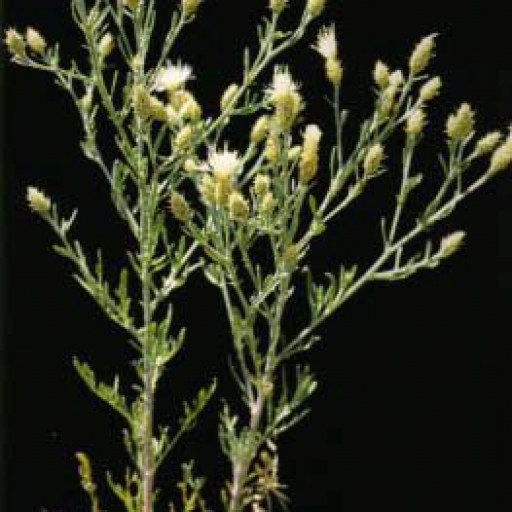
Plant Overview
Often called the Diffuse Knapweed or the "Tumble Knapweed," this resilient traveler originally hails from the sun-drenched regions of Southeast Europe and Western Asia. While it may look like a delicate, airy wildflower, it is a master of survival and a notorious "pioneer" species. In many parts of North America, it is considered a formidable invader because of its ability to thrive in harsh, dry conditions where other plants simply give up.
🔍 How to Identify
- 🌸 The Bloom: Small, thistle-like flower heads that are usually white or pale rose, appearing at the very tips of slender branches.
- 🍃 The Foliage: The leaves are a muted grey-green and covered in fine hairs, giving the plant a "dusty" appearance. Lower leaves are deeply divided, while upper leaves are smaller and more linear.
- 🏗️ The Bracts: Look closely at the base of the flower; you’ll see small scales (bracts) tipped with a sharp, rigid spine and tiny lateral teeth that look like a comb.
- 🌿 Growth Habit: It typically grows as a highly branched, ball-shaped bush, reaching about 1 to 2 feet in height, which eventually snaps off at the base to roll away.
🏡 In Your Garden
- 🏜️ The Ultimate Survivor: This plant loves "disturbed" soil—think gravel pits, roadsides, and neglected pastures. It has a massive taproot that can dive deep into the earth to find water during droughts.
- 🤺 Chemical Warfare: Diffuse Knapweed is allelopathic, meaning it releases special chemicals into the soil from its roots to prevent neighboring plants from growing, effectively "clearing the floor" for its own offspring.
- 🌪️ The Tumbleweed Strategy: Once the plant dies and dries out, it breaks off at the soil line. As it tumbles across the landscape in the wind, it shakes out thousands of seeds, ensuring its spread over miles of territory.
⚠️ Safety & Toxicity
- 🧤 Status: Mildly Irritant.
- 🖐️ Details: While not known to be toxic if accidentally touched, the sharp spines on the flower bracts can easily puncture the skin or cause irritation. It is highly recommended to wear thick gardening gloves if you are pulling this plant by hand. It is generally unpalatable to livestock due to its bitter taste and prickly texture.
✨ Fun Fact
The "Knapweed" name comes from the Old English word "knap," meaning a knob or a button, referring to the hard, round shape of the flower buds before they burst into bloom!

Detailed Care Instructions
To grow Centaurea Diffusa, also known as Knapweed or Diffuse Knapweed, follow these steps:
- Obtain Seeds: You can purchase Centaurea Diffusa seeds online or from a local nursery. Alternatively, you can collect seeds from wild Knapweed plants, but ensure that it is legal and sustainable to do so in your area.
- Determine Growing Conditions: Centaurea Diffusa prefers full sunlight and well-draining soil. It is a hardy plant that can tolerate a range of soil types, including sandy or rocky soil. It is also drought-resistant once established.
- Preparing the Soil: Prepare the soil by removing any weeds, rocks, or debris. You can add organic matter, such as compost or well-rotted manure, to improve soil fertility.
- Sowing the Seeds: Sow the seeds in late winter or early spring, either directly in the garden or in pots. If sowing in pots, use seed trays filled with soil and lightly cover the seeds with a thin layer of soil. If sowing directly in the garden, scatter the seeds over the prepared soil and lightly rake them in.
- Watering: Keep the soil evenly moist but not waterlogged until the seeds germinate, which usually takes 1-3 weeks. After germination, reduce watering frequency but provide water whenever the soil feels dry to the touch.
- Thinning: If you sowed the seeds directly in the garden, thin out the seedlings once they have grown a few inches tall, leaving about 8-12 inches of space between plants.
- Mulching: Apply a layer of organic mulch around the plants to suppress weeds and conserve moisture.
- Maintenance: Knapweed is a low-maintenance plant. However, you may need to occasionally water during prolonged dry periods and remove any weeds that compete for nutrients and space.
- Deadheading: To encourage prolonged blooming, you can deadhead the spent flowers by removing them once they start to fade. This will also prevent the plant from self-seeding and becoming invasive.
- Pests and Diseases: Centaurea Diffusa is generally resistant to pests and diseases. However, keep an eye out for aphids or snails, and protect the plants accordingly if necessary.
By following these steps, you can successfully grow Centaurea Diffusa plants in your garden.

Place in a bright room that is sun drenched almost all day. Or directly in a south-facing window.

To water this specific plant, it is important to ensure that the soil is well-draining and not waterlogged. Check the soil moisture level by inserting your finger into the soil up to the first knuckle. If it feels dry, it is time to water. Use room temperature or lukewarm water to avoid shocking the roots. Water around the base of the plant, avoiding the leaves and flowers as much as possible. Water regularly, but do not overwater as this may lead to root rot. Let the soil dry slightly before watering again. If the plant is in a container, make sure it has drainage holes and water until water flows out of the bottom of the container.
To fertilize this plant, use a balanced, water-soluble fertilizer with equal amounts of nitrogen, phosphorus, and potassium. Apply the fertilizer once every two weeks during the active growing season. Mix the fertilizer in water according to the package instructions and apply it to the soil around the plant. Water the plant thoroughly after applying the fertilizer to help it absorb the nutrients. Avoid over-fertilizing, as it can damage the plant and harm its growth.
Centaurea Diffusa is a plant that grows best in well-draining soil with a slightly acidic pH level. The soil should be rich in nutrients, such as nitrogen, phosphorus, and potassium, to support healthy growth. It is recommended to use a sandy or loamy soil mix for this plant, as it allows for optimal drainage and airflow. Additionally, it is important to ensure that the soil is not too compacted, as this can inhibit proper root growth and cause issues such as fungal infections. Overall, a high-quality, well-draining soil mix that is rich in nutrients is essential for the successful growth of Centaurea Diffusa.
To propagate this plant, collect seeds in late summer or early fall and plant them in a well-draining soil mixture. Cover the seeds lightly with soil and keep them moist until they germinate. Once the seedlings have grown to a few inches tall, transplant them into individual containers or directly into the garden. This plant can also be propagated through division in early spring or fall. To divide, carefully lift the plant from the ground and separate the roots into new clumps. Plant these clumps in their desired location and water well.








