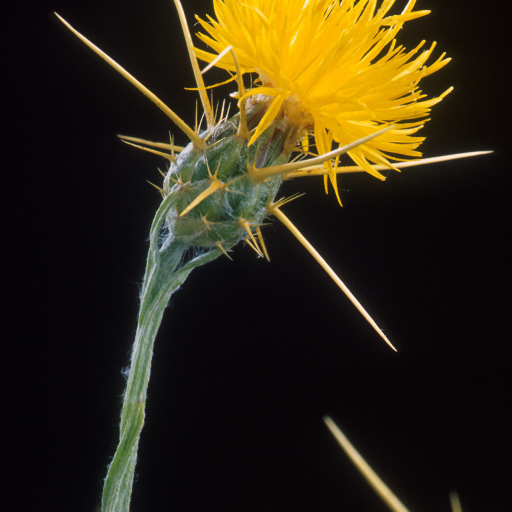
Plant Overview
Commonly known as the Yellow Starthistle, this Mediterranean native is often described as a "beautiful villain." While its bright golden blooms look cheerful in a summer field, its sharp, star-shaped spines and aggressive growth make it a formidable invader. In the wild, it is a pioneer species that thrives where the land has been disturbed, quickly turning a diverse meadow into a prickly sea of yellow.
🔍 How to Identify
- 🌟 The "Star" Bracts: The most iconic feature is the circle of stiff, straw-colored spines (up to 1 inch long) that radiate from the base of the flower head like a spiked crown.
- 🟡 Bright Blooms: The flower heads are small, round, and composed of numerous tiny, vibrant yellow tubular florets.
- 🕸️ Cobwebby Stems: The stems and leaves have a distinct grayish-green tint because they are covered in fine, woolly hairs that give the plant a dusty or "cobwebby" appearance.
- 📏 Winged Stems: If you look closely at the stalks, they have "wings"—thin ridges of leaf-like tissue that run vertically along the stem.
🏡 In Your Garden & Landscape
- 🚜 Disturbed Soil Lover: This plant is an opportunist. It rarely moves into healthy, established grasslands but will rapidly take over areas where the soil has been tilled, grazed, or cleared.
- 💧 Drought Specialist: It survives harsh summers by sending down a massive taproot that can reach over 3 feet deep. This is why it stays green and flowering long after other grasses have turned brown and dormant.
- 🐝 Pollinator Magnet: Despite its bad reputation among farmers, bees and butterflies absolutely adore it. It is actually a major source of nectar for honey production in some regions.
⚠️ Safety & Toxicity
- 🐴 Toxic to Horses: This is a major concern for livestock owners. If horses eat large quantities, it causes "Chewing Disease" (Nigropallidal encephalomalacia), a permanent neurological condition that prevents them from being able to swallow.
- 🌵 Physical Injury: The long, sharp spines are strong enough to puncture thin clothing and leather. They can cause painful skin pricks and are particularly dangerous to the eyes of grazing animals or curious pets.
- 🐕 Pet Safety: While not chemically toxic to dogs or cats, the "burrs" and spines can get lodged in paws, ears, or fur, leading to infections or irritation.
✨ Fun Fact
Even though it is considered one of the most "hated" weeds in the Western United States, "Starthistle Honey" is a highly prized gourmet product! It is known for its light color, mild flavor, and a faint hint of cinnamon or almond.

Detailed Care Instructions
To grow Centaurea solstitialis, also known as Yellow Starthistle, follow these steps:
- Location: Choose a sunny spot in your garden or outdoor area with well-draining soil.
- Soil preparation: Prepare the soil by removing any weeds, rocks, or debris. Loosen the soil to a depth of about 6 inches using a garden fork or tiller. Amend the soil with organic matter such as compost to improve its fertility and drainage.
- Planting: Start seeds indoors about 6-8 weeks before the last spring frost, or directly sow seeds outdoors after the last frost. If sowing indoors, fill seed trays or pots with seed-starting mix and lightly press the seeds onto the surface, covering them with a thin layer of soil. Keep the soil moist but not waterlogged until germination occurs. If sowing outdoors, scatter the seeds on the prepared soil and gently press them into the ground.
- Watering: Water the seedlings regularly, keeping the soil moist but not saturated. Once established, Centaurea solstitialis is somewhat drought-tolerant, but regular watering during dry spells will help promote healthy growth.
- Thinning: If you started seeds indoors, thin out the weaker seedlings once they have developed their first true leaves, leaving about 6-12 inches of spacing between the remaining plants. If you sowed seeds directly, thin out the plants once they are a few inches tall, following the same spacing guidelines.
- Fertilization: Centaurea solstitialis typically does not require heavy fertilization. However, a balanced, all-purpose fertilizer can be applied once or twice during the growing season to ensure healthy growth.
- Pruning: Deadhead spent flowers regularly to promote continuous blooming and prevent self-seeding. Pruning can also help control the size and height of the plant.
- Pest and Disease Management: Centaurea solstitialis is generally resistant to pests and diseases. However, keep an eye out for common garden pests such as aphids and caterpillars. If necessary, use organic pest control methods or insecticidal soap to manage infestations.
- Winter care: In colder regions, Centaurea solstitialis may require protection during the winter. Mulch around the base of the plant with straw or leaves to insulate the roots from frost.
- Propagation: Centaurea solstitialis can be propagated by collecting and planting seeds or by dividing mature plants during the early spring or late fall.

Place in a bright room that is sun drenched almost all day. Or directly in a south-facing window.

To water this plant, it is important to consider the soil type and weather conditions. It prefers well-draining soil, so be wary of overwatering it. The best time to water is in the morning, as it allows time for the soil to dry out before nightfall. When watering, be sure to target the soil near the roots and not the leaves, as wet leaves can lead to disease and fungal growth. Deep watering once or twice a week, depending on weather conditions, is preferred over frequent shallow watering. Finally, monitor the plant closely and adjust your watering schedule based on its specific needs.
To fertilize this plant, begin by preparing the soil with compost or well-rotted manure. Choose a fertilizer that is high in phosphorous, as this will encourage healthy root and flower growth. Apply the fertilizer in early spring, just as new growth begins to emerge. Be careful not to over-fertilize, as this can result in excessive foliage growth at the expense of flowers. Water thoroughly after fertilizing to ensure that the nutrients are absorbed into the soil. Repeat the process once or twice throughout the growing season as needed.
Centaurea Solstitialis is a plant that requires well-draining soil. It thrives in mildly acidic to alkaline soil with a pH range of 6.0 to 8.5. The soil should be of sandy texture with good moisture retention capacity, as the plant prefers medium moisture levels. Fertile soil is also preferred, with the incorporation of organic matter during the planting process. Avoid using heavy clays or soils with poor drainage, as this can lead to root rot and poor growth. It is recommended to conduct a soil test before planting to ensure the soil meets the necessary requirements.
To propagate this plant, you need to collect seeds from a mature and healthy plant. Once you have the seeds, you will need to scarify them by gently scratching the surface of the seed coat, which will help them germinate faster. You can then sow them in a seed tray filled with well-draining soil, lightly covering them with soil. Keep the soil moist and in a warm and bright location, and the seeds should germinate within a few weeks.
Once the seedlings have grown large enough, you can transplant them into individual pots or directly into the ground. Water them regularly, especially during dry periods, and mulch around the base of the plant to help retain moisture. It is also important to remove any weeds or competing vegetation, as this plant can struggle to compete in a crowded environment.
As the plant matures, it may start to produce new shoots from its roots, known as rhizomes. These can be carefully divided and transplanted to create new plants – be sure to use a sharp tool to divide the rhizomes and plant them in well-draining soil. With proper care, your new plants should thrive and produce beautiful flowers for years to come.








