Plant Overview
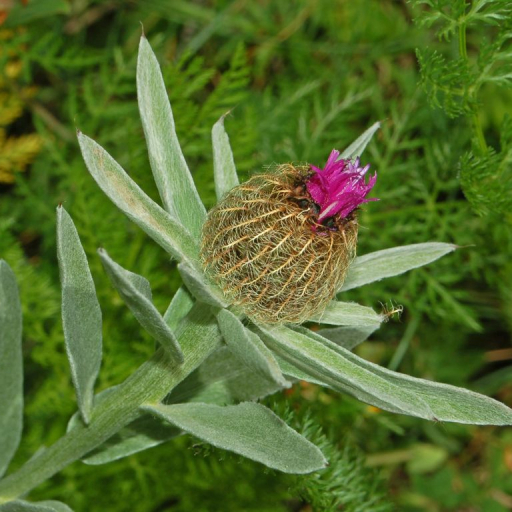
Often called the Single-flowered Knapweed, this alpine beauty is a resilient survivor from the high peaks of the European Alps. Unlike its bushier, multi-branched relatives, it stands tall with a solitary, thistle-like bloom that looks like a burst of magenta fireworks against a silvery-green backdrop. It is a favorite for rock gardens where its rugged, "lone wolf" charm and wild mountain heritage can truly shine.
🔍 How to Identify
- 🌸 The Lone Bloom: As the name suggests, each sturdy, unbranched stem produces exactly one large flower head, featuring vibrant purple-pink petals that radiate outward.
- 🕸️ Fringed Bracts: If you look closely at the "cup" holding the flower, you'll see overlapping scales (bracts) with dark, feathery fringes that look almost like a tiny, intricate basket.
- 🍃 Silvery Foliage: The leaves are narrow, lance-shaped, and covered in fine, soft white hairs, giving the entire plant a dusty, silver-gray cast that shimmers in the sun.
🏡 In Your Garden
- 🏔️ Mountain Roots: Because it originates from rocky slopes, this plant thrives in well-draining, gritty soil. It is highly susceptible to root rot if left in standing water, so "tough love" and excellent drainage are the keys to its success.
- ☀️ Sun Seeker: This is a true sun-worshipper. In the garden, it requires full light to stay compact and silvery; in too much shade, the stems become "leggy" and may flop over under the weight of the flower.
- 🐝 Pollinator Magnet: Despite its rugged appearance, it is incredibly soft to the touch and serves as a high-protein nectar source for specialized mountain bees and butterflies.
⚠️ Safety & Toxicity
- ✅ Non-Toxic Status: Centaurea uniflora is generally considered safe and is not listed as a toxic plant for humans, cats, or dogs.
- 🧤 Skin Sensitivity: Like many plants in the Aster family, the fine hairs and textured stems can occasionally cause mild skin irritation or "contact dermatitis" for gardeners with sensitive skin. Wearing gloves while pruning is recommended.
✨ Fun Fact
The genus name Centaurea is rooted in Greek mythology; it is named after Chiron the Centaur, who was famous for his knowledge of herbology and was said to have used these plants to heal a wound in his foot caused by one of Hercules' arrows.

Detailed Care Instructions
| Humidity | High |
| Lighting | Full Sun |
| Difficulty | Medium |
| Hibernation | Cold Period |
| Temperature | 15°C - 21°C |
| Hardiness Zones | 4 - 9 |
To successfully grow Centaurea Uniflora plant, also known as a meadow knapweed, follow these steps:
- Choose the right location: Centaurea Uniflora thrives in full sun and well-draining soil. Make sure to select a spot in your garden where the plant will receive plenty of sunlight throughout the day.
- Prepare the soil: Prior to planting, loosen the soil and remove any weeds or debris. Amend the soil with organic matter, such as compost, to improve drainage and nutrient content.
- Plant seeds or seedlings: You can start Centaurea Uniflora from seeds or purchase young seedlings from a nursery. If planting seeds, sow them directly into the prepared soil according to the package instructions. If using seedlings, dig a hole slightly larger than the root ball and place the seedling in, filling the hole back with soil.
- Water properly: Keep the soil evenly moist but not waterlogged during the plant's initial establishment period. Once established, Centaurea Uniflora is fairly drought-tolerant and does not require frequent watering.
- Mulch: Apply a layer of organic mulch, such as straw or wood chips, around the plant to retain moisture, suppress weeds, and regulate soil temperature.
- Maintenance: Centaurea Uniflora requires minimal maintenance. However, you may need to remove any weeds that compete with the plant for nutrients and water. Deadheading spent flowers can encourage prolonged blooming.
- Propagation: Centaurea Uniflora can be propagated by dividing the plant or collecting and planting seeds. Dividing the plant in early spring or fall helps rejuvenate older plants and provide new specimens for your garden.
- Pests and diseases: Centaurea Uniflora is generally resistant to most pests and diseases. However, occasional aphid infestations may occur. Monitor the plant regularly, and if necessary, treat the infestation with insecticidal soap or other organic pest control methods.
By following these steps, you can successfully grow Centaurea Uniflora in your garden and enjoy its beautiful flowers throughout the growing season.

Place in a dark room with little light, like a dark bedroom or a spot far away from a window or directly in a north-facing window.

To water this plant, first check the soil to ensure it is dry to the touch. Once you have confirmed the soil is dry, use a watering can or hose to gently water the base of the plant until the soil is moist but not saturated. Be careful not to overwater, as this can cause root rot. It is also important to avoid getting water on the plant's leaves as this can encourage disease. Water this plant regularly, but allow the soil to dry out slightly between waterings.
For optimal growth and flowering, apply a balanced fertilizer with equal amounts of nitrogen, phosphorus, and potassium. Apply the fertilizer every 4-6 weeks during the growing season, following the recommended dosage on the packaging. Water the plant deeply before and after fertilizing to avoid burning the roots. Avoid fertilizing during periods of drought or high heat as this can stress the plant. Additionally, removing spent blooms will encourage new growth and prolong the flowering period.
The recommended soil for Centaurea Uniflora plant is a well-draining, light to medium-textured soil that is rich in organic matter. A soil pH of 6.0-8.0 is ideal for this plant. The soil should be moist but not waterlogged and should not remain saturated for extended periods of time. The plant prefers a dry and well-drained soil. Addition of sand and peat moss to the soil mixture may improve drainage, which may be necessary in areas with heavy clay soils. It is also recommended to avoid the use of soils that are too heavy or compacted, as this can lead to root rot and other issues.
One way to propagate this plant is by taking stem cuttings. Select a healthy stem from the parent plant and cut it at a 45 degree angle with a sharp, sterile knife. Remove all leaves except for the top one or two. Dip the cut end in rooting hormone powder and plant it in a well-draining potting mix. Water the soil and cover the cutting with a plastic bag to create a humid environment. Keep the soil moist and place the pot in a bright, but not direct sunlight. The cutting should develop roots in a few weeks and can be transplanted to a larger pot or planted in the garden.








