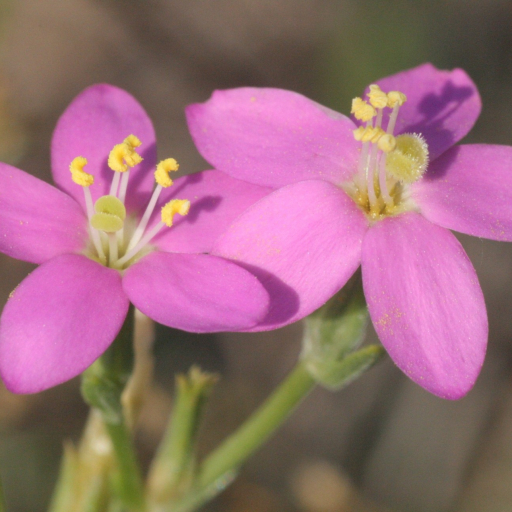
Plant Overview
Often referred to as the Seaside Centaury, this resilient little gem is a master of the shoreline. While it looks delicate with its starry pink blossoms, it is a tough pioneer species that thrives where other plants wither—right in the salty spray of coastal dunes and sandy marshes. Historically, centauries were named after Chiron the Centaur, who, according to Greek mythology, used the plant’s medicinal properties to heal a wound.
🔍 How to Identify
- 🌸 The Bloom: Small, vibrant rose-pink flowers with five petals that form a distinct star shape, often featuring bright yellow anthers in the center.
- 🍃 The Foliage: Fleshy, narrow, lance-shaped leaves. They start as a tight rosette at the base and then climb up the stiff, square-ish stem.
- 📏 The Stature: A compact survivor, it usually stands quite low to the ground (about 5-20 cm) to avoid being battered by coastal winds.
🏡 In Your Garden
- 🏖️ Coastal Specialist: As its name suggests, this plant is a "halophyte," meaning it is highly salt-tolerant. If you live near the ocean, it’s one of the few beauties that won't mind the salt spray.
- ⏳ Life Cycle Nuance: It is typically a biennial. In its first year, it focuses on growing a leafy rosette; in the second year, it shoots up its flower stalk. To keep them in your garden, allow the flowers to go to seed so new rosettes can form for the following year.
- ☀️ Soil & Light: It demands full sun and "lean" soil. It hates heavy clay or overly rich fertilizers, preferring sandy, well-draining spots that mimic the edges of a sand dune.
⚠️ Safety & Toxicity
- 🟢 Safe Status: Centaurium littorale is generally considered non-toxic to humans and common household pets.
- 👅 Bitter Defense: Like many members of the Gentian family, it contains extremely bitter compounds (gentiopicrin). While not poisonous, the bitter taste is usually enough to discourage any curious cats, dogs, or toddlers from taking a second bite.
✨ Fun Fact
The "Centaurium" genus gets its name from the Greek Kentauros. Legend says the centaur Chiron used the juice of this plant to heal a foot wound caused by a poisoned arrow from Hercules! In medieval times, it was also used in "magic" potions to ward off evil spirits.

Detailed Care Instructions
To grow Centaurium Littorale (commonly known as shore centaury), follow these steps:
- Select the right location: Centaurium Littorale requires full sun to partial shade. Choose a location that receives at least 6 hours of direct sunlight per day. It prefers well-draining soil.
- Prepare the soil: Ensure the soil is well-draining by adding organic matter, such as compost or peat moss. This helps improve the soil structure, retain moisture, and provide nutrition.
- Sow seeds or transplant: Centaurium Littorale can be grown from seeds or transplanted from nursery-bought plants. If sowing seeds directly, do it in early spring or fall. Lightly cover the seeds with a thin layer of soil. If transplanting, dig a hole slightly larger than the root ball of the plant and gently place it in, backfilling with soil.
- Watering: Keep the soil consistently moist but not waterlogged. Water the plant regularly, especially during dry periods. Maintaining proper moisture levels is critical for the plant's growth.
- Mulching: Apply a layer of organic mulch around the plant. This helps retain moisture in the soil, suppress weeds, and regulate soil temperature.
- Pruning: Trim back any dead or yellowed foliage. This promotes air circulation, prevents diseases, and encourages healthy growth.
- Fertilization: Centaurium Littorale usually doesn't require heavy fertilization. However, you can apply a balanced, slow-release fertilizer in the spring to provide necessary nutrients. Follow the package instructions for application rates.
- Pests and diseases: Keep an eye out for common pests like aphids or spider mites. If detected, treat them with appropriate organic or chemical pest control methods. Preventing waterlogged conditions and ensuring good airflow minimizes the risk of diseases.
- Overwintering: In cooler climates, Centaurium Littorale may die back during winter. Apply a layer of mulch around the base of the plant to protect the roots from freezing temperatures.
- Propagation: If you want to propagate more plants, Centaurium Littorale can be divided in early spring or fall. Dig up the established plant, gently separate the roots, and replant in desired locations.
By following these steps, you can successfully grow Centaurium Littorale and enjoy its lovely pink flowers.

Place in a bright room that is sun drenched almost all day. Or directly in a south-facing window.

To properly water this particular plant, you should first verify the type of soil in which it is growing. If the soil is well-draining and loamy, you will want to water it when the top inch of soil feels dry. When watering, ensure that you are providing enough water to penetrate the soil to a depth of at least 6 inches, but do not overwater as this can drown the roots and lead to root rot. If the soil is heavy and clay-like, you may need to water less frequently to avoid waterlogging. Additionally, you should avoid getting water on the leaves or flowers of the plant as this can cause damage or disease. To protect the root system, it may also be beneficial to add a layer of organic mulch around the base of the plant to help retain moisture between waterings.
To fertilize this plant, use a balanced fertilizer with equal parts nitrogen, phosphorus, and potassium. Apply the fertilizer every two weeks during the growing season, reducing the frequency to once a month in the dormant season. Follow the manufacturer's instructions for the recommended dosage. Make sure to water the plant thoroughly before and after applying fertilizer to prevent burning the roots.
The type of soil that is ideal for Centaurium Littorale plant should be rich in nutrients and well-draining. It should have a slightly acidic to neutral pH level ranging from 6.0 to 7.5. The soil should be moist but not too wet as it may cause root rot. A sandy loam with some organic matter added is a good choice as it provides good drainage and also retains some moisture. Additionally, the soil should be free from any harmful chemicals and contaminants that can affect the growth and health of the plant.
To propagate this plant, you will need to take stem cuttings in the spring or summer. Choose a healthy stem that is at least 3-4 inches long and has several leaves. Cut the stem just below a node (the spot where leaves emerge) with a sharp, clean knife or pruning shears.
Remove the leaves from the lower half of the stem, leaving only a few at the top. Dip the cut end of the stem in rooting hormone, which will help it develop roots more quickly.
Prepare a pot with well-draining soil and make a hole in the center for the cutting. Insert the stem into the hole and gently press the soil around it. Water the cutting thoroughly and cover the pot with a plastic bag or clear plastic wrap to create a mini greenhouse effect that will help maintain humidity.
Place the pot in a bright but indirect light and keep the soil moist but not waterlogged. Check on the cutting regularly and remove the plastic cover once it has started to develop new leaves and roots, which usually takes several weeks. Once the plant has grown enough to handle, it can be transplanted to a larger pot or planted outdoors in suitable conditions.








