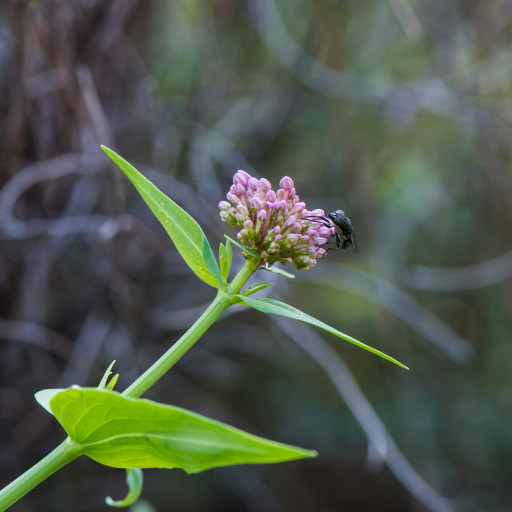
Plant Overview
Commonly known as Jupiter’s Beard or the romantic Kiss-me-quick, Centranthus ruber is a hardy Mediterranean beauty that defies the odds by blooming in the cracks of stone walls and rocky cliffs. This perennial is beloved for its "pioneer spirit," often being the first to bring a splash of crimson to neglected or dry landscapes. While it looks delicate, it is a powerhouse of resilience, thriving where more finicky garden plants would wither.
🔍 How to Identify
- 🌸 The Blooms: Look for dense, rounded clusters of tiny, star-shaped flowers. While most famous for its deep reddish-pink hue, you may also find white (Albus) or pale pink varieties.
- 🍃 The Foliage: The leaves are somewhat fleshy, lance-shaped, and have a distinct blue-green (glaucous) tint. They grow in opposite pairs along the stems.
- 🌿 Growth Habit: It typically forms a bushy, upright clump that can reach up to 3 feet tall. As it ages, the base of the stems can become slightly woody.
🏡 In Your Garden
- 🧱 The "Wall" Lover: This plant has a unique preference for alkaline, lime-rich soils. It is famous for "escaping" gardens and growing in the mortar of old brick walls or stony embankments where few other things can survive.
- 🦋 Pollinator Magnet: If you want to see your garden come alive, this is the plant to choose. It is a primary nectar source for butterflies and is particularly irresistible to the hovering Hummingbird Hawkmoth.
- ✂️ Self-Seeding Spirit: Be aware that it is a prolific self-seeder. If you don't want it popping up everywhere, "deadhead" the faded flower heads before they turn into fluffy, wind-borne seeds.
⚠️ Safety & Toxicity
- ✅ Status: Generally considered non-toxic to humans, dogs, and cats.
- 👃 The Scent: While the flowers are beautiful, some people find the scent of the crushed leaves or roots to be slightly "funky" or earthy, similar to its cousin, the medicinal Valerian, though Centranthus is not typically used for its sedative properties.
✨ Fun Fact
Despite its common name "Red Valerian," this plant is not the true Valerian used in sleep teas (Valeriana officinalis). However, in the past, its young leaves were sometimes eaten fresh in salads or boiled as a vegetable in its native Mediterranean regions!

Detailed Care Instructions
| Color | Commonly Crimson Red, But Also Pale Pink And White |
| Soil Ph | Preference For An Alkaline Ph Level |
| Humidity | Dry |
| Lighting | Part Sun |
| Soil Type | Tolerant Of A Variety Of Well-Drained Soil Types |
| Bloom Time | Summer To Early Fall |
| Difficulty | Medium |
| Plant Type | Herbaceous Perennial |
| Hibernation | Cold Period |
| Mature Size | Up To 3 Foot |
| Native Area | The Mediterranean |
| Sun Exposure | Full Sun/ Partial Shade |
| Hardiness Zones | 5-8 |
To grow Centranthus Ruber (also known as Jupiter's beard or red valerian), follow these steps:
- Choose a sunny location: Centranthus Ruber plants thrive in full sun but can tolerate partial shade.
- Prepare the soil: The plant prefers well-draining soil. If your soil is heavy or clayey, mix it with some organic matter like compost to improve drainage.
- Sow seeds or plant seedlings: You can start growing Centranthus Ruber from seeds indoors in late winter or directly sow them in the garden in spring after the last frost. For seedlings, choose healthy ones and place them in the ground, leaving about 12-18 inches between each plant.
- Watering: Water the plants regularly, especially during dry spells. Avoid overwatering, as it can cause root rot. Once established, Centranthus Ruber is reasonably drought-tolerant and doesn't require excessive watering.
- Mulching: Apply a layer of organic mulch around the plants to conserve moisture, suppress weed growth, and protect the roots during extreme temperatures.
- Fertilizing: In general, Centranthus Ruber doesn't need heavy fertilization. However, you can apply a balanced, slow-release fertilizer in spring to promote healthy growth.
- Pruning: Deadhead the spent flowers to encourage continuous blooming. Prune the plant back in autumn to remove any dead or damaged foliage.
- Pests and diseases: Centranthus Ruber is relatively resistant to most pests and diseases. However, keep an eye out for aphids, slugs, or powdery mildew. If infested, treat the plant with appropriate organic pest control methods.
- Dividing: Centranthus Ruber can become invasive over time. To control its spread, you can divide the plant every 2-3 years in spring or fall. Dig up the clump, separate it into smaller sections, and replant them in suitable locations.
- Winter care: Centranthus Ruber is hardy in USDA zones 4-8. In colder regions, it may die back during winter, but it usually regrows in spring. Applying a layer of organic mulch around the plant base can offer some winter protection.
By following these steps, you can successfully grow Centranthus Ruber and enjoy its beautiful flowers throughout the growing season.

Place in a window with dappled sun or a spot in the middle of a room. Or directly in a window facing west or east.

Centranthus Ruber is a species of flowering plant that requires regular watering throughout the growing season. When watering this plant, it is important to avoid the foliage and focus on the soil. Watering the leaves can increase the risk of disease or pests.
To ensure that the plant receives the right amount of water, it is important to monitor the soil moisture. The soil should be moderately damp but not waterlogged. Overwatering can lead to root rot, which can be fatal to the plant.
If the soil is dry to the touch, it is time to water the plant. Slowly pour water around the base of the plant, allowing it to soak into the soil. It may be necessary to repeat this process a few times until the soil is fully saturated.
During periods of heavy rainfall, it may be necessary to adjust the watering schedule to avoid overwatering the plant. Alternatively, during periods of drought, it may be necessary to increase the amount of water given to the plant.
Overall, a consistent watering schedule is essential for the health and growth of Centranthus Ruber.
To fertilize this plant, use a balanced, all-purpose fertilizer in the spring when new growth appears. Apply the fertilizer according to the package instructions, being careful not to over-fertilize as it can lead to weaker growth and susceptibility to disease. Water the plant thoroughly after fertilizing to ensure the nutrients penetrate deep into the soil. Avoid fertilizing during the dormant season, as it may stress the plant.
The ideal soil for this plant should be well-draining with good fertility. It should be rich in organic matter and have a pH range of 6.5 to 7.5. This plant prefers soil that is slightly alkaline or neutral. The soil texture should be moderately coarse with good water-holding capacity. It is important to avoid heavy clay soils that retain water, as this can lead to root rot. Additionally, the plant prefers a soil that is not compacted, allowing air to circulate around the roots. A mixture of sand, loam, and compost is recommended for this plant.
To propagate this plant, first wait until its flowers have died and the seed pods have formed. Cut the seed pods off and allow them to dry, then remove the seeds from the pods.
Next, fill a seed tray or small pots with potting soil and sow the seeds on top of the soil. Lightly cover the seeds with additional soil and water gently.
Place the seed tray or pots in a warm and bright location, but out of direct sunlight. Keep the soil moist but not soggy. In a few weeks, the seeds should germinate and small seedlings will emerge.
Once the seedlings have grown a few sets of true leaves, they can be transplanted into larger containers or directly into the ground in a sunny location with well-draining soil. Water regularly and the plant will continue to thrive and produce beautiful flowers.
Common pests of the red valerian include Mealybugs, aphids. Make a habit of checking your red valerian frequently for pests so that any infestations can be caught and managed early.








