Plant Overview
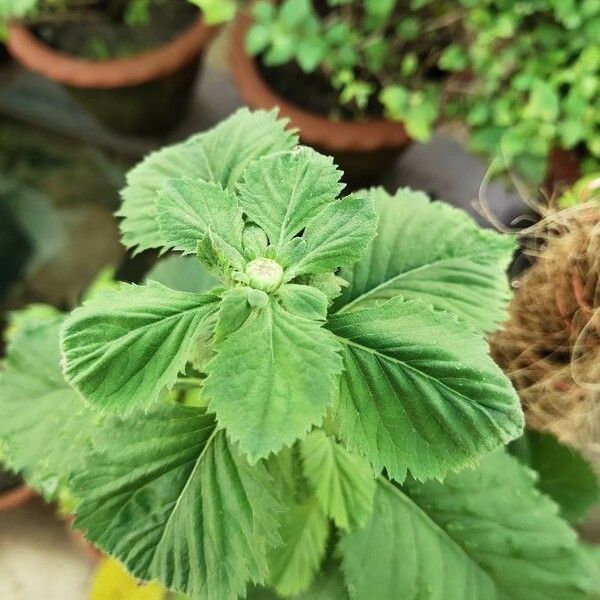
Known affectionately as the Brazilian Button Flower or Larkdaisy, this South American native is a magnet for butterflies and wandering eyes alike. Its ruffled purple blooms look like soft, lavender pom-poms perched atop vibrant green, serrated foliage. While it might look like a wild thistle to the untrained eye, its lack of thorns and its delightful pineapple-scented leaves make it a friendly and fragrant addition to any sunny border.
🔍 How to Identify
- 🌸 The Bloom: Small, one-inch wide, fluffy lavender-purple flower heads that resemble miniature thistles but are soft to the touch.
- 🍍 Scented Foliage: The bright green, serrated, oval-shaped leaves emit a distinct, sweet pineapple fragrance when crushed or even lightly brushed against.
- 🌿 Growth Habit: A bushy, mounding perennial (often grown as an annual) that typically reaches 1 to 2 feet in height, creating a dense, textured carpet of purple and green.
🏡 In Your Garden
- ☀️ Sun-Seeker: This plant thrives in intense full sun and is remarkably drought-tolerant once established. It’s a "set it and forget it" choice for rock gardens or containers that might occasionally miss a watering.
- 🌱 The Great Spreader: Be prepared for a takeover! It is a prolific re-seeder. While this provides free plants every year, you may find "volunteers" popping up in sidewalk cracks or neighboring pots if you don't deadhead the spent flowers.
⚠️ Safety & Toxicity
- 🟢 Low Risk: Centratherum punctatum is generally considered non-toxic to humans and common household pets like cats and dogs.
- 🧤 Skin Sensitivity: Because it belongs to the Asteraceae (daisy) family, some people with sensitive skin may experience mild irritation or "contact dermatitis" after heavy handling. Wearing gloves while pruning is a simple precaution.
✨ Fun Fact
Despite its delicate appearance, this plant is a biological "nectar powerhouse." It is one of the few flowers that can attract the elusive Long-tailed Skipper butterfly and several species of Swallowtails all at once, earning it a permanent spot in "pollinator buffet" garden designs.

Detailed Care Instructions
| Lighting | Full Sun |
To grow Centratherum Punctatum (Brazilian Button Flower) plant, you can follow these steps:
- Obtain the seeds: Obtain Centratherum Punctatum seeds from a reputable nursery or seed supplier. Alternatively, you may try collecting seeds from mature plants.
- Prepare the soil: Choose a well-draining soil mix. Centratherum Punctatum prefers fertile soil with organic matter. If your soil is heavy, mix in some sand or compost to improve drainage.
- Sow the seeds: Sow the seeds directly into the soil about 1/4 inch deep. Consider sowing multiple seeds in each location to increase the chances of germination. Keep the seeds about 6-8 inches apart.
- Watering: After sowing the seeds, water the soil thoroughly, ensuring it is evenly moist. However, avoid overwatering, as it may lead to root rot. Once the seedlings emerge, water them regularly to keep the soil slightly moist.
- Sunlight: Centratherum Punctatum requires full sun exposure for optimum growth. Ensure that the chosen location receives at least 6-8 hours of direct sunlight each day.
- Temperature: Brazilian Button Flower plants thrive in warm temperatures. They are typically grown as annuals in temperate regions. Keep the plants protected from frost or cold temperatures.
- Fertilizing: Apply a balanced liquid fertilizer once a month during the growing season to provide essential nutrients to the plant.
- Pruning: Centratherum Punctatum plant grows into a dense, bushy shape. To encourage branching and maintain its form, pinch-off the tips of the plants when they are about 6 inches tall.
- Pests and diseases: Monitor the plants regularly for any signs of pests or diseases, such as aphids or powdery mildew. If any issues are detected, take appropriate measures to control them, such as using organic insecticides or fungicides.
- Harvesting: Centratherum Punctatum produces small, daisy-like flowers with vibrant colors. You can harvest the flowers for decoration or use them in floral arrangements.
By following these steps, you can successfully grow Centratherum Punctatum plants in your garden or containers. Happy gardening!

Place in a window with dappled sun or a spot in the middle of a room. Or directly in a window facing west or east.

Centratherum Punctatum is a type of plant that requires proper watering to thrive. To water this plant, you should:
1. Check the soil moisture level by inserting your finger into the soil up to the second knuckle. If the soil feels dry at this depth, it's time to water your plant.
2. Use a watering can or hose with a gentle stream nozzle to apply water to the soil around the base of the plant.
3. Water until the soil is evenly moist throughout the root zone. Avoid over-watering, as this can cause root rot and other problems.
4. Let the soil dry out slightly before watering again, as Centratherum Punctatum prefers well-draining soil and can be susceptible to fungal diseases if the soil is constantly wet.
5. Water in the morning or early afternoon to allow the leaves and soil to dry before the cooler nighttime temperatures set in.
6. Fertilize the plant according to its specific requirements, as excessive fertilization can lead to overgrowth and reduced water uptake.
To properly fertilize the Centratherum Punctatum plant, it is recommended to use a balanced fertilizer with equal parts nitrogen, phosphorus, and potassium. Apply the fertilizer to the soil around the base of the plant every 4-6 weeks during the growing season, being careful not to over-fertilize as this can lead to leaf burn and other plant health issues. Water the plant well after fertilization to help the nutrients penetrate the soil and reach the roots. It is also important to monitor the pH level of the soil, as Centratherum Punctatum prefers a slightly acidic soil with a pH range of 6.0-7.0.
The best soil for Centratherum Punctatum plants would be a well-draining soil that is rich in organic matter. It should have a slightly acidic to neutral pH. The soil should be loose and airy, allowing for good root development and water drainage. A soil mix with a 1:1 ratio of peat moss and perlite or vermiculite is ideal. Additionally, some sand or grit can be added to the mix to enhance drainage. It is important to avoid using heavy, clay-like soils as these can cause waterlogging, leading to root rot.
To propagate this plant, take stem cuttings that are 3-4 inches long with at least 2-3 nodes. Remove the lower leaves and dip the cutting in rooting hormone powder. Plant the cutting in well-draining soil, and keep it consistently moist but not waterlogged. Place the pot in a bright location but out of direct sunlight. It should root in around 4-6 weeks. Once the roots have established, the plant can be transferred to a larger pot or planted in the ground.








