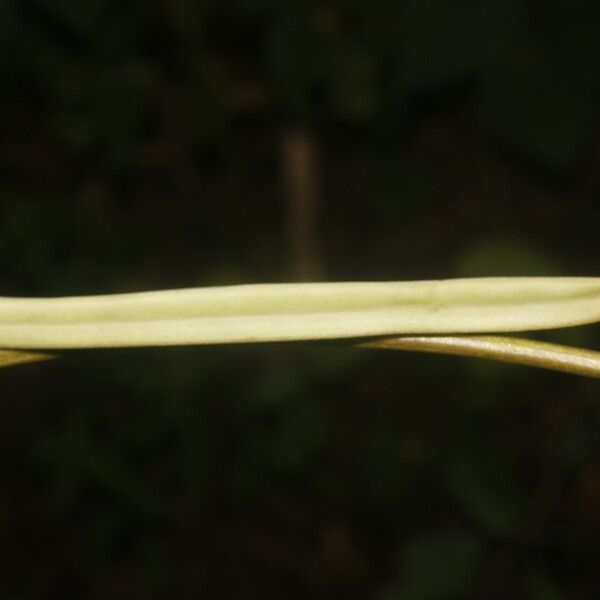
Plant Overview
Commonly known as the Feathery Butterfly Pea or Plumier’s Butterfly Pea, this elegant climber is a showstopper in tropical and subtropical landscapes. Named after the 17th-century French botanist Charles Plumier, it is cherished for its oversized, orchid-like blooms that look like they belong in a botanical illustration. Whether draping over a fence or scrambling up a trellis, it brings a sense of wild, romantic charm to any green space.
🔍 How to Identify
- 🌸 The Bloom: Features large, inverted pea-like flowers that are typically creamy-white or pale lilac with a dramatic, feathery splash of deep magenta or purple in the center.
- 🍃 The Foliage: The leaves are trifoliate (appearing in groups of three) and are egg-shaped with a smooth, dark green texture that provides a lush backdrop for the bright flowers.
- 📏 The Growth: It is a vigorous twining vine that can reach lengths of 6 to 10 feet, using its stems to spiral around nearby supports rather than using tendrils.
🏡 In Your Garden
- 🧗 Support is Key: Because of its twining nature, this plant "hates" being left on the ground where it can become a tangled mess. It performs best when provided with a thin trellis or chain-link fence to climb.
- 🧪 Soil Superpowers: As a member of the legume family, it is a "nitrogen fixer." It works with beneficial soil bacteria to pull nitrogen from the air and store it in the ground, effectively fertilizing itself and its neighbors over time.
⚠️ Safety & Toxicity
- 🟢 Non-Toxic Status: Centrosema plumieri is generally considered non-toxic to humans and common household pets like cats and dogs.
- 👶 General Caution: While safe, the seed pods are tough and woody when dry. Keep them away from curious toddlers to avoid choking hazards, and as with any garden plant, monitor pets to ensure they don't treat the vine as a salad bar, which could lead to mild indigestion.
✨ Fun Fact
The flowers of the Butterfly Pea grow "upside down" compared to many other pea species! This unique orientation is an evolutionary trick designed to provide a perfect landing platform for heavy bees, who are the plant's primary pollinators.

Detailed Care Instructions
To grow Centrosema Plumieri plant, also known as butterfly pea or sky flower, you can follow these steps:
- Climate: Centrosema Plumieri plant thrives in tropical and subtropical climates. Choose a planting location with full sun exposure.
- Soil: The plant prefers well-draining soil with a pH range of 6 to 7.5. Prepare the soil by incorporating organic matter like compost or well-rotted manure to improve its fertility and drainage.
- Propagation: You can grow Centrosema Plumieri from seeds or stem cuttings. If you choose to use seeds, soak them in warm water for 24 hours before planting to enhance germination. For stem cuttings, choose healthy stems with two to three nodes and plant them directly in the soil.
- Planting: Dig a hole slightly larger than the root ball or seedling. Place the plant in the hole and backfill with soil, firming gently around the root area. Space the plants about 15-24 inches apart to allow for proper growth.
- Watering: Water the plant regularly, keeping the soil evenly moist but not waterlogged. Insufficient watering may cause the plant to wither, while overwatering can lead to root rot.
- Fertilization: Centrosema Plumieri is a nitrogen-fixing plant, meaning it can access nitrogen from the atmosphere. However, you can still apply a balanced fertilizer, such as a 10-10-10, once every two months during the growing season to provide additional nutrients.
- Pruning: Regular pruning can help maintain the shape of the plant and encourage branching. Cut back any dead or diseased branches and remove spent flowers to promote more blooms.
- Support: Centrosema Plumieri tends to climb and sprawl. You can provide a trellis or stakes for support, especially if you want to train it vertically.
- Pest and Disease Control: Keep an eye out for common garden pests like aphids, spider mites, or caterpillars. Use organic insecticides or soapy water sprays to control them. Proper sanitation and good airflow around the plants can also prevent disease issues.
- Harvesting: Centrosema Plumieri produces vibrant blue flowers that can be harvested for use in herbal teas or as a natural dye. These flowers are usually plucked when in full bloom, and the petals can be steeped to create a blue-colored tea with potential health benefits.
By following these guidelines, you can successfully grow Centrosema Plumieri plant and enjoy its beautiful flowers.

Place in a bright room that is sun drenched almost all day. Or directly in a south-facing window.

When watering this plant, it is important to keep in mind its natural habitat and requirements. This plant prefers well-draining soil with moderate moisture levels and does not do well in standing water. It is recommended to water this plant deeply but infrequently, allowing the soil to dry out partially before watering again. Overwatering can lead to root rot and damage to the plant.
When watering, it is best to water at the base of the plant rather than overhead watering, as this can lead to leaf rot and other issues. Use a watering can or garden hose with a nozzle to control the water flow and ensure that the water is evenly distributed around the base of the plant.
During periods of drought or high temperatures, this plant may require more frequent watering to prevent dehydration. However, it is important to avoid overwatering, as this can also stress the plant and lead to health problems.
In summary, when watering this plant, it is important to keep in mind its natural preferences and requirements, water deeply but infrequently, and avoid overwatering to keep it healthy and thriving.
To fertilize this particular plant, first, ensure that the soil is moist and has good drainage. Apply a balanced, slow-release fertilizer around the base of the plant, taking care not to get the fertilizer on the leaves or stems. Use a fertilizer with a 10-10-10 or 20-20-20 ratio and apply according to the manufacturer's instructions. Avoid over-fertilizing as this can damage the roots and reduce flower production. Fertilize the plant during the growing season, particularly during periods of active growth.
Centrosema Plumieri plant requires a specific type of soil that is well-draining and has a pH level between 5.5 to 6.5. The soil should be rich in organic matter and should be able to retain moisture to support the plant's growth and development. It is important to avoid using soil that is prone to becoming waterlogged, as this can cause root rot and other problems that can affect the plant's health. The soil should be loose and friable, allowing air to circulate freely around the roots. Additionally, adding organic fertilizers or compost to the soil can be beneficial for promoting healthy growth.
Centrosema Plumieri plant can be propagated through a variety of methods, including stem cuttings, seed germination, and layering. When propagating through stem cuttings, it is important to select healthy stems that are at least six inches long and cut them at a 45-degree angle using a sharp, clean cutting tool. Once the stem has been cut, remove any leaves from the lower half of the stem and dip the cut end in rooting hormone powder. The stem cutting can then be planted in a small pot filled with moist potting soil and placed in a warm, brightly lit area until roots have formed.
To propagate through seed germination, collect the seeds from mature seed pods and soak them in warm water for 24-48 hours to soften the outer hull. Plant the seeds in a pot filled with well-draining soil and keep the soil consistently moist until the seeds have germinated. Once the seedlings have grown large enough, they can be transplanted to their final growing location.
Layering is another method of propagation where a stem is bent down to the ground and covered with soil while it is still attached to the parent plant. The stem will begin to root while still attached to the parent, and once roots have formed, the stem can be cut away from the parent plant and transplanted to its final growing location.








