Plant Overview
Often called the Arrowleaf Butterfly Pea, this delicate perennial vine is a master of geometry and camouflage. Native to the tropical regions of Central and South America, it is beloved by botanists for its "sagittate" foliage—leaves that look exactly like hand-carved arrowheads. While it may appear fragile, it is a resilient climber that plays a vital role in its ecosystem by "feeding" the soil from the inside out.
🔍 How to Identify
- 🍃 Arrowhead Leaves: The most striking feature is the foliage; the leaves are long and narrow with two pointed lobes at the base, mimicking the shape of a classic arrow.
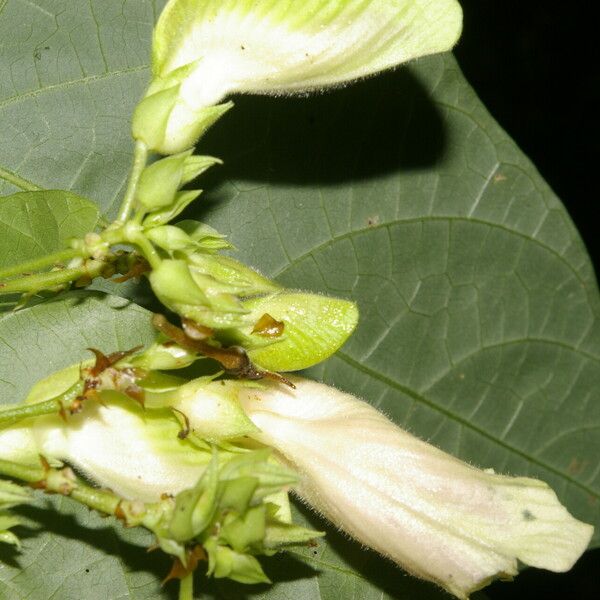
- 🌸 Inverted Flowers: The blooms are typically creamy white or pale violet. In a quirky twist of nature, the flowers appear "upside down" compared to other peas, featuring a large, flat petal called a "standard" that faces outward.
- 🧵 Twining Stems: Look for thin, wiry green stems that don't have tendrils; instead, the entire stem wraps itself tightly around tall grasses or small shrubs to climb toward the light.
🏡 In Your Garden
- 🌱 Soil Enrichment: This plant is a "nitrogen fixer." It hosts special bacteria in its roots that turn atmospheric nitrogen into fertilizer, naturally improving the soil quality for every plant growing nearby.
- 🦋 Pollinator Magnet: The wide, flat shape of the flower is designed specifically as a landing pad for heavy-bodied bees and butterflies, making it a great addition to a wild, pollinator-friendly "nectar cafe."
⚠️ Safety & Toxicity
- 🐾 Pet Assessment: Generally considered non-toxic to livestock and frequently used as high-protein forage, but it may cause mild stomach upset in house pets if ingested in large quantities.
- 🚫 Not Culinary: Despite being in the "Pea" family, the pods and seeds of the Centrosema Sagittatum are not for human consumption. Always keep garden seeds away from small children.
✨ Fun Fact
The species name sagittatum comes directly from the Latin word sagitta, meaning "arrow." In ancient times, plants with this leaf shape were often associated in folklore with protection and the Roman god of the woods, Silvanus.

Detailed Care Instructions

Some plants require more regular watering than others, which should be done every few days. It's critical to maintain the soil moist all of the time. The water requirements of the same plant placed in pots with varying sizes will differ. Because the water in the smaller pot evaporates faster than the water in the larger pot, it will require more watering. Regardless of pot size, the surface should constantly be maintained moist.








